





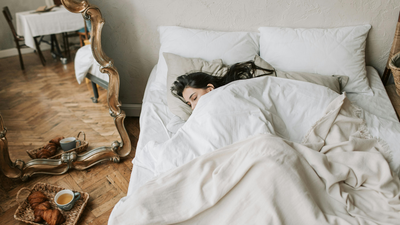
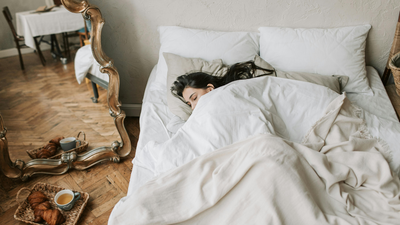
The act of waking up and immediately making one’s bed has been considered an attribute of discipline and productivity. Many of us have been taught that making one’s bed has a direct correlation with having a successful day. Nevertheless, recent research has shown that making one’s bed immediately after waking up may not be as productive as we once thought. In fact, making one’s bed immediately after waking up could be causing an unwholesome environment. Although one’s bed will look neat and clean, there could be moisture, bacteria, and dust mites living in one’s bed. Allowing one’s bed to breathe could be a powerful tool towards better sleeping habits.
Why making your bed too soon can trap moisture and dust mites
One of the main reasons why it is not recommended to make your bed immediately after waking up is because of dust mites. Dust mites are microscopic creatures that thrive in a warm, dark, and humid environment. These conditions are naturally met while you are sleeping.It is estimated that during an average night’s sleep, half a litre of moisture can be lost through sweating. This moisture is absorbed into your bedding. If you make your bed immediately after waking up, you are essentially trapping this moisture under your bedding, thus providing an environment for dust mites to thrive.According to Dr Robert Patterson of Uintah Basin Medical Center, Roosevelt, Utah, if you do not make your bed immediately after waking up, it allows for the moisture to evaporate, thus not providing an environment for dust mites to survive.
Why airing your bed matters
Allowing your bed to air out for 30-60 minutes can make a big difference in the level of hygiene in your home. When you pull back the covers, the moisture dries up, which can prevent bacterial growth from occurring.According to Dr Stephen Pretlove, who has done research on the indoor environment, “leaving a bed unmade during the day can remove moisture… so the mites will dehydrate and eventually die.” This simple action can make a big difference, especially in the case of people who are prone to allergies, asthma, or those whose skin is very sensitive, as dust mite waste is known to trigger respiratory problems.
Better bed hygiene: What you should do instead
Rather than avoiding the task altogether, experts suggest that you delay the task slightly. The following are some easy and efficient suggestions:
- Draw back the duvet or blanket as soon as you wake up
- Open the window to enhance ventilation
- Let the bed breathe for 30-60 minutes
- Wash the bed sheets once a week using hot water
- Use a protector on the mattress to decrease moisture levels
This not only minimises the amount of allergens in the bedroom but also helps keep the bed fresh and comfortable.
A balanced approach to a healthier routine
However, it’s worth pointing out that, unlike what many might think, making your bed isn’t a bad habit, but rather one that needs to be done at a different time. Once your bed has aired, you can then make it like you normally do, and hence enjoy the benefits of having a clean and organised room, and a healthier sleeping environment.In a world where our daily lives are largely dictated by our daily habits, this one trick can prove to be quite advantageous, and hence a healthier choice than one might think, especially when one considers that they are not lazy, but rather smart when they let their beds breathe before they make them.