




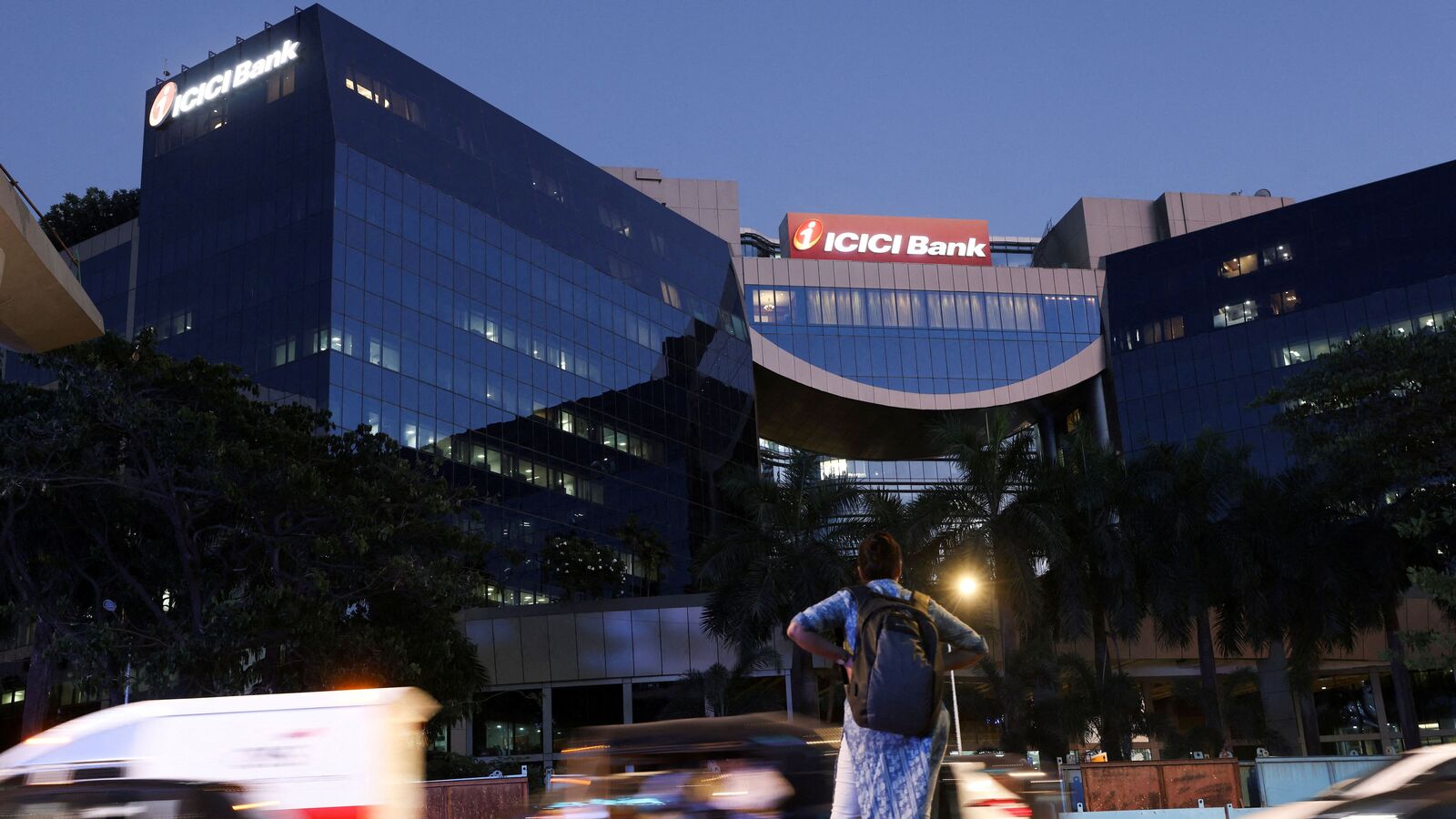
In the surprise move, India’s second-largest private-sector lender has also hiked the requirement for semi-urban areas to ₹25,000 from ₹5,000 and for rural areas to ₹10,000 from ₹5,000.
Mint probes what could have led to this step.
What are the new terms and conditions?
Urban customers who open savings bank accounts with ICICI Bank from 1 August will have to maintain a minimum average balance of ₹50,000.
Certain exemptions apply—the hike will not apply to existing account holders, salary accounts, basic savings deposit accounts, and zero-balance savings accounts opened as part of the Pradhan Mantri Jan Dhan Yojana, the government’s flagship financial inclusion programme.
The average minimum balance is calculated as the average of monthly day-end balances. Customers who fail to maintain the minimum balance will have to pay a penalty of 6% of the shortfall or ₹500, whichever is lower. The penal charges are unchanged.
What are the possible reasons?
The bank has made the decision for three reasons, according to a person close to the matter. First, it does not want to be a customer’s secondary bank. It wants customers to maintain a high balance allowing it access to a greater pool of low-cost deposits. Savings accounts earn lower interest than term deposits or fixed deposits. At ICICI Bank, savings accounts pay an interest of 2.5%, while its term deposits pay anywhere from 2.75 to 6.6%, depending on the tenor.
Second, the lender is banking on the rising income levels in the country, especially in the metros. India’s per capita net national income adjusted for inflation increased from ₹72,805 in 2014-15 to ₹114,710 in 2024-25, up 58%—a far cry from the 400% jump in ICICI Bank’s minimum balance requirements.
Finally, the bank hopes that this will act as a risk filter, keeping out potential mule accounts. Mule accounts are so named because they act as conduits for sending and receiving funds that do not belong to the account holder. They usually remain dormant but can see a sudden spurt in typically low-value, high-volume transactions. According to the person cited earlier, the bank believes that a higher cost of entry will deter the use of accounts for unscrupulous purposes.
Mint‘s emailed queries to the bank remained unanswered.
Will it encourage other banks to do the same?
Experts do not see other banks following suit. According to Adhil Shetty, chief executive officer of financial services marketplace Bankbazaar, it is highly unlikely that other banks will follow this step at this point. “So, while there would not be an influx of customers to other banks from ICICI Bank right away, this may eventually happen. At the same time, we can also expect ICICI Bank to introduce new products and features that may excite customers to stick with it.”
What are the minimum balance requirements at its peers?
At India’s largest private sector lender, HDFC Bank, the average minimum balance requirement for regular savings accounts is ₹10,000 in metros and urban locations, and ₹5,000 in semi-urban areas. For rural areas, the bank mandates a balance of ₹2,500 for savings account holders, but it is calculated on a quarterly basis. HDFC Bank also does not stipulate a minimum average balance for salary account holders and Jan Dhan accounts. It levies a penalty for a host of savings accounts of 6% of the shortfall or ₹600, whichever is lower.
State-run banks, on the other hand, have been dropping minimum account penalties in droves, hoping to attract more customers. Mint reported on 18 July, that since June, public sector banks such as Canara Bank, Punjab National Bank, Indian Bank, Bank of Baroda, and Bank of India have dropped charges for not maintaining a minimum average balance in savings accounts, five years after India’s largest lender, State Bank of India (SBI), did so.
How many bank accounts are there in the country?
India had over 2 billion savings bank accounts, with deposits worth ₹65 trillion as on 31 March, according to data from the Reserve Bank of India (RBI). The number of savings accounts stood at 1.9 billion on 31 March 2024.
Of the 2 billion savings accounts, 70% are in public-sector banks, 18% are in private-sector banks, and the remaining are in foreign banks, payments banks, and small finance banks. Of the aggregate savings accounts in urban and metros of 871 million, state-owned banks accounted for almost half, while private-sector banks had a 23.5% share, according to the March RBI data.
Savings account openings also saw a surge due to the Pradhan Mantri Jan-Dhan Yojana. Launched in August 2014, the scheme offers zero-balance savings accounts with debit cards, insurance, and direct transfer benefits. As of end-March, 551 million bank accounts had been opened under this programme.