




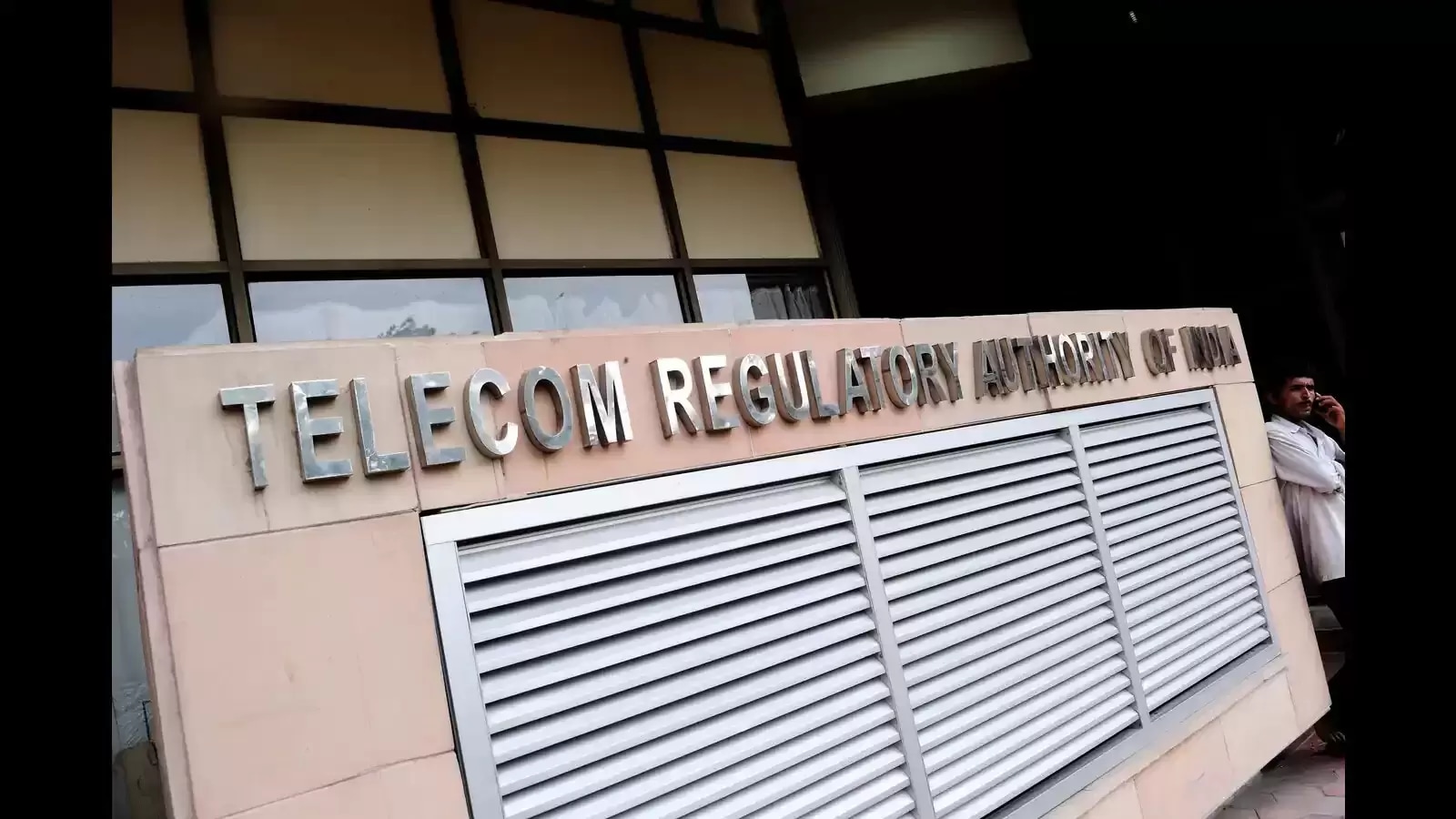
According to three government officials aware of the matter, the telecom regulator is working on a plan to get the decades-old Trai Act, 1997 amended and give itself more teeth. To be sure, Trai has sufficient powers to regulate telecom service quality, resolve disputes via TDSAT, and protect consumer interests, but lacks adequate enforcement powers.
“Trai cannot impose strong penalties, attach bank accounts or properties in case of violation, and ask for bank guarantees,” the first of three officials cited earlier said, all of whom spoke on the condition of anonymity. This official said that the gaps in the Trai Act make it difficult for the regulator to effectively enforce rules and ensure compliance in the telecom sector. The officials
A key demand from the regulator is to have the powers to seek bank guarantees from telecom operators. The bank guarantee will bring seriousness in compliance from telecom operators and can be invoked in case they fail to pay penalties imposed by the regulator, the first official said.
In fact, the issue of giving more powers to Trai also came up at a recent meeting of Trai officials with the department-related Parliamentary Standing Committee on Home Affairs, a second official said.
This official added that the proposal, which is in the works, will be sent to the department of telecommunications (DoT), under the Union communications ministry.
Queries emailed to Trai did not elicit any response till press time.
Why Trai can’t act tough on telcos
As per the Trai Act, 1997, its powers are primarily regulatory, advisory, and enforcement-focused through directions. This is different from other regulators. For example, the markets regulator Securities and Exchange Board of India (Sebi) can pass binding orders independently. However, for Trai, the power to enforce orders is limited. The telecom regulator, for instance, relies on the department of telecommunications for licence actions.
One of the key issues is also the enforcement of financial disincentives or penalties, which Trai does not have powers on. “Trai can enforce a limited penalty but they don’t have the power to recover that penalty,” said Satya N. Gupta, a former principal advisor at Trai.
According to Gupta, the telecom regulator should have the powers to grant licence and implement policy, whereas the government should just make policies. “In almost every country, the regulator has licensing power. In India, the government has kept both licensing and policy making,” Gupta said, adding that Trai has control over a few things such as quality of service orders and tariffs (which is now under forbearance).
A key reason for Trai to seek more powers also stems from the financial disincentives worth over ₹140 crore imposed on telecom operators for failing to curb spams, which the operators refused to pay and sought an interim stay in the Telecom Disputes Settlement and Appellate Tribunal (TDSAT). The case is scheduled to be next heard on 8 August.
“It is not illegal for telcos to challenge such orders by Trai but it delays enforcement. Often, operators do not take such orders seriously and also delay compliance with the regulator’s request on sharing of certain data for research and investigation,” the third official said, adding that Trai can impose some penalties, but not enough to hold companies fully accountable for serious violations. It lacks the teeth to enforce bigger actions — that’s the problem, the official added.
Call for binding powers, guarantees
“Trai should be empowered to directly issue, amend, or revoke telecom licences, rather than leaving this authority solely with the Department of Telecommunications. This would allow Trai to hold service providers more directly accountable,” said Murtuza Kachwala, managing director at business consulting firm Protiviti Member Firm for India.
“Its recommendations—on tariffs, service quality, and consumer protection—should carry more weight by being made binding, rather than just advisory, so operators are obligated to follow them unless a legal challenge overturns them,” Kachwala said.
According to Kachwala, Trai’s enforcement powers should be upgraded so it can independently impose penalties, fines, or other sanctions on operators that violate regulations—similar to the powers Sebi holds in the financial sector.
Currently, if telecom operators do not comply with Trai’s order on financial disincentives, the best route for Trai to recover the same is through the chief metropolitan magistrate. The Trai Act gives the regulator powers to file a complaint with the magistrate to initiate criminal proceedings if a telecom operator is in violation of Trai’s directions or regulations, and fails to comply. However, the process is cumbersome and Trai has not exercised the powers in the last many years, the third official said.
In February, the regulator also recommended to DoT that the authorization regime for licence holders such as telecom operators should include a provision for a bank guarantee. This guarantee would cover financial dues and ensure compliance with Trai’s regulations, orders, and directions issued from time to time.
Trai made these comments in its recommendations on the terms and conditions of network authorizations under the Telecommunications. Trai had said that compliance with its orders and regulations is a critical component of the efficient performance of authorized entities (telecom service providers). The DoT, however, has not accepted the recommendations.
Bank guarantees are required to secure telcos’ payments towards licence fees, performance fees and penalties. When guarantees are invoked, the bank is supposed to pay that much to the institution to which it was provided and the borrower has to immediately repay the bank.