



Under the new tariff structure, duties are applied only to the portion of a product that does not use American inputs. If at least 20% of a product is made with US-origin content, that share is exempt from the additional duty, which is levied only on the balance 80%. If the threshold is not met, the entire value of the product is subject to the tariff.
The Indian textile industry believes domestic manufacturers can increase their use of US cotton to benefit from this provision, helping to keep Indian products price-competitive.
“Though the benefit may appear small, it will still help keep Indian products price-competitive,” said Rakesh Mehra, chairman of the Confederation of Indian Textile Industry (CITI).
“Manufacturing units will make efforts to increase the input share of US-origin cotton to gain duty benefits. Though they cannot raise it to 100%, as there are several other inputs apart from cotton, it may go up to a significant level to leverage the benefits,” Mehra added.
A stich in time
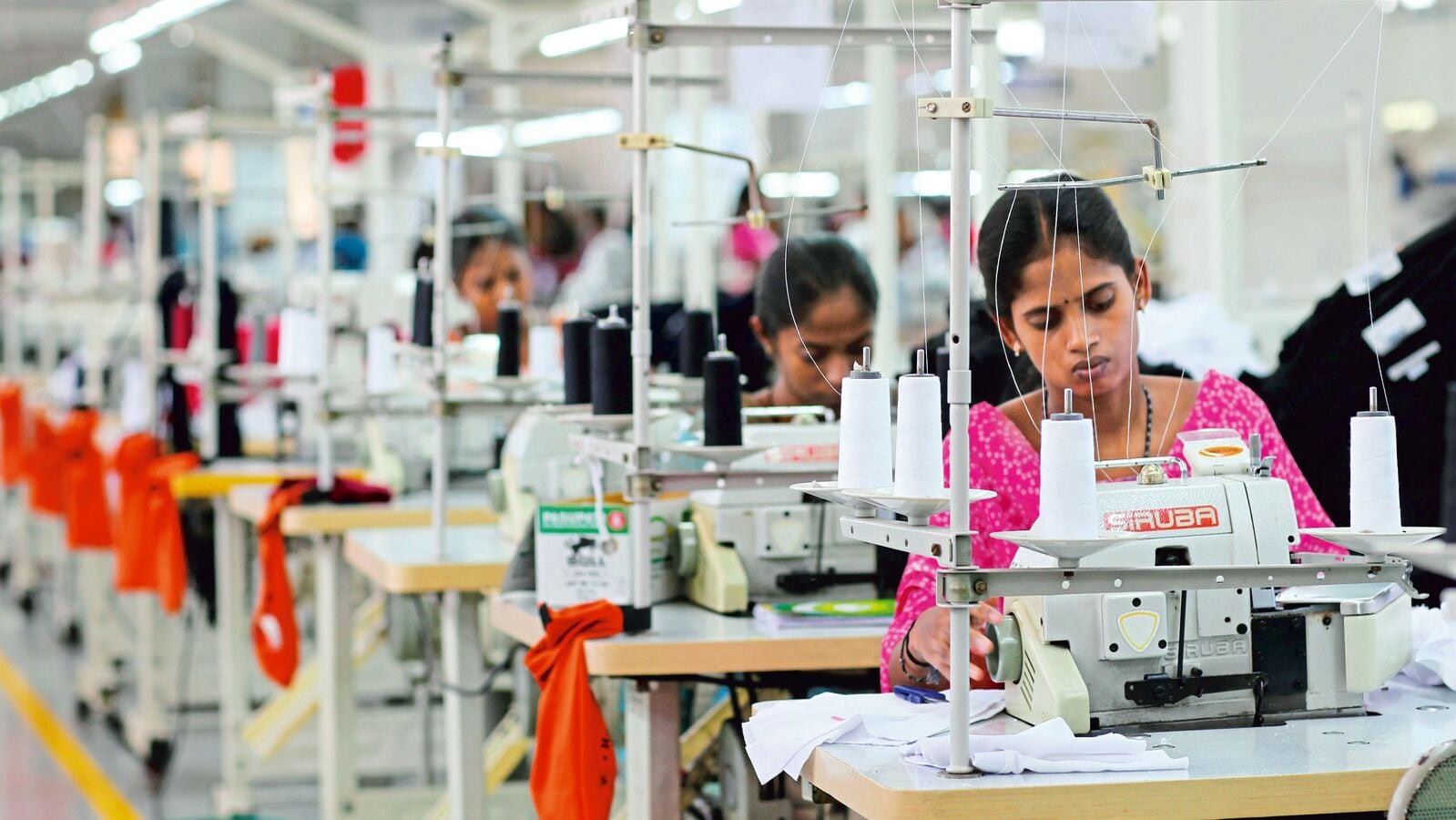
The exemption comes at a critical time, with Indian textile and apparel exporters facing shrinking orders and rising competition from Vietnam, Bangladesh, and Mexico. India’s textile exports to the US were valued at $10.44 billion in FY23, slipped slightly to $10.02 billion in FY24, and rose again to $10.91 billion in FY25.
Overall textile exports from India stood at $35.55 billion in FY23, $34.40 billion in FY24, and $36.55 billion in FY25. The US remained India’s largest market, accounting for 29.4% of total textile exports in FY23, 29.1% in FY24, and 29.9% in FY25.
The US is the single largest market for India’s textile and apparel, accounting for almost 28% of exports. China is the biggest supplier of textile and apparel to the US, followed by Vietnam, India and Bangladesh. At 20% each, the current US tariffs for Vietnam and Bangladesh are significantly lower than those imposed on India.
In July, India signed the Comprehensive Economic and Trade Agreement (CETA) with the UK, which will ensure that India’s textile and apparel exports no longer face a duty disadvantage in the UK market, said Mehra. The CETA is expected to become operational in 2026.
“Cotton, being an essential part of textile manufacturing, accounts for nearly 60% of India’s total fibre consumption. This exemption will help us manage raw material cost pressures and ensure stable access to quality inputs,” said Dharmesh Dattani, chief financial officer (CFO) of Vishal Fabrics Ltd, a denim and apparel fabric exporter.
“Further, we will be able to ensure timely delivery of orders because cotton yarn will be available on time at a slightly lower price. By passing on some benefits to our customers, we can secure more orders,” Dattani said.
Rahul Mehra, chief mentor, Clothing Manufacturers Association of India, said, “The duty benefit on using US-origin inputs will provide some relief for Indian exporters facing steep tariffs in the American market. By raising the share of US cotton in finished products, manufacturers can partially offset the duty impact and keep Indian apparel price-competitive compared to suppliers from countries such as Vietnam, Bangladesh and Mexico.”
What’s at risk
The high tariff has put at risk the future of India’s textile and apparel exporters, caused India to lose foreign-exchange earnings, threatened countless jobs, and hurt the government’s chances of achieving its target of $100 billion in textile and apparel exports by 2030.
The textile and apparel industry contributes around 2% of India’s GDP and remains one of the largest sources of employment in the country.
On 18 August the government exempted cotton from import duty for 40 days, until 30 September. On 28 August the exemption was extended to 31 December. Since February 2021, cotton imports had been subject to an 11% duty—comprising 5% basic customs duty and 5% agriculture infrastructure and development cess.
According to commerce ministry data, cotton imports surged 107.4% from $579.2 million in FY24 to $1.20 billion in FY25. The major suppliers last year included Australia ($258.2 million), the US ($234.1 million), Brazil ($180.8 million), and Egypt ($116.3 million).
“Nearly all of the $1.20 billion worth of cotton imported in FY25 consists of fibre staple length of 28 mm or more. Since India already permits duty-free imports of 51,000 MT (metric tonnes) of such cotton from Australia under the ECTA, the main beneficiary of the wider duty exemption will be the US, which is India’s second-largest supplier,” said Ajay Srivastava, co-founder, Global Trade Research Initiative, a think tank.