




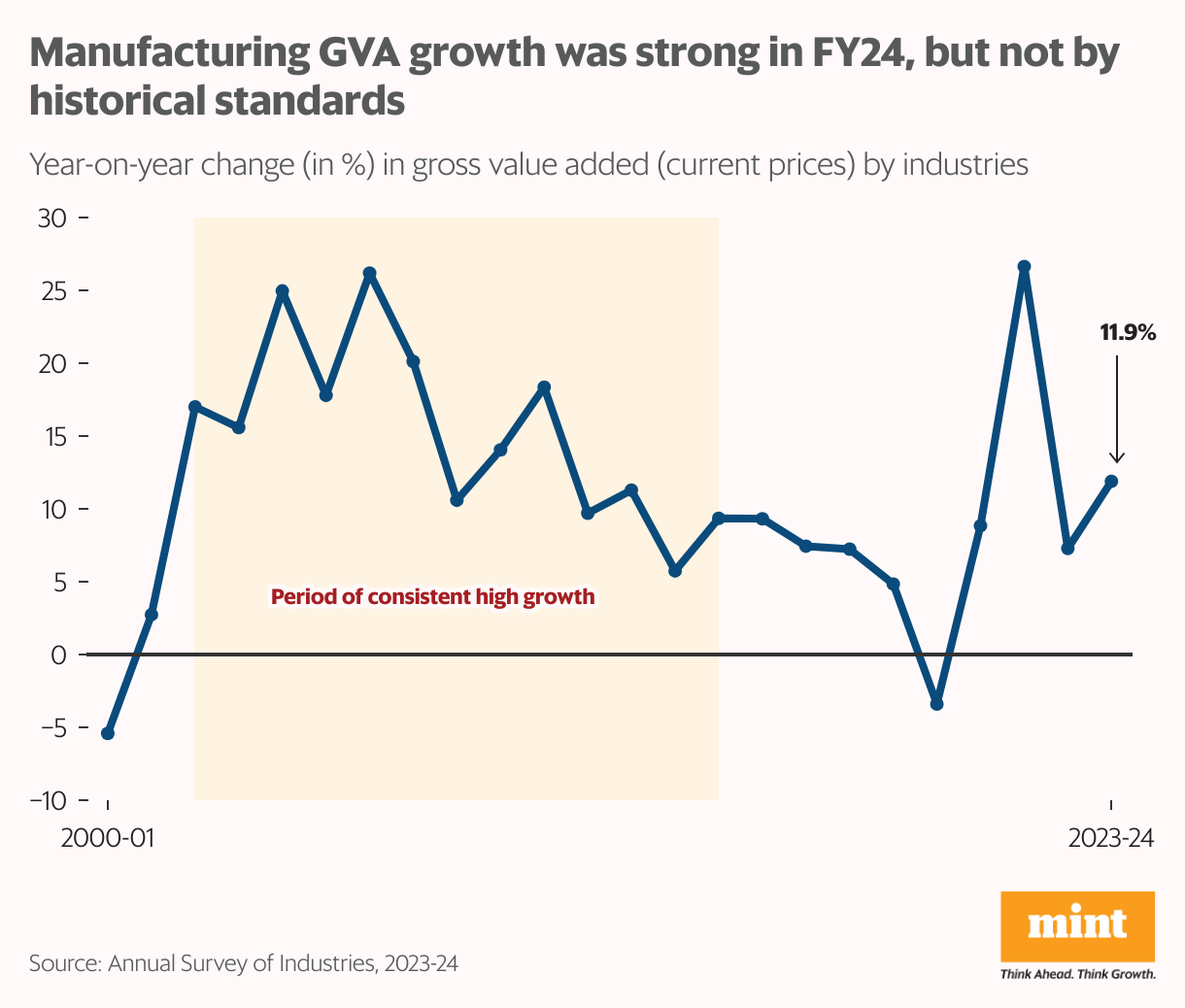
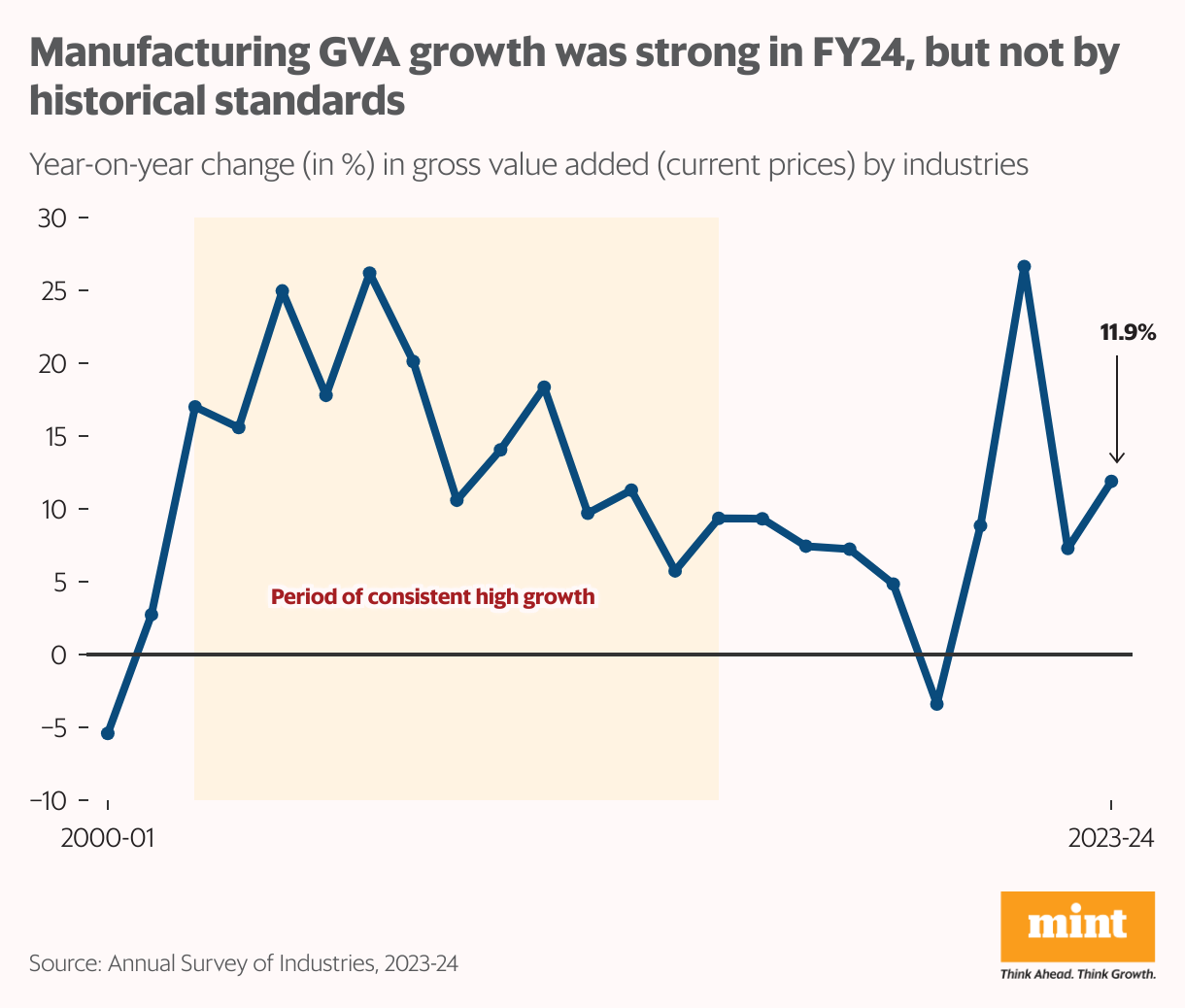
India’s manufacturing sector recorded 11.9% growth in gross value added (GVA) in 2023-24 compared to 7.3% in the previous year, showed the results of the latest Annual Survey of Industries (ASI) released by the statistics ministry on Wednesday.
While this figure would be considered robust—the second-highest growth rate in the past decade—it pales in comparison to a a nearly 17% average growth rate between FY03 and FY13. Overall, the average growth rate recorded between FY15 and FY24 was around 9%.
The FY24 GVA growth was broadly in line with the 11.2% nominal GVA growth rate reported by the national accounts statistics (NAS), which releases gross domestic product (GDP) data. In FY25 nominal GVA growth from NAS was 9.52%, suggesting a deterioration.
The Annual Survey of Industries covers units in the organized manufacturing sector, which are registered under the Factories Act, 1948. These includes units employing 10 or more workers using power and those employing 20 or more workers without using power. It also covers registered bidi and cigar manufacturing facilities, and electricity undertakings not registered with the Central Electricity Authority (CEA). The field work for this survey was carried out between October 2024 and June 2025.
Productivity growth declines
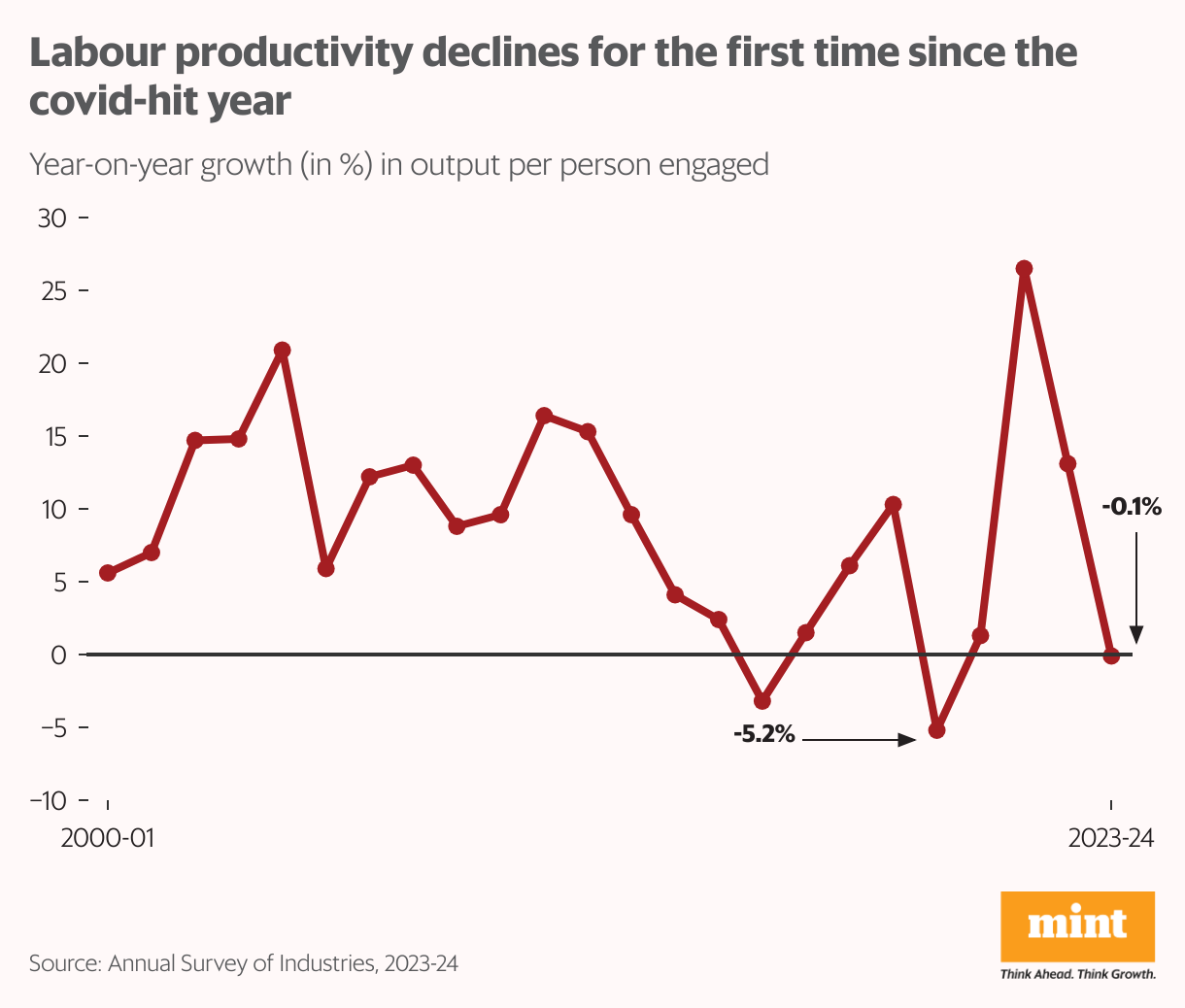
The worrying part of industrial activity in FY24 was the lost momentum in worker productivity. Growth in output per person engaged declined for the first time since FY20. The decline was only marginal at 0.1%, but sharply lower than the 13.1% growth in FY23. ‘Persons engaged’ include employees as well as company proprietors who are involved in the functioning of a factory, giving a broader definition of all stakeholders involved in running a factory establishment.
On the employment front, the total people engaged by the manufacturing sector rose to 19.6 million, as the sector created 1.1 million additional jobs compared to FY23, leading to 5.9% growth.
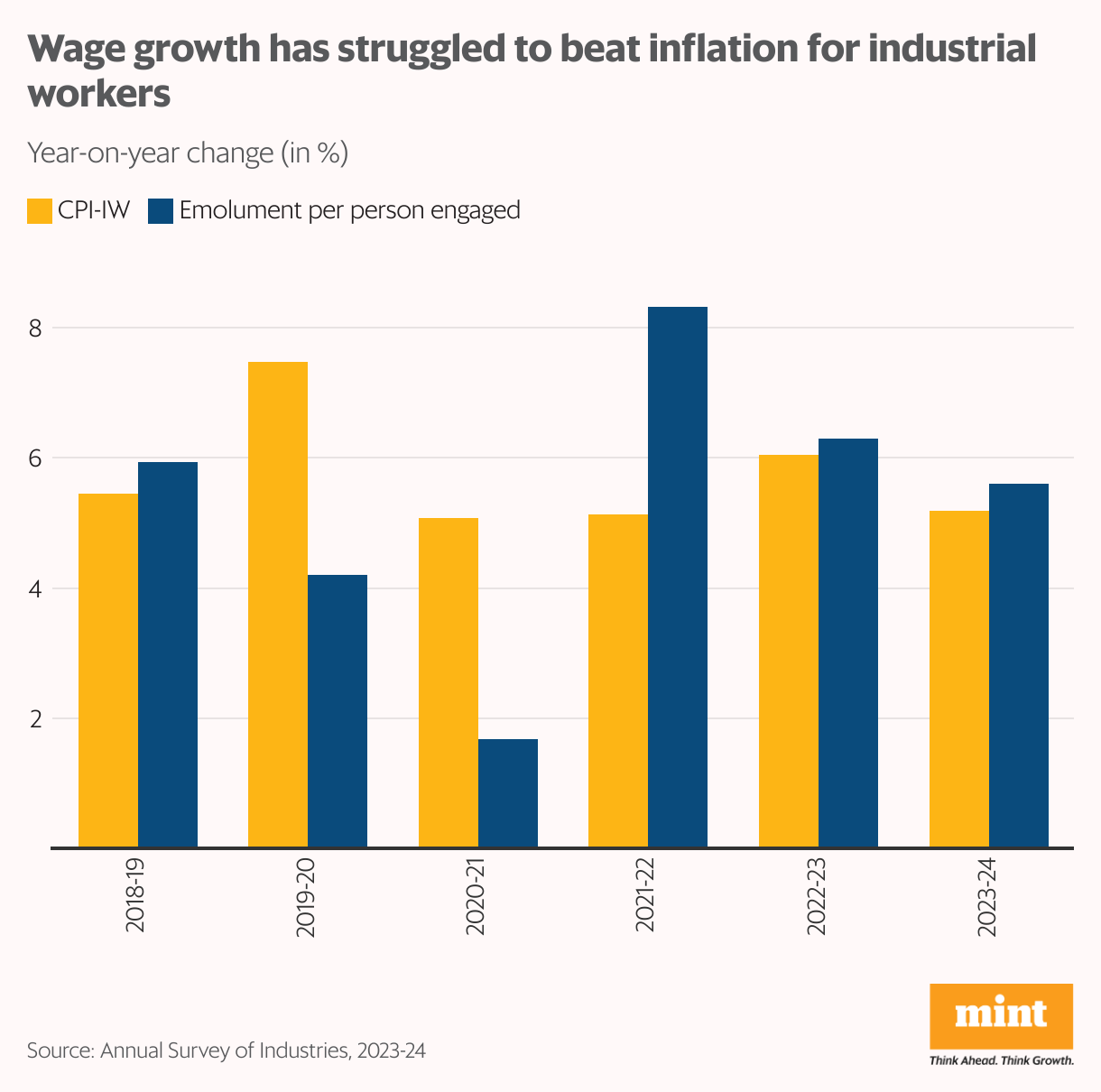
However, emoluments per person (defined as the total of wages and salaries, including bonuses)in the industrial sector have struggled to beat inflation in recent years, highlighting the wider issue of low wage growth in the country. The average emolument per person increased 5.61% to ₹365,748 in FY24. This was only a tad higher than 5.19% inflation for industrial workers as recorded through the consumer price index for industrial workers (CPI-IW).
State-wise, Tamil Nadu remained a manufacturing king, with the highest share of factories (15.4%) and employees (15.2%). However, when it came to industrial output, Gujarat and Maharashtra raced ahead. Tamil Nadu, Maharashtra and Gujarat are among the most prosperous states in the country, mainly due to robust industrial activity. These three states drove the manufacturing sector to a large extent, accounting for over 40% of total factories and total output, indicating significant concentration.
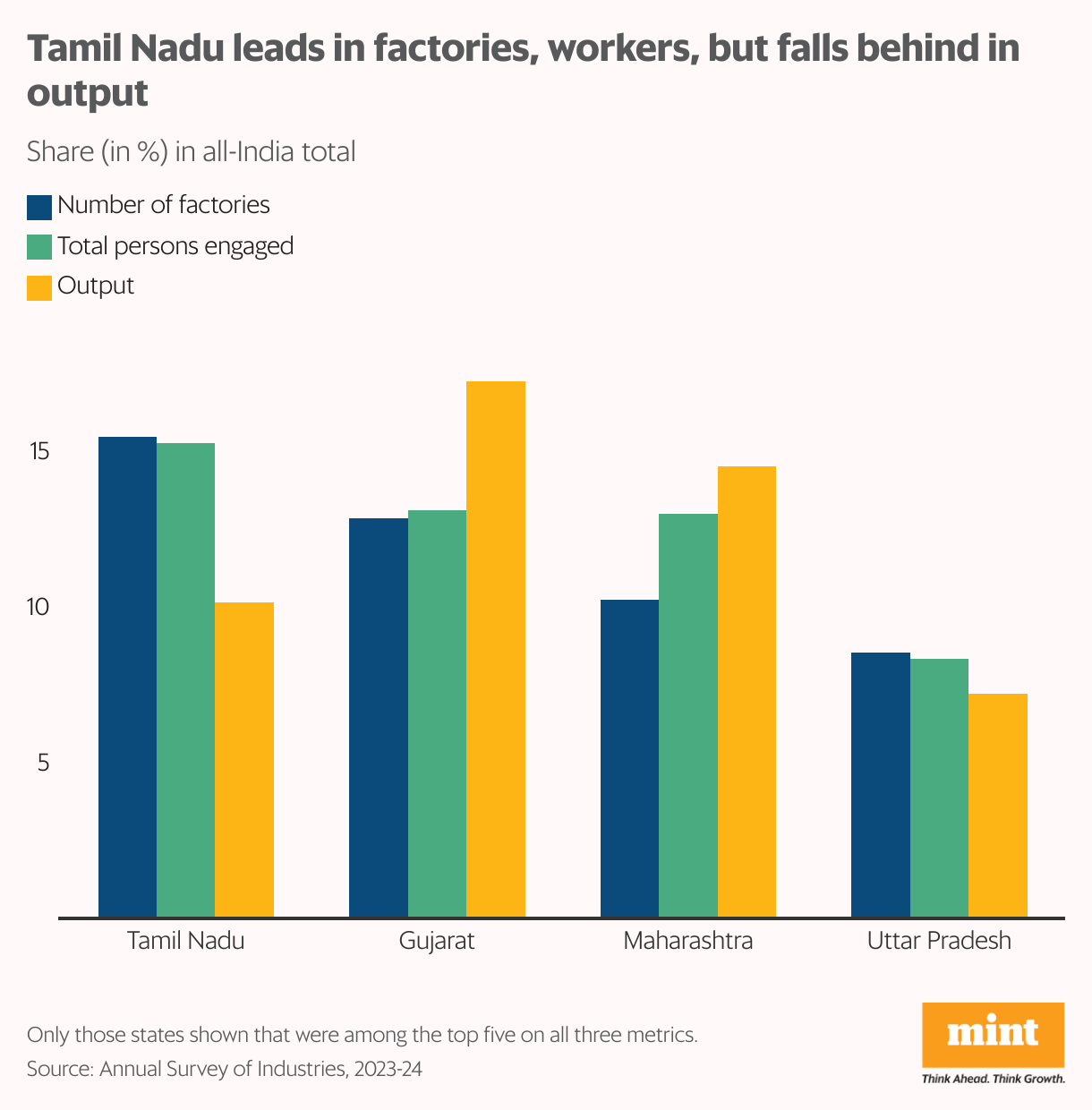
Uttar Pradesh, despite having the second-lowest per capita income of ₹50,341, made it to the top five states with significant industrial activity. The most populous states in the country had a 8.5% share in total factories and 8.3% share in total persons employed.
Sector-wise, the food industry engaged the largest number of workers, followed by textiles and basic metals. The food industry also accounted for the largest share of factories (16.0%) and employment (11.1%), while basic metals fared the best in terms of output (14.5%) and fixed capital (17.4%).