




Despite these challenges, people in the industry are already talking about 6G – the next technology on the telecom horizon – and how it will boost the Indian economy. Mint explains what’s happening with 6G, why 5G is hard to make money from, the health of the telecom sector, and what leading in 6G would mean for India.
Where is India on 5G?
India started 5G services on 1 October 2022. Since then, the number of people using 5G has grown fast, to be sure. By June 2025, over 365 million people in India were using 5G, which is about 32% of all mobile users of 1.16 billion. With telecom operators Reliance Jio and Bharti Airtel taking the lead, 5G services cover 99.6% of the country’s districts, according to a government release in June.
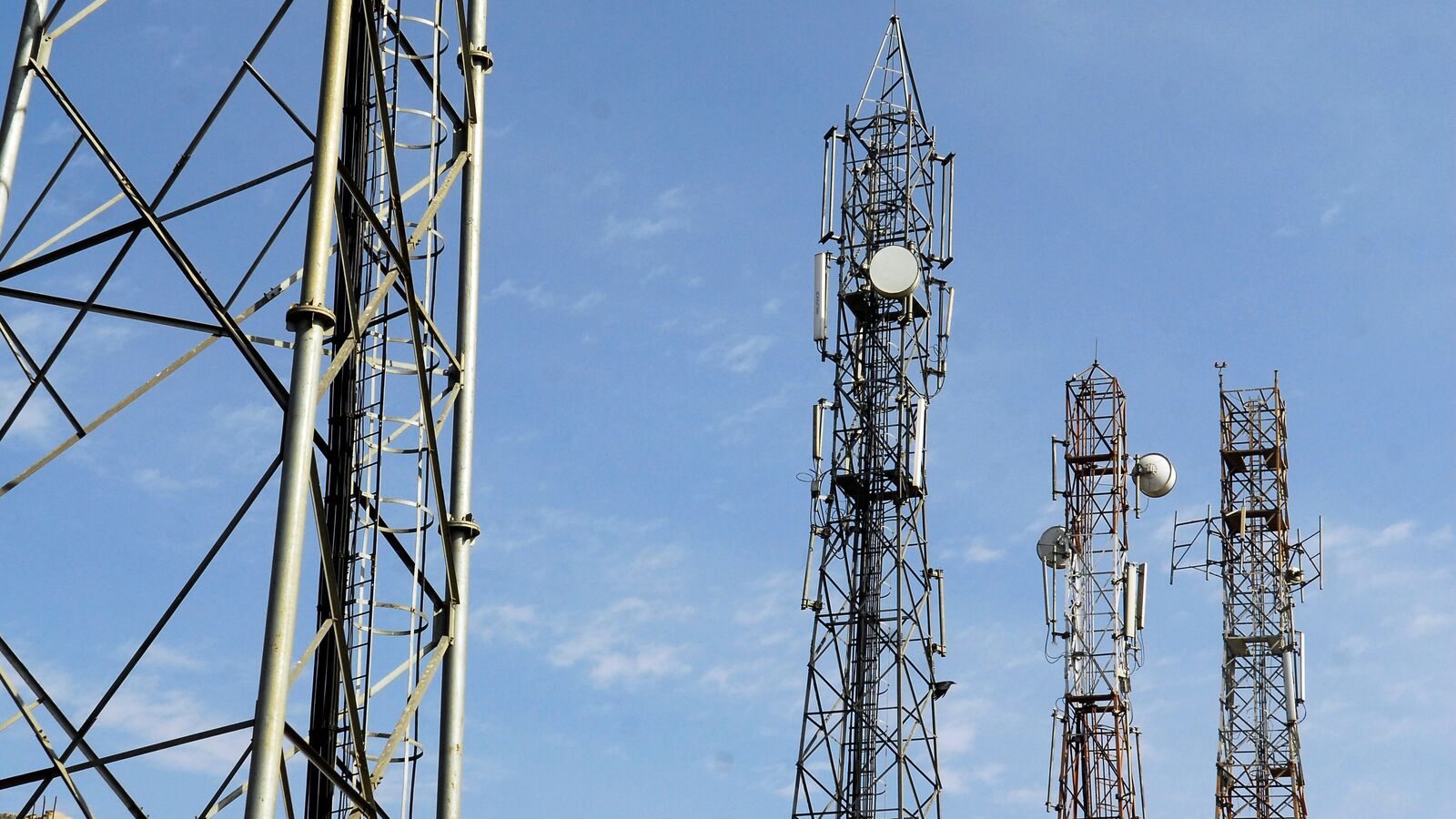
For Airtel, 5G sites already cater to 36% of the total network traffic enabling some traffic offload from the existing 4G radio towers and base stations. But users are still getting used to 5G, and it will take some more time before everyone uses it fully.
Estimates for India’s 5G user base by 2030 vary widely. While GSMA, which represents mobile operators globally, projects around 641 million users by 2030 – roughly half the mobile population – Ericsson Mobility Report presents more optimism, expecting 980 million 5G subscriptions, or 74% of the total. The actual number, however, will depend on pricing, device availability, and how quickly 5G use cases mature.
Why are telcos struggling to monetise 5G?
Even though the rollout of 5G networks by the operators has been rapid, the companies are finding it hard to make enough money from it. On the consumer side, a simple reason why 5G has not seen much return on investments for operators, is that people don’t feel much difference between 4G and 5G, so they don’t want to pay more for 5G plans. This despite a spike in data consumption post launch of 5G in the country.
While 5G is being offered unlimited with recharge plans, Jio and Airtel have in the past increased the minimum recharge plan to get unlimited 5G. For example, Jio now provides unlimited 5G for plans with 2 GB per day data, which starts at ₹198 for 14 days and ₹349 for 28 days, as compared to ₹239 plan earlier for 28 days. Similarly, Airtel gives unlimited 5G with its ₹349 plan for a similar use-by period with 1.5 GB per day data.
Experts said business assumption on 5G has gone wrong as it was expected that enterprises use cases would come in the form of sensors in an internet of things (IoT) enabled world. However, those have not come. B2C monetisation was never expected as there is no major difference between 4G and 5G speeds.
Operators are banking on fixed wireless access, or FWA, which is a way of providing home broadband on 5G, to monetise 5G services and recoup their return on investments. According to government data, nearly ₹4.5 trillion have been invested in rolling out the 5G network. Reliance Jio is also exploring 5G network slicing as a solution to monetise 5G. This involves creating multiple virtual networks on top of a single physical 5G network —like slicing a pizza into different pieces, where each slice is customized for a different need. Each slice can be tailored to support different services with their own performance levels — such as speed, latency, security, and reliability.
Is the 5G monetisation problem with India only?
5G monetisation is a global challenge — not just an Indian problem. Telecom companies around the world have spent hundreds of billions of dollars rolling out 5G, but many are still struggling to make enough money from it. This is because it takes time for people and businesses to start using it in ways that generate more money for telecom companies. Even in advanced markets like the US, South Korea, and Europe, operators are finding it hard to recover their investments. For example, in South Korea, one of the earliest 5G adopters, telecom companies have introduced premium video or gaming bundles to encourage users to pay more, because 5G alone isn’t driving higher revenues. In Europe, countries like France and Germany have reported high 5G rollout costs but limited returns.
In a recent report, the Bharat 6G Alliance, a government-backed group working on 6G research, said that India is just starting to test network slicing, which helps deliver better and more customised internet services to businesses. In the next few years, this could be used along with AR/VR (augmented and virtual reality) to create more interactive digital experiences. The report says that large-scale use of this tech is expected by 2027-28, when 5G Advanced (5GA) networks roll out. Also, with new XR (extended reality) devices expected to arrive around 2026–27, immersive services like virtual classrooms or 3D shopping could become much more popular in India and around the world.
What is 6G and why is it needed?
6G is the next big wireless technology, expected to come around 2030. It will be 5-10 times faster than 5G and will have almost no delay when sending information. With 6G, things like hologram calls, super-realistic virtual reality, and smarter cities will be possible. This means better internet, improved health care, better education, and many new technologies for everyday life.
India’s use of mobile data is growing very fast. Between 2024 and 2030, the amount of data people use on their phones is expected to triple — from 340 exabytes in 2024 to 645 exabytes in 2027 and reach 1,068 exabytes by 2030, Bharat 6G Alliance said in its report.
As more people use 5G phones and the internet more, the current network won’t be able to keep up. So, India will need to keep building more 5G coverage and find more space on the airwaves to handle all this extra data after 2027.
Some of this extra data can be managed by making better use of the existing wireless spectrum, but new space will also be needed. After 2028, India will need to put up more network towers and equipment to handle the growth, and by 2030, it will be ready to switch to 6G technology with more spectrum, which can deliver much faster internet speeds, according to the Bharat 6G Alliance.
How crucial is it for India to take the lead in 6G?
At the recently concluded India Mobile Congress, communications minister Jyotiraditya Scindia said, “India is here not to follow, but to co-lead the 6G revolution”. The government is targeting ownership of 10% of global 6G patents, setting standards for the future of connectivity.
Right now, the global rules for 6G technology are being discussed at the International Telecommunication Union (ITU), the group that sets worldwide standards for how wireless networks work. One of the reasons for India to move fast on 6G technology is that if Indian standards and technologies are accepted by the ITU, it means India’s approach to 6G will be used by countries all over the world. This gives India a chance to influence how 6G networks are built and used globally, making sure the technology supports India’s needs and strengths.
But does India’s telecom sector have good financial health?
India’s telecom sector is mostly dominated by the big two, Jio and Airtel, which between them have a 75% subscriber market share. Another big player, Vodafone Idea has been struggling to survive because it faces high debts and also losing subscribers to competition. While the two operators have been seeing an improvement in financials especially after a huge 5G capex, Vodafone Idea continues to be in losses. The fourth operator, state-run BSNL, is also under losses and is currently only rolling out its 4G network across the country.
According to sector experts, since 6G is yet to take another five-six years at least, telecom operators would have some momentum on 5G monetisation by then. However, it will be crucial to see if Vodafone Idea gets any concessions from the courts on its pending dues to the government — if nothing, to maintain a four-player telecom sector.
Can telcos launch 6G in absence of 5G monetisation?
It will be hard for companies to start 6G if they aren’t making enough money from 5G. Developing 6G needs a lot of money, so telecom companies need to earn well from 5G first. However, they can still start researching and planning for 6G while trying to make 5G more profitable. In March, the Cellular Operators Association of India (COAI) had said, the absence of 5G use cases and its slow monetisation, could delay the launch of 6G services in the country beyond the target of 2030. According to the operators, the work is also needed to look at the kind of applications that will consume 6G to avoid a similar situation like 5G, wherein 6G technology will be there without any consumers.