




New Delhi: India has identified manufacturing, renewable energy and auto components for relaxing covid-era curbs on Chinese investments, as the Asian heavyweights warm up to each other under the heat of Trump’s tariffs.
The government is considering a plan to allow 20-25% Chinese investments in these sectors through the automatic route, two officials directly involved in the process told Mint on condition of anonymity.
Under India’s Press Note 3 notification in 2020, investments from neighbouring countries require New Delhi’s approval involving tight scrutiny, a move targeted primarily at China. But US President Donald Trump’s increasing tariff pressure on China and India has pushed the two economic giants closer.
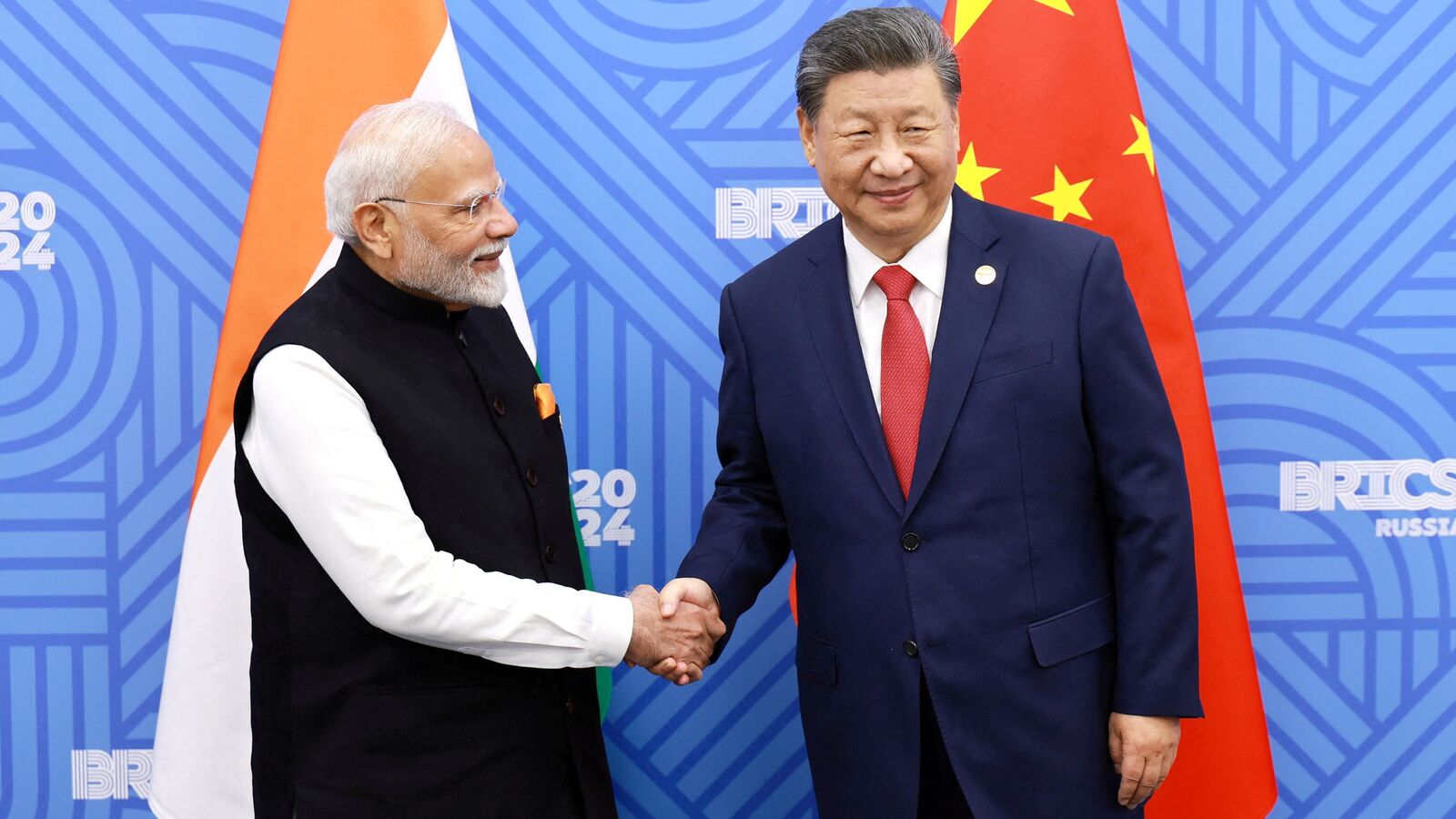
The relaxations in India’s foreign direct investment (FDI) rules are expected to be announced shortly, as Prime Minister Narendra Modi visits China for the Shanghai Cooperation Organization summit, the officials said.
“Sectors such as defence, security, strategic installations, exploration, and telecom installations have been kept out of the proposal,” one of them said.
“It is being considered to tweak the PN-3 after coming to the conclusion that allowing investments from Chinese firms could generate employment opportunities in India, since many of these companies already operate large manufacturing units in China and export their goods to the Indian market,” the official added.
However, the investments will be subject to strict scrutiny and surveillance, the second official said. Complaints related to Chinese investments will be reviewed on a case-to-case basis, and if a Chinese company invests in multiple sectors, scrutiny will apply only to the specific part under complaint, the official added.
In manufacturing, Chinese funds would be allowed in the production of textile machinery, farm equipment, electrical goods, and auto components, the officials said.
On Friday, the government held two meetings over the issue of FDI from Chinese firms—one in the commerce ministry and the other by government think tank NITI Aayog, as per the officials.
Mint reported on 18 August that India planned to ease restrictions on Chinese investments in select sectors to revive capital inflows and restore supply chains.
India is also looking to create a more industry-friendly ecosystem to boost FDI to $100 billion from about $80 billion now. Currently, 100% FDI under the automatic route is allowed in most sectors, except a few strategically important ones such as defence and atomic energy.
Queries sent to the spokespersons of the ministries of commerce, external affairs remained unanswered.
Pragmatic move
India’s softer stance on Chinese investment signals a pragmatic shift aimed at securing new economic opportunities at a time when external pressures are mounting.
US President Donald Trump has imposed 50% tariffs on Indian goods, the highest globally, including a 25% penalty for buying Russian oil. The first set of duties came into effect on 7 August and the additional 25% on 27 August.
“The 50% US tariff on Indian exports is expected to hurt labour-intensive industries such as textiles, apparel, leather and engineering goods, forcing New Delhi to look for alternative markets and capital inflows,” said Vinod Kumar, president, India SME Forum.
India is also weighing the option of joining the China-led Regional Comprehensive Economic Partnership, the world’s largest trade group comprising 15 countries.
Joining RCEP could give Indian exporters preferential access to a vast market bloc even as global trade dynamics are being reshaped by US protectionism, Mint reported on 21 August.
“Over five years since PN3’s introduction, shifting geopolitical dynamics demand a policy relook,” said Sunil Kumar, partner, tax and regulatory practice, EY India. “Encouraging FDI in non-sensitive sectors like manufacturing with technology transfer, job creation, export promotion, and majority Indian ownership is vital.”
India has already resumed issuing tourist visas to Chinese nationals after a 5-year gap. New Delhi is also preparing to restart direct flights to Beijing, restoring air connectivity that has remained suspended since the covid-19 pandemic.
India restricted Chinese investments after a deadly clash between the two sides in Ladakh’s Galwan Valley in 2020. Still, trade continued to grow as India relies on its neighbour for imports of pharmaceutical raw materials to electronic parts.
India’s imports from China increased from $94.57 billion in 2021-22 to $113.45 billion in FY25, while exports to China declined from $21.26 billion to $14.25 billion.
In the latest April-June first quarter, shipments from China increased 13.1% from a year earlier to $40.66 billion, while exports to China jumped 20% to $5.76 billion.
Enhancing efficiency and competitiveness
Industry stakeholders and experts welcomed India’s plans to ease FDI restrictions on Chinese investments in manufacturing, renewable energy, and auto components, sectors that could be affected by Trump’s tariffs.
“In the textile and apparel sector manufacturing value chain, we rely heavily on imports for apparel and weaving machinery, so any investment in this area will help us build capacity and make our products more efficient and competitive in the global market,” said Prabhu Dhamodharan, convenor, Indian Texpreneurs Federation (ITF), a textile entrepreneurs body based out of Coimbatore.
“Another important aspect is technology partnership in man-made fiber processing, where India is relatively weak but China has mastered the technology. Collaborations in this area could bring about a significant transformation,” Dhamodharan told Mint over phone.
Jatin Arya, director, CareEdge Ratings, said easing investment rules for the manufacturing and renewable energy sectors would not only enhance capital flow but also boost availability of technology and skilled manpower for components such as solar cells, wafer and ingots.
“While India already has adequate capacity in solar module manufacturing, we still need to build scale and expertise in backward integration for these sub-components,” Arya said. “Similarly, greater support for domestic boiler manufacturing could widen the supply base for thermal power projects, where capacity expansion is currently constrained by limited availability.”