




As Prime Minister Narendra Modi and his British counterpart Keir Starmer prepare to announce the landmark India-UK Free Trade Agreement (FTA) formally, apart from trade, air connectivity is also set to expand in the coming months between the two countries. London has always been the aspirational travel hub for Indians for ages.
Also Read: PM Modi in London LIVE
Historically, Air India has served London even in an era when it took multiple stops to reach London, transitioning to a non-stop flight when the jet era began and planes could fly that longer. London was also the choice of expansion for both Jet Airways and Air Sahara when international services were allowed, and both airlines relied on leased aircraft available in the market to start services. The story was no different for Kingfisher Airlines.
Over a decade later, connectivity has now expanded beyond London and is set to expand further. Data shared by Cirium, an aviation analytics company, exclusively for this article, shows that British Airways and Virgin Atlantic together operate 81 flights a week between London and points in India, while IndiGo and Air India operate 55 weekly frequencies to the UK. Air India has scaled back its UK operation temporarily. In the winter schedule beginning the end of October, the total frequency between the two countries increases to 166 flights per week from 136 currently, as Air Canada reinstates its flight connecting London Heathrow to Mumbai and TUI Airways returns with its seasonal flights to Goa.
Indian carriers have gone beyond London
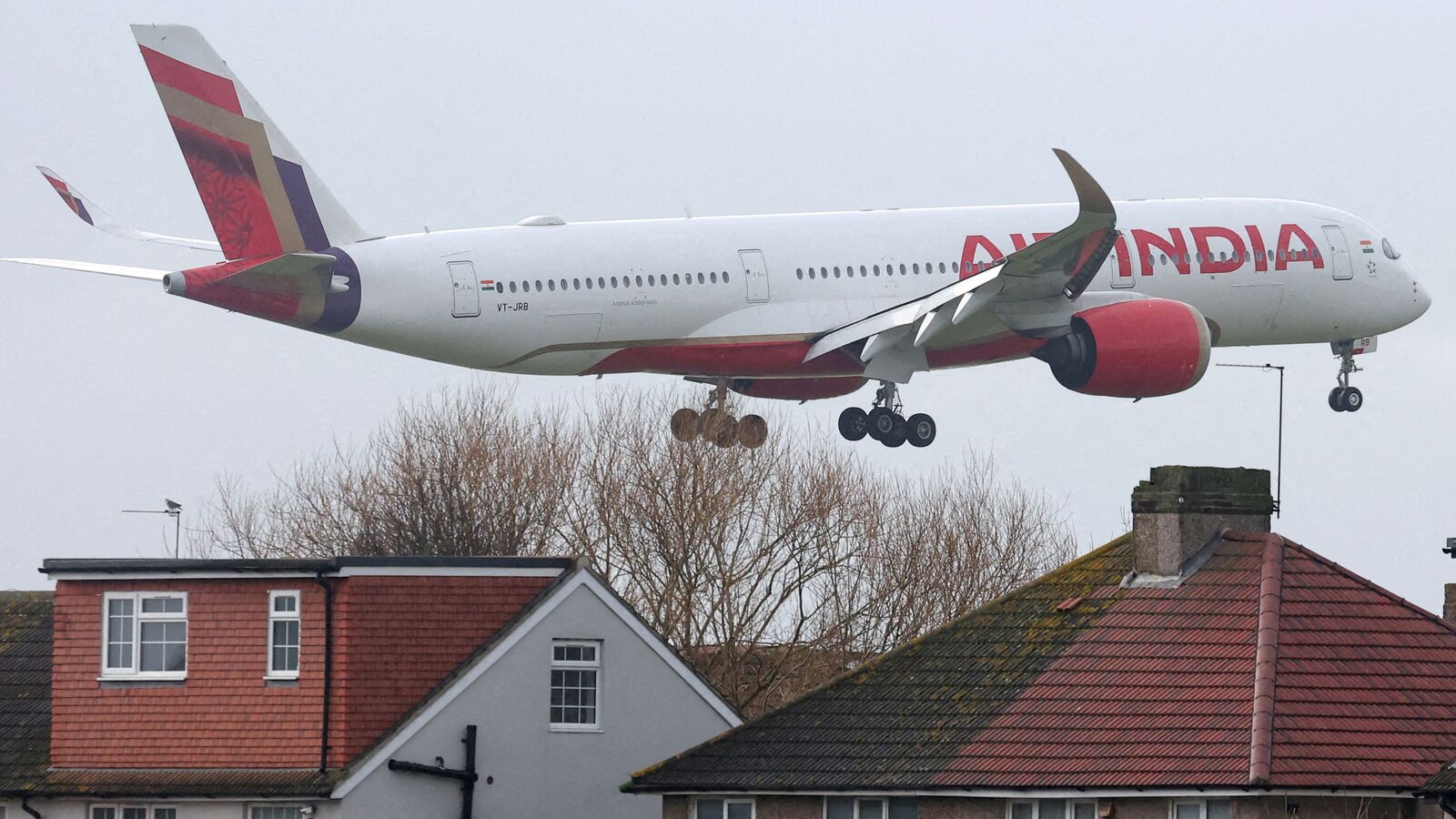
Air India and IndiGo are the Indian carriers that operate to the United Kingdom. Both have gone beyond London with Air India operating to Birmingham from Amritsar and Delhi, and IndiGo launching operations to the UK with flights to Manchester. IndiGo has announced that London will be its new destination soon but has remained mum about place of origin in India or the airport where it will operate in London.
Indian carriers cater to point-to-point traffic with feed largely from different points in India and some from ASEAN. However, British carriers not only cater to traffic to the UK but also look for traffic onwards to Canada and the USA, which is a lucrative market, thanks to limited non-stop capacity between India and North America, partially due to the US carriers not flying over Russia and thus having limited options to add capacity to India.
British carriers still in poll position
With 81 flights a week now and 95 planned in winter, the British carriers remain in pole position on the route led by British Airways, which intends to operate thrice a day to Mumbai, twice daily to Delhi and a daily each to Bengaluru, Chennai and Hyderabad.
London Heathrow the bottleneck
The Bilateral Air Services Agreement between India and the UK is unusual where it caps flights to London Heathrow but allows flights to other airports in London like Stansted or Gatwick. London Heathrow is considered the busiest airport in the world with no scope for expansion. The airport also allows sale of slots unlike most airports and airlines rake up millions by selling the slots. Indian carriers have filed for additional slots at Heathrow over the last many years but have never been granted slots. One of the prime reasons why airlines have not been able to add capacity.
More often than not, diplomatic efforts help at such times, and will the high-level visit from the Prime Minister give a boost to such efforts and resolve the issues so as to help Air India and IndiGo launch more flights to London Heathrow?
Tail Note
The market between India and the UK is expected to cater to over 3 million passengers annually with over half of those flying indirect via one of the Middle Eastern hubs. Emirates flies 11 times a day to three airports in London from Dubai, as does Qatar Airways from Doha to two airports in London.
There remains demand for additional non-stop flights to London from various cities in India and also the metro routes, which are underserved compared to the demand and passenger numbers. While India remains adamant about not increasing seats to the Middle East, the impact is being felt on flights to Europe as well.