




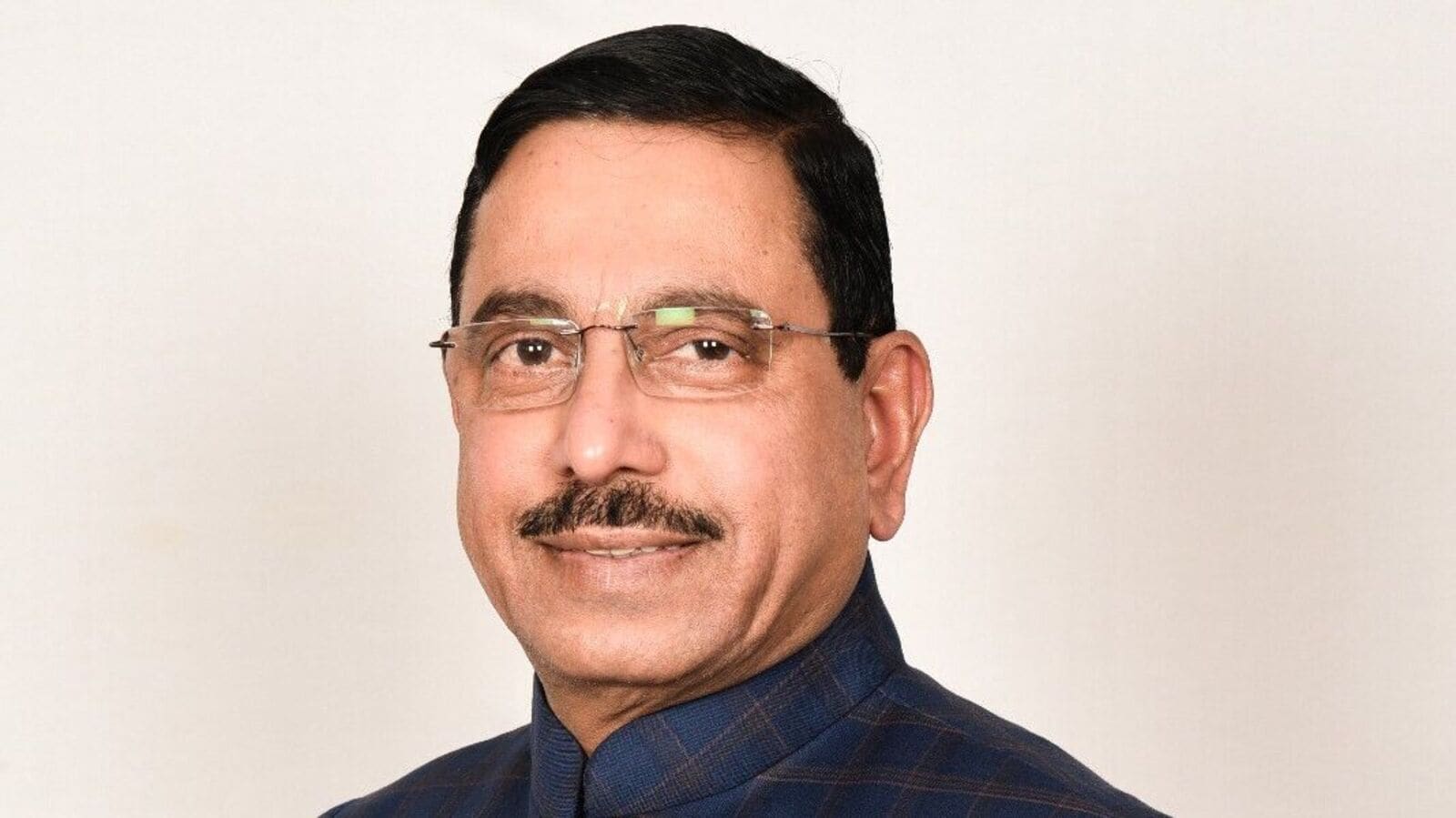
New Delhi: India is working towards a more accurate weather forecasting system that would aid in ensuring reliable renewable power supply and electricity grid stability, said Union minister for new and renewable energy Pralhad Joshi.
Addressing the 5th Mint Sustainability Summit, Joshi said although weather forecasting has improved over the years, greater accuracy is required to ensure adequate renewable power generation in the energy mix, which includes solar, wind, and hydro sources.
“Improving the accuracy of the weather forecasting system is important… relatively, it has improved very much from the past. However, as far as the accuracy required for renewable energy, we still need further achievement,” Joshi said on Wednesday. “I assure that the ministry will work on that also. We will see that a more accurate weather forecasting system (is in place)… based on which grid stability can be better ensured.”
Joshi noted that India has surpassed Japan to become the third-largest solar power generator globally, and exuded confidence that the country is on track to achieve its ambitious 500 GW non-fossil power capacity target by 2030.
India’s current non-fossil power generation capacity stands at 295.89 GW, including 8.78 GW of nuclear power capacity.
Between 1 January and 30 June, India added 22 GW of solar and wind power capacity, and by the end of the year, the annual addition may reach 39-43 GW, he said.
Spain and Portugal, which source 80% of their power from green sources, witnessed nationwide blackouts recently. India, too, has witnessed instances of grid congestion due to high solar power generation or cloud cover, raising concerns of grid failure.
“We understand that the rapid increase in the solar and wind capacity also brings with it a challenge of inherent intermittency of renewable generation. To address this, the government has rolled out a series of proactive measures. We have established renewable energy management centres across the country to ensure better forecasting and real-time monitoring of the renewable generation,” Joshi said.
The minister added India’s electricity demand and supply is now more efficiently balanced by bringing in dispatchable sources like hydro and thermal power whenever supply from wind and solar plants go down.
On India’s green power capacity addition, the minister said 186.3 GW of projects are under implementation and another 67.08 GW have been tendered. The strong pipeline of projects “ensures that we will surpass our (renewable power capacity) target”, he said.
Clearing the backlog
Joshi also stressed on India’s leadership in the green energy and climate space.
“India is not dealing (with climate change), it is leading. Overall we have achieved 120 GW of solar installed capacity and module capacity, which at one point of time was negligible… Today, we have 100 GW module capacity in the country,” he said.
On the issue of unsigned power sale and power purchase agreements, the minister said the government is taking measures to clear the backlog.
Power purchase agreements (PPAs) are signed between renewable power developers and renewable energy implementing agencies (REIA), which are the procurers. These buyers then sign power sale agreements (PSAs) with distribution companies, or discoms, to transmit the electricity to industries and homes. PSA and PPAs for about 30 GW of capacity remained unsigned, Mint reported earlier.
“Government has taken several measures to expedite power sale agreements. So far, tariffs have been falling. So everybody (discoms) just keeps waiting for the subsequent tenders. So we have also taken several steps to bring stability in this regard. I think you will see further good results very shortly,” Joshi said, adding that he holds regular meetings with state chief ministers and energy ministers on complying with renewable energy purchase obligations.
The minister also said the Union government has suggested the renewable energy implementing agencies, which include Solar Energy Corporation of India, NTPC, NHPC, and SJVN, aggregate demand from discoms and other consumers before inviting tenders, which would make the projects more attractive and bankable.
“Banks don’t want to lend money because PPAs are not signed. We are trying to address this also,” he added.