




India’s power distribution companies (discoms) returned to profits in FY25, having reported a cumulative ₹2,701-crore profit after tax for the fiscal year, as against a loss of ₹25,553 crore in the year before, the power ministry said on Sunday.
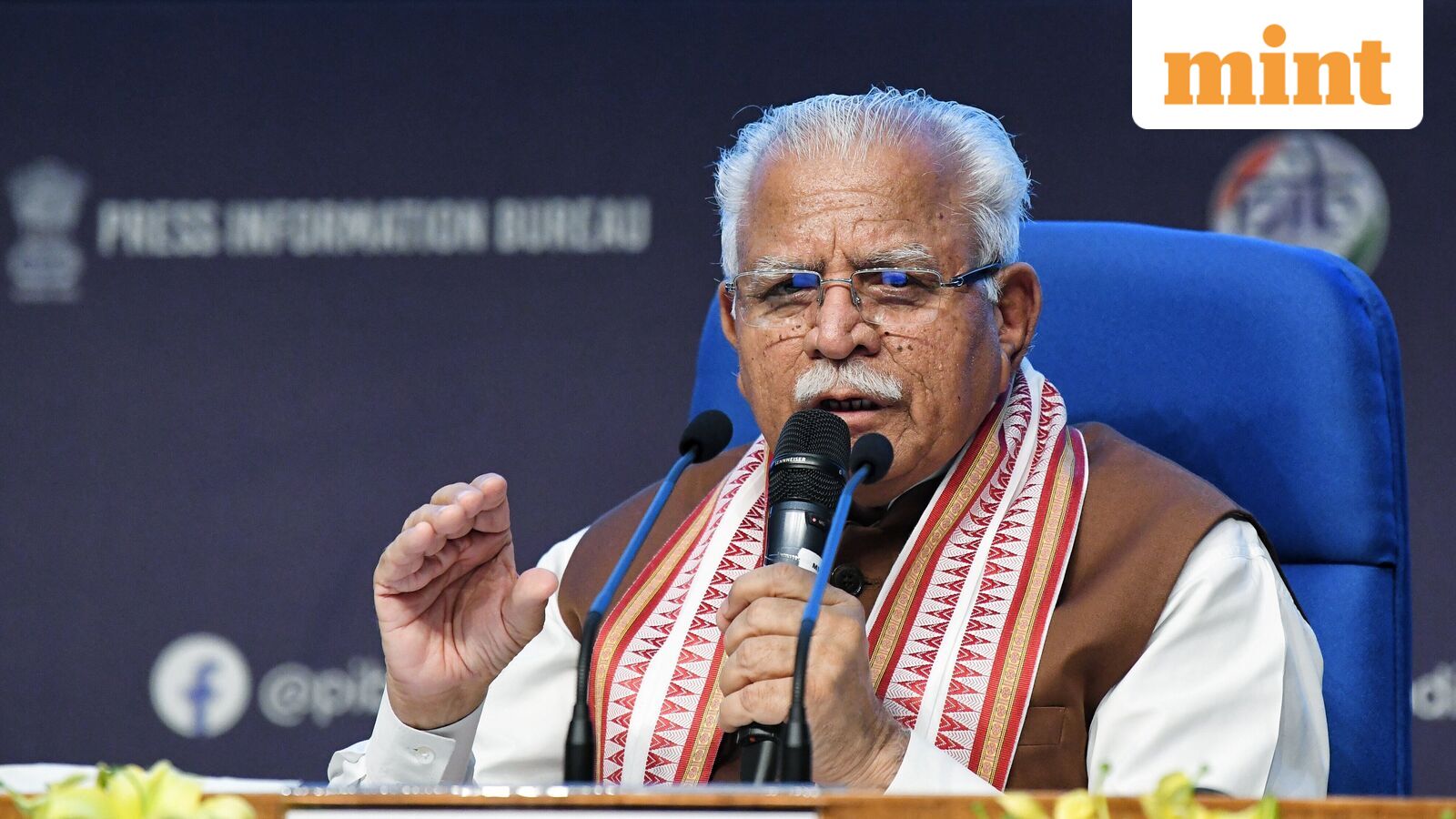
Union power minister Manohar Lal attributed the turnaround to the Centre’s initiatives, including the revamped distribution sector scheme and late payment surcharge rules, said an official statement.
The development is significant as distribution is a crucial segment of India’s power system that caters to consumers, with a key role in the country’s energy transition goals. Discoms have been reeling under financial stress for a number of years and government data shows that they have a cumulative debt of ₹7 trillion.
Describing their financial performance as “a significant turning point for the sector”, the ministry said distribution utilities had been reporting losses for the past several years since the unbundling and corporatization of state electricity boards.
The minister said that the momentum is expected to be sustained on the back of the ongoing deliberations in the group of ministers to improve the financial viability of discoms.
As reported by Mint earlier, the group of ministers on financial viability of discoms has suggested a new scheme, under which discoms would be asked to monetize their assets and come up with public listing of shares. Of the total debt, the panel pegged the total unsustainable debt of discoms at ₹2,74,120 crore.
As reported by Mint earlier, amid high debt and financial stress, several discoms—including those in Uttar Pradesh, Bihar, Assam and West Bengal—have come up with tenders for coal-based power and a few of them have signed power purchase agreements (PPA) at an average tariff of ₹6 per unit, higher than those for renewable and hybrid power.
Amid higher supply of renewable energy—largely solar—discoms are selling renewable energy on electricity exchanges at a price lower than what they had purchased it for.
The ministry said that the aggregate technical & commercial (AT&C) losses have reduced over the years and at the end of the last fiscal, they were at 15.04%. In FY24, the AT&C losses were at 17.6%. AT&C losses refer to the total gap between electricity supplied by a utility and the revenue collected, combining physical power loss (technical) and commercial losses, which include non-payment and billing issues.
Further, the average cost of supply-average revenue realized (ACS-ARR) gap has narrowed to about ₹0.06 per kWh (kilowatt hour or unit) in FY25, compared to ₹0.48 in FY24.
Ratings agency Icra, in a September 2025 report, had said that an average tariff hike of 4.5%, along with reduction in AT&C losses to less than 15% is needed to eliminate the gap between ACS and ARR for profitability.
“Reforms such as the Electricity (Late Payment Surcharge) Rules have led to a 96% reduction in outstanding dues to generating companies—from ₹1,39,947 crore in 2022 to just ₹4,927 crore by January 2026—while bringing down distribution utility payment cycles from 178 days in FY2020-21 to 113 days in FY2024-25,” the ministry said.
India has about 67 discoms, including 16 run by the private sector in Delhi, Mumbai, Odisha, West Bengal, Gujarat, and Dadra and Nagar Haveli.
The government of Uttar Pradesh is currently in the process to privatize two of its discoms. Mint had earlier reported that at least eight firms, including Adani Group, Tata Power Ltd and Greenko Group, are eyeing a majority stake in Purvanchal Vidyut Vitran Nigam Ltd (PUVVNL) and Dakshinanchal Vidyut Vitran Nigam Ltd (DVVNL).
In 2020, the Centre had decided to privatize all electricity discoms in the Union Territories administered directly by it. CESC Ltd won control of the Chandigarh discom, while Torrent Power got the Dadra and Nagar Haveli one. The sales were linked to incentives from the Centre, encouraging discoms to seek new investors.
That year, the government had also announced a reform-linked ₹90,000 crore liquidity-injection into fund-starved discoms as part of a ₹20 trillion stimulus package to revive the economy.
Odisha was the first state to privatize its power distribution sector into four discoms in 1999. This was followed by Delhi, which privatized three of its discoms in July 2002: BSES Rajdhani Power Ltd, BSES Yamuna Power Ltd and Tata Power Delhi Distribution Ltd.
Discoms are seen as major players in India’s energy transition journey. In the past few years, they have diversified sourcing of power towards cleaner sources too and are coming up with bids for battery energy storage systems to store solar and wind power for peak demand period and also maintain grid stability and lower loss of power.
With India’s growing power demand, the role of discoms would become more critical to the country’s power infrastructure. Recently, the union power secretary Pankaj Agarwal had said the country’s power sector would require a cumulative investment of nearly $500 billion by 2032.
Some sector experts remain guarded over the discoms’ financial performance. “Profitability should be structural inflection point, driven by better billing efficiency, lower AT&C losses, subsidy discipline, and selective tariff rationalization; and should not be limited to an accounting exercise,” said Sambitosh Mohapatra, partner and leader for climate and energy at PwC India. “Improvement remains uneven across states and must be sustained through continued reforms including privatization.”
Progress in the power distribution sector would depend on cost-reflective tariffs with targeted subsidies, stronger governance and effective integration of renewables supported by storage and grid flexibility, he added.