





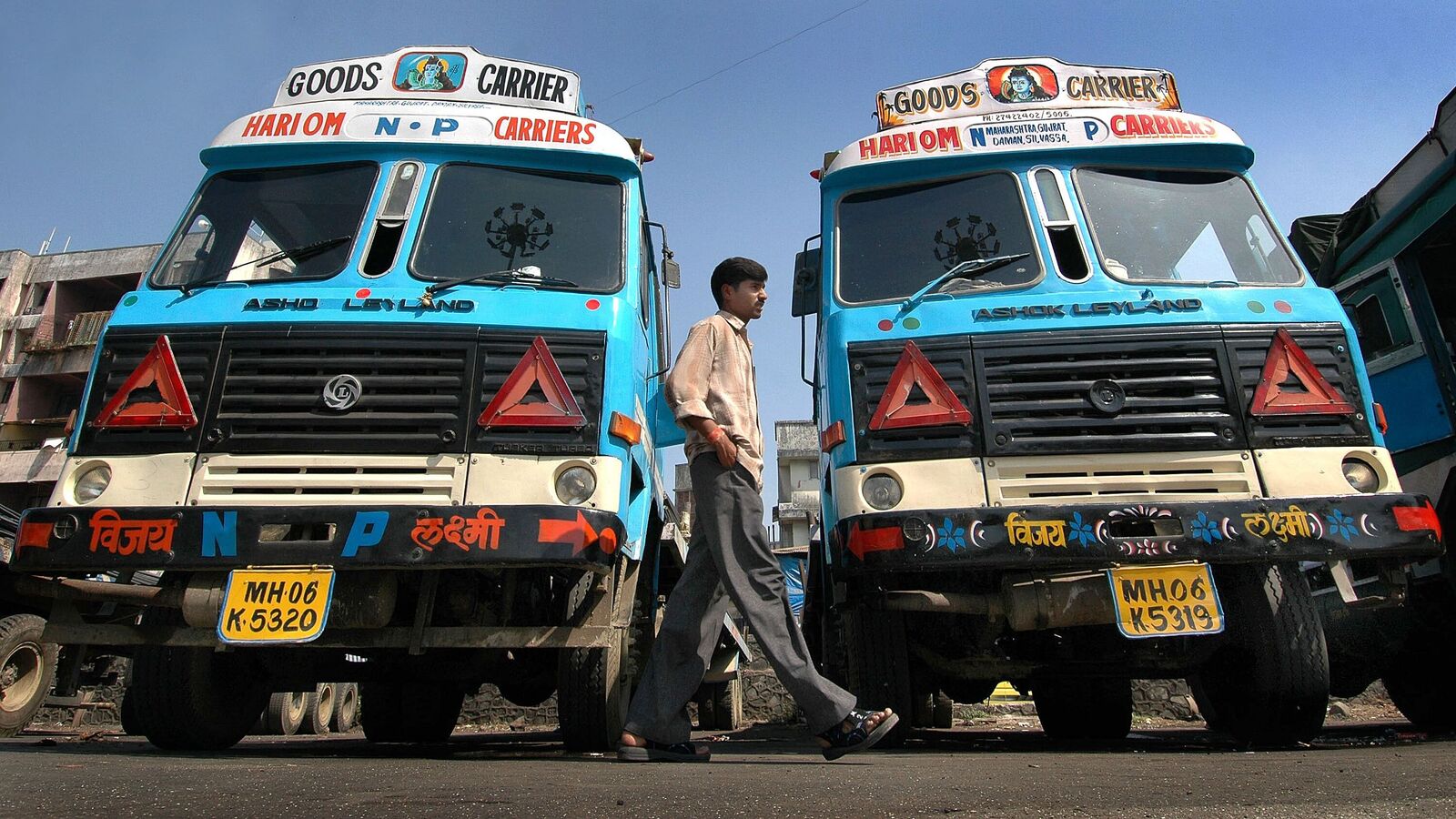
A reduction in the cost of logistics would have cascading effects, such as making the manufacturing sector more competitive, something that’s especially important amid global economic uncertainty and a 50% tariff from the US.
Union minister of road transport and highways Nitin Gadkari has said several times that while India’s logistics costs have fallen over the years, they need to be lower still. His goal is to reduce India’s logistics costs to 9% of gross domestic product (GDP), he told Mint in July. At a CII event in New Delhi on Monday, Gadkari said India’s logistics costs are currently around 10-11% of GDP – down from 11-15% earlier – compared to 8% for China and about 12% for US, UK, and Europe. This improvement was driven by the better quality of roads, he said.
Ripple effects
The GST cut on goods carriers will lower acquisition costs, and allow fleets to be upgraded faster and maintained better, according to manufacturers and sector experts.
The rate cut will “not only reduce logistics costs for the economy, but encourage customers to upgrade their fleets with modern, fuel efficient and safer trucks”, said Vinod Aggarwal, managing director and chief executive officer, VE Commercial Vehicles Ltd, a truck and bus maker.
“For trucks, it will ease cost pressures for fleet operators and stimulate demand in logistics and freight, which are critical for India’s growth momentum,” Aggarwal added.
The cost of logistics in India depends on a variety of factors such as the upfront cost of purchasing a truck, how well it is maintained, and the condition of Indian roads and highways.
Anshuman Magazine, chairman & CEO for India, South-East Asia, the Middle East & Africa at CBRE, a global consultancy firm, said, “The tax cut on key construction inputs such as cement and steel is expected to benefit both developers and logistics companies. For developers, it is likely to reduce the cost of building warehouses, cold storage facilities, and transport hubs. As the cost of development decreases, it typically becomes more profitable for developers to build supply in key areas, which is likely to stimulate demand.”
“Door-to-door cargo charges are also expected to come down with the reduction in GST on multimodal transport, excluding air transit, to 5% (with restricted inut tax credits) from 12% (with full input tax credits) earlier. These cost reductions may also encourage the adoption of new technologies and optimised supply chains, potentially lowering operational expenses,” Magazine added.
The reduction in third-party insurance on goods carriages from 12% to 5% will also reduce operating costs for transporters, Crisil Intelligence said in a note following the GST revamp.
Beyond cost savings
The reforms will also make it easier to do business, according to Rahul Garg, founder & CEO of Moglix, a B2B commerce company. “By lowering compliance burdens and rationalising input costs, it will strengthen the backbone sectors of our economy—manufacturing, logistics, fintech, and B2B commerce,” he said.
Vineet Agarwal, managing director, Transport Corporation of India, said the GST reforms would release pent-up demand across sectors. “The anticipation of GST rates revision had created a transitional pause in demand across auto, FMCG, and consumer durables as both dealers and consumers waited for clarity on final pricing. With the new slabs now officially notified, we expect a release of pent-up demand, particularly in large-ticket purchases like automobiles and appliances, as well as incremental momentum in categories such as textiles, cosmetics, and fashion retail. Manufacturers who maintained output in anticipation are well placed to serve this surge,” he said.
“From a logistics standpoint, this will compress the festive buying cycle into a shorter window closer to Diwali, requiring agile supply chain planning and strong last-mile execution,” he added.
Making India resilient to unstable external economic conditions was a crucial goal of the GST reforms. “The GST revamp should not be seen just a tax reform, but as growth reform also,” Motilal Oswal Financial Services wrote in a note after the GST announcement on 4 September.
It added that the reforms were meant to boost consumption sentiment, and as Prime Minister Narendra Modi indicated, there would be more reforms in multiple domains “intended to unleash the animal spirits of the economy, providing a shield against the global geopolitical headwinds”.