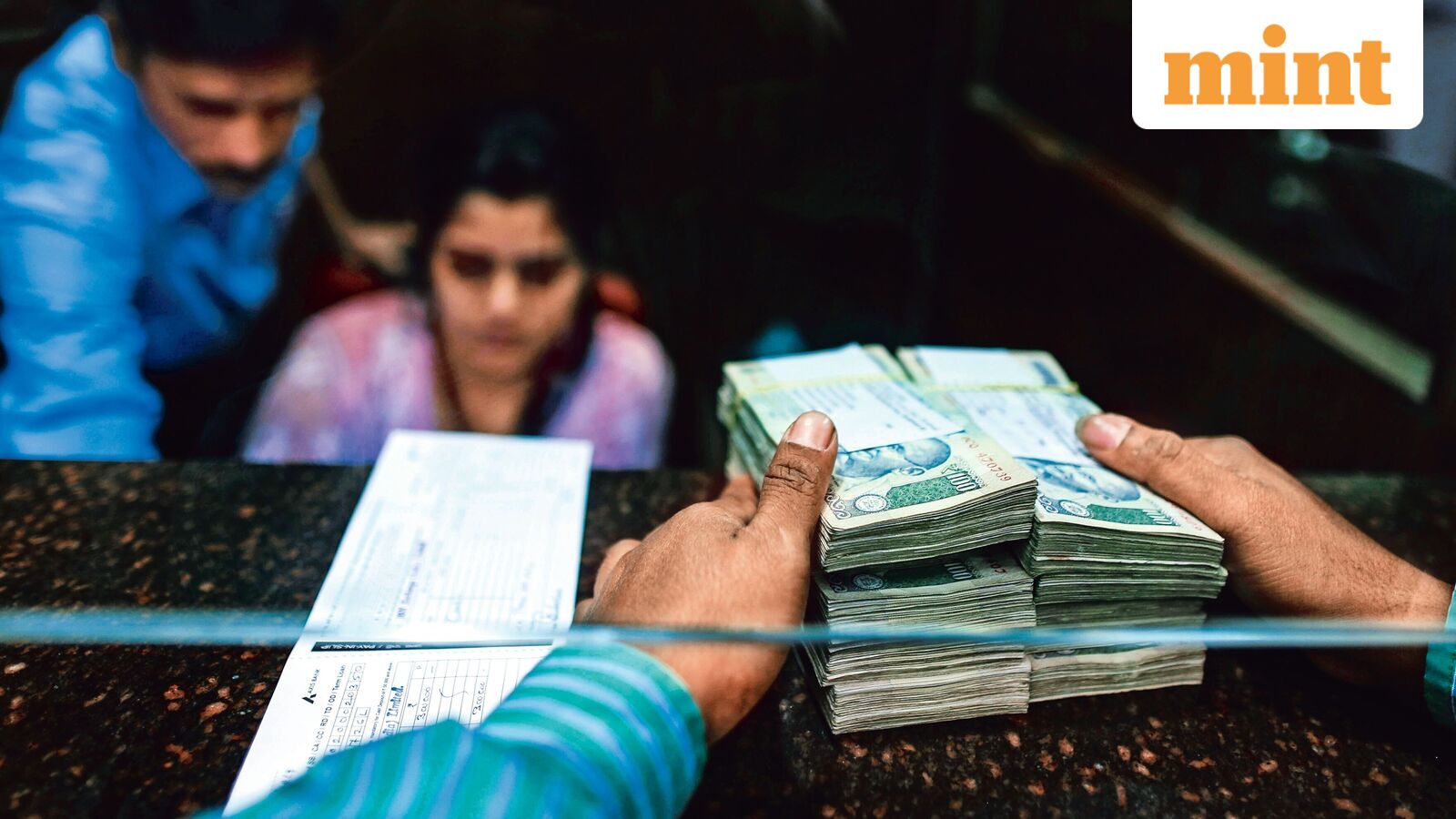






Armed with provisions for prison terms and stiff penalties for violators, the law is expected to deliver a body blow to India’s real-money gaming sector, dominated by companies such as Dream11, Gameskraft and Games24x7. The bill treats fantasy games and gambling alike and makes no difference between games of skill and chance, effectively criminalizing an industry that generated over $2 billion in revenue last year from millions of gamers, advertisements, and in-app purchases.
The government cited “severe socio-economic and psychological consequences” from the gaming industry’s unregulated growth, in the bill approved by the Union cabinet on Tuesday. Online real-money games have “led to significant mental health issues… and behavioural problems linked to prolonged gaming,” the Promotion and Regulation of Online Gaming Bill, 2025 said. Mint has seen a copy of the bill, which is likely to be presented in the Lok Sabha on Wednesday.
Out of India’s online gaming industry’s FY24 revenue of $3.8 billion, real-money gaming brought nearly two-thirds or $2.4 billion, according to gaming investment firm Lumikai. Out of this, Dream11, Gameskraft and Games24x7 accounted for $1.36 billion. The gaming industry also earns revenue from advertisements and in-app purchases.
‘Grave risk’
The Ministry of Electronics and Information Technology (Meity), in a cabinet note to other ministries, said “the unregulated and unchecked growth of online money gaming platforms has led to severe socio-economic and psychological consequences, posing a grave risk to public welfare”.
The bill proposes a complete ban on any game that incorporates financial transactions, which it declares as criminal offences that can attract up to five years of imprisonment and ₹1 crore in penalty. Meity also proposed setting up a designated authority to monitor the online gaming sector, with a total budget allocation of ₹70 crore, including ₹20 crore for recurring annual expenses.
Anyone advertising these games will face penalties as well. Any bank enabling transactions through these apps will also face penalties.
Gameskraft and Games24x7 which operate RummyCulture and My11Circle respectively did not respond to requests for comments. Queries emailed to a Meity spokesperson remained unanswered.
‘Shut shop’
An executive from one of India’s top five online gaming firms said his company has no way but to shut shop. “In the end, it is the offshore betting and gambling firms that have won, because this ban doesn’t mean that a person who loves playing rummy online will stop—they will simply move on to whatever other platform they can find,” he said on the condition of anonymity.
As of FY24, the online gaming industry had collectively paid $948 million ( ₹8,258 crore) in GST to the Centre—after a 28% tax was imposed on 1 October, 2023. In March this year, when the Supreme Court began hearing appeals by the gaming industry, the cumulative retrospective GST demand from the sector was nearly ₹2 trillion for six fiscal years between FY17 and FY22.
A second executive from another top gaming company said the industry employed over 100,000 people, and the ban would reduce these jobs, as well as reduce the Centre’s GST collections by over $2 billion.
However, the bill has a completely different take.
Extreme outcomes
“Individuals have fallen victim to financial losses… sometimes resulting in extreme outcomes. Players are lured into a cycle with little awareness of risks or legal protections. These platforms frequently employ predatory monetization tactics… and reward systems designed to exploit psychological triggers to increase spending,” the bill states. It adds that online gaming startups have also enabled financial fraud and money laundering.
The bill is “not a sudden revelation, but is a response to the regulatory clarity that the online money gaming industry has been asking for since a long time”, a government official involved in the law-making said. “The problem, however, is that on one hand, money games—where people come to play with real money in the hope of winning something back—want to be correlated with gambling operations when it comes to taxation and other issues. On the other hand, the same companies want to be regulated by the Centre in order to circumvent state-level legislations. You can’t pick and choose what you like, to get away with things,” the official further added.
Cash-rich
Online gaming was among the favourites for venture capital and private equity firms until mid-2022, following which bans in various states, as well as the Centre imposing massive GST demand, made the funds cautious. Some of the most-funded firms include Sporta Technologies, which raised over $1.3 billion until its Series-E round—and was valued at $8 billion in end-2021. Games24x7, until its Series-C round in March 2022, had raised just over $90 million in total at last-reported valuation of $2.5 billion. Galactus Funware, which runs Mobile Premier League, last raised $150 million in end-2021—and $330 million in total—at last-reported valuation of $2.3 billion.
“If such a bill becomes law, then we’re staring at a game-changer for online gaming firms that are growing really fast and generating significant revenue. It will hit them hard,” said Sajan Poovayya, senior advocate at the Supreme Court.
“There is no doubt that such a law, if enacted, would be challenged in court. There is precedent of such challenges having been made before, especially since the proposed bill makes no effort to distinguish between a game of chance and skill—and paints any title with the same brush,” he added.
Mint reported on 19 August that the Supreme Court had wrapped up months of hearings that could decide the fate of the online real-money gaming industry. At the heart of the case is whether fantasy sports and online rummy should be treated as games of skill or as gambling.
“The bill leaves no room for interpretation, and correlates money games to gambling, which too is unconstitutional since gambling itself is a state subject,” said Jay Sayta, a technology and gaming lawyer who represents multiple online real-money gaming startups.
“The Centre’s legal move would basically destroy the startups in terms of being able to operate anywhere, and lead to interested players moving to offshore operators and play such games anyway,” he added.
In February, Mint reported that the Ministry of Home Affairs was hosting inter-ministerial meetings to understand the online gaming sector, as well as considering the possibility of bringing games that need to be played with real money under the Centre’s ambit. During this process, a landmark set of hearings at the Supreme Court, which ended after five months on 12 August, offered opinion on the sector—including how titles such as rummy were not akin to gambling.