



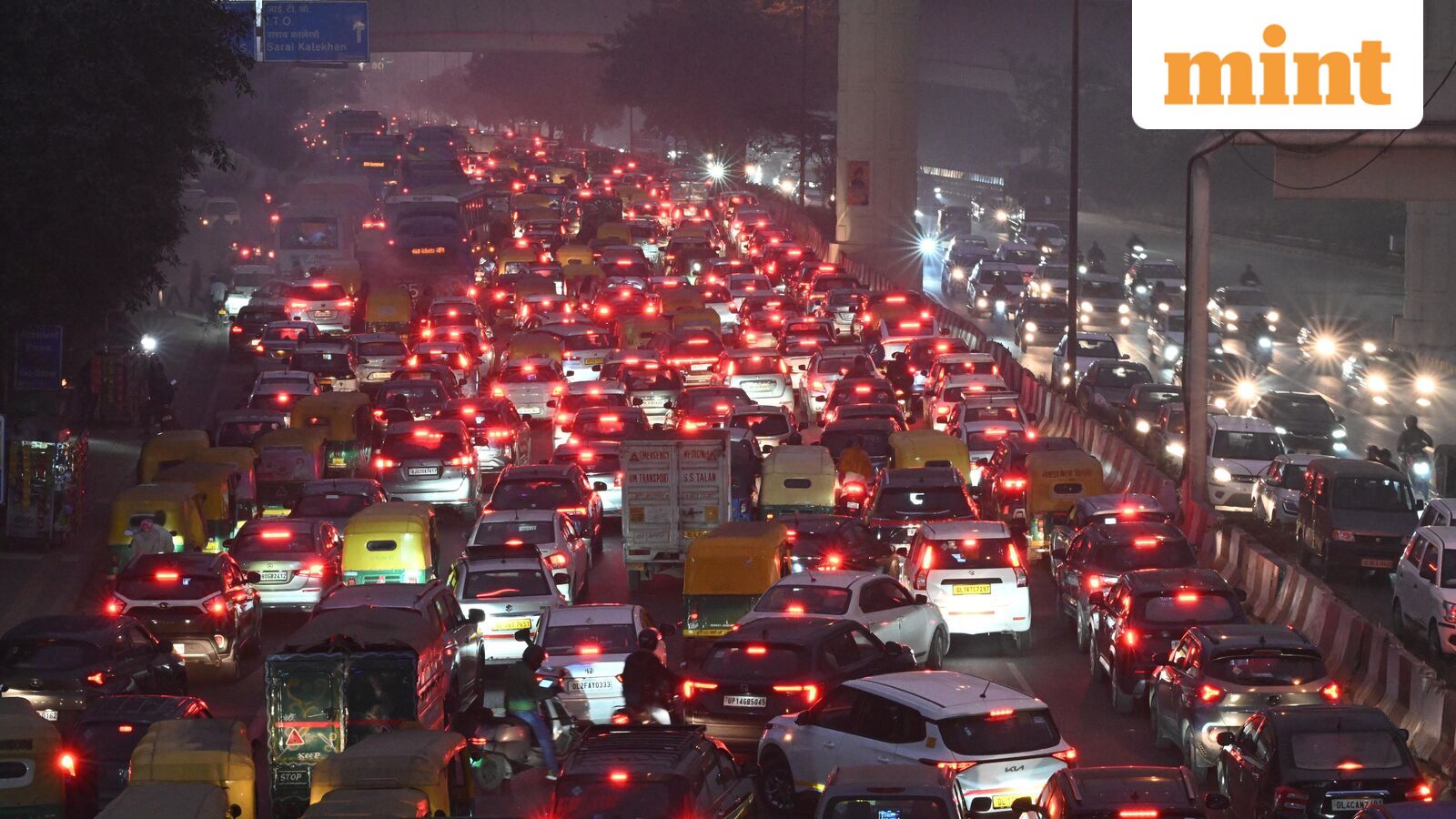
The move is also expected to help settle future debates over automobile emission norms that have divided the industry, they said.
The ministry of heavy industries, in consultation with industry and academia, is drawing up a new playbook to track decarbonization levels from various powertrains in the world’s third-largest automobile market, according to the draft Automotive Mission Plan (AMP) 2047, the two people said. Mint reviewed the draft.
The life-cycle analysis (LCA) would include calculation of the emissions of a vehicle throughout the value chain, starting from the mining of critical minerals and metal ores used in the auto industry to the scrapping of vehicles and the recycling of electric vehicle batteries.
Emission analyses are currently done on the basis of tailpipe emissions, or at best, well-to-wheel (WTW) assessments, which measure the energy consumption and greenhouse gas output of a fuel from its origin to its use by a vehicle.
These estimates miss large chunks of climate impact, especially of manufacturing and end-of-life disposal, according to the draft AMP, which will set interim goals for 2030, 2037 and 2047. A clear policy pathway for the auto sector in the form of AMP 2047 assumes importance as it contributes 7.1% of India’s total economic output and almost half of the country’s manufacturing output.
“The life-cycle analysis of all vehicle segments could answer questions about carbon emissions made by different powertrains – ICE (internal combustion engine) vehicles, hybrids, electric vehicles, and flex fuel vehicles. Currently, all the different methods of calculating emissions do not cover emissions from mining for lithium and other critical minerals, or even in the process of recycling these elements,” the first person said, requesting anonymity.
Industry divided
This comes in the backdrop of the current fuel emissions controversy, wherein automakers are divided over benefits given to small cars under the soon-to-be-notified third iteration of the corporate average fuel efficiency norms (CAFE 3) norms, scheduled to come into force in April 2027. The industry and the government were also yet to agree on whether to include the energy efficiency of EVs or count it as zero in the September 2025 CAFE 3 draft.
Electric vehicles do not emit tailpipe emissions, giving them a distinct advantage if the tailpipe emission method is used for policy decisions. On the other hand, flex fuel engines use gasoline blended with ethanol or other compounds and perform best in WTW comparisons, and EVs have an advantage only when they run on electricity from renewable sources instead of thermal power, according to the draft AMP.
“LCA analysis would help in such situations,” the first person said.
The AMP strategy is on framing a long-term pathway for green mobility and higher exports.
“Life Cycle Assessment (LCA) is crucial for shaping the development pathways of India’s automobile sector,” according to the draft AMP. “It is also necessary to deploy policy measures, preferably incentives-based, to ensure that LCA outcomes (as well as polluting tailpipe emissions) are reflected adequately in the prices of vehicles.”
According to the draft, the pathway requires coordinated progress across electrification, hydrogen mobility, battery manufacturing, and circular value chains. A clear long-term roadmap can help align policy, industry investment, and innovation priorities to position India as a globally competitive clean-mobility hub by 2047, it noted.
“Automobile design done on the basis of natural resource management and emissions has the potential to make this process more sustainable, compared to making designs only on the basis of comfort and convenience,” said Gurudas Nulkar, professor and director of the Centre for Sustainable Development at the Gokhale Institute of Politics and Economics. “For this, an LCA is required—it is a scientific tool to reduce resource intensity.”
Goals and strategies
“The AMP is supposed to be a comprehensive document on how the auto sector will behave. It takes into account different strategies with every manufacturer having a different strategy and a different vision of the future,” said the first person cited earlier. “Some believe that hybrids are intermediate technology and battery-operated electric vehicles (BEVs) are the end goal. Others may believe that even BEVs are the intermediary technology, and green hydrogen vehicles are truly the cleanest of all powertrains. The AMP looks to bring all these together.”
The draft has pitched for tax incentives for the creation of auto sector intellectual property such as patents, trademarks, and designs, and takes domestic taxation policies into account. It calls for scaling up of EVs and localization of battery manufacturing by 2040, with near-complete electrification of two- and three-wheelers, and at least half of the cars, buses and trucks on Indian roads being EVs, hydrogen and flex fuels vehicles by 2047.
The playbook will involve short-term (till 2030), medium-term (till 2037), and long-term (till 2047) objectives involving strategies on decarbonizing the sector, boosting exports and strengthening supply chains. The government has facilitated discussions among seven sub-committees and will now begin weighing in on the first draft in the coming weeks, according to the second person, who also spoke on condition of anonymity.
The work on AMP 2047 started last year after China restricted exports of rare earth magnets – crucial components in any vehicle’s transmission – putting global manufacturers, including Indian ones, into turmoil. Also, China’s 2023 new energy vehicle policy created tax incentives for EVs, hybrids, range-extended hybrids and other vehicles, pushing consumers to opt for cleaner alternatives.
“Countries that develop long-term policies provide clear direction to industry. For example, China’s new energy vehicle policy has shaped the automobile strategy of the country’s manufacturers, first for the domestic market and then for global markets” said Amit Bhatt, India managing director at the International Council on Clean Transportation, an international think tank. “The NEV policy later introduced electrification mandates and reduced incentives for bridge technologies such as conventional hybrids.”
Energy security
Experts said a long-term plan for the auto sector is essential for global competitiveness.
“With tightening emission norms globally, Indian vehicles must meet green standards to remain exportable. A clear transition roadmap is also vital to attract significant capital inflows, as funds are increasingly flowing into sustainable manufacturing and low-carbon technologies,” said Poonam Upadhyay, director at Crisil Ratings. “Domestically, shifting to electrification and alternative fuels reduces reliance on imported crude, enhancing energy security and shielding the economy from oil price fluctuations.”
Queries emailed to the spokespersons of the heavy industries ministry, the Society of Indian Automobile Manufacturers, Maruti Suzuki, Tata Motors, Mahindra & Mahindra, Toyota Kirloskar Motor, Bajaj Auto, TVS Motor, Ola Electric, Ather Energy, Hyundai, Kia, Ashok Leyland, JBM Auto, PMI Electro, and EKA Mobility on 23 January remained unanswered.
Shyamasis Das and Tarandeep Kaur wrote in a January 2026 report by the Centre for Social and Economic Progress that given some of the challenges in the EV sector like supply-chain risks, there is a case for diversifying India’s transport decarbonization strategy to consider other solutions such as biofuels with a flex-fuel engine, and fuel cells.
“However, these technologies have their own constraints. The absence of a clear direction in decarbonizing road transport could lead to inadequate policy support, uncertainty in the industry and market inertia,” they said.
AMP 2047 will also help strategies to amalgamate Indian auto components makers into global value chains, according to the draft.