



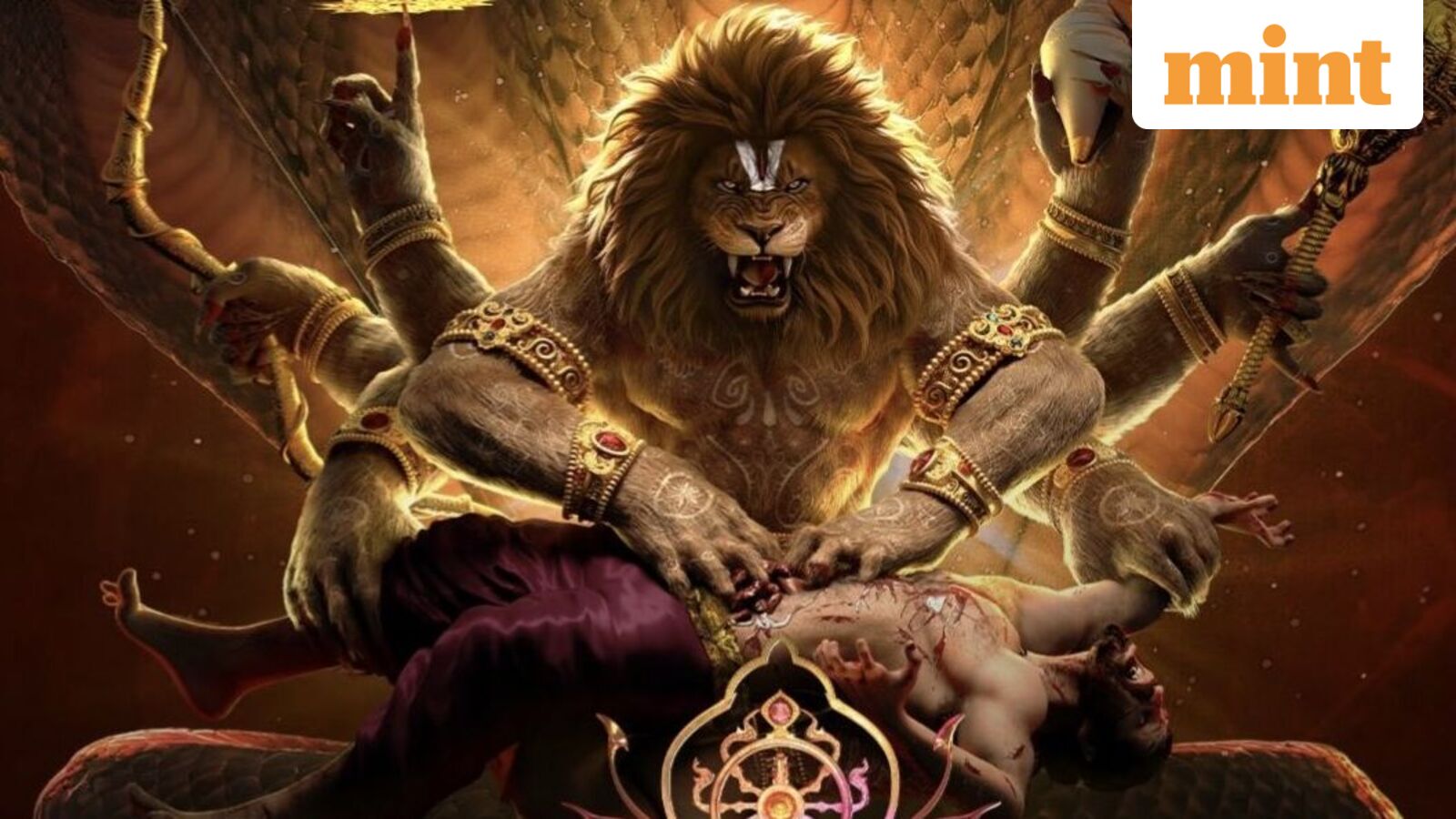
The success of Mahavatar Narsimha, an animated mythological epic that was released without promotions or marketing this July and eventually grossed ₹300 crore, has proven to be a turning point, given animation’s long history of poor theatrical performance in the country.
So far synonymous with cartoons, theatre owners and trade experts say the combination of animation with mythology can attract adults and families beyond children, and resonate with ideas of common cultural identity that live-action hits such as Chhaava have also benefited from. Furthermore, animation also helps mythological films avoid the pitfalls of live-action movies, including high star fees and costume and production expenses, in order to maintain authenticity, as well as scrutiny on visual interpretation. Animation films have not grossed more than ₹20-30 crore at the box office in India.
Mahavatar Narsimha was presented by Hombale Films, the studio behind hits such as KGF. The film’s viewership primarily grew through word of mouth, especially in small towns, and producers also partnered with multiplex chains to secure advertising in cinemas.
According to the Ormax Cine Sense: 2023 report, mythology is among the top five genres with the highest appeal among Hindi theatrical audiences. While the makers of Mahavatar Narsimha have already planned a multi-part animated franchise, other titles such as Chiranjeevi Hanuman and Jai Santoshi Mata have also been announced.
“There’s a clear creative shift towards reimagining mythology through the lens of modern animation. Indian filmmakers are exploring this space to connect with younger audiences while keeping our cultural roots intact. Given the emotional resonance of mythology and the growing acceptance of animated storytelling, this blend has strong potential for theatrical success,” Gautam Dutta, chief executive officer, revenue and operations, PVR Inox Ltd, said. Mahavatar Narsimha collected around ₹300 crore across India, becoming the highest-grossing Indian animated film ever, and its success has clearly inspired more filmmakers to experiment with this genre, Dutta added.
Bollywood’s cheat code
To be sure, the challenges that once limited animation in India have largely disappeared, according to industry experts like Dutta. Today, studios are equipped with world-class technology, artificial intelligence (AI)-assisted production tools, and strong creative talent capable of delivering high-quality global content. Cinemas aid this transformation by offering animated films the same premium platform and visibility as live-action titles. Premium formats such as IMAX, ICE and 4DX further elevate the visual and sound experience, creating a cinematic spectacle.
Animation in India was often viewed as primarily children’s content, rather than a mainstream cinema genre, said Bhuvanesh Mendiratta, managing director of Miraj Entertainment Ltd, a company that operates multiplexes. “That’s changing fast. The audience today is exposed to global animation—from Spider-Verse to Japanese anime—and is open to fresh storytelling styles. Technically, too, we’ve come a long way.”
According to Mendiratta, studios now utilize advanced rendering, motion capture and visual effects tools that enhance storytelling and make it more immersive. “Collaborations with international teams are also improving production quality and timelines,” he said. From a business perspective, mythology has universal appeal in India as it transcends age, region and language. When combined with high-quality animation, it becomes a visual spectacle that families love to watch on the big screen, he added.
That said, while Mahavatar Narsimha has successfully addressed the gap in audience demand for culturally rooted mythological stories, trade experts point out that many other Hindi mythological films, such as Brahmastra and Adipurush, have failed to manage adequate returns. Additionally, given the surge in mythological films being planned across both animation and live-action fronts, it may result in overkill for viewers.
Animated returns
Traditionally, the challenge has been that there hasn’t been as much of an animation viewership culture in India, particularly when it comes to Indian animation content, content and media strategist Devdatta Potnis said. “This whole thing—‘why should we pay for it?’ in cinemas and notions like ‘cartoons are for kids only’ have been around, which is the reason Indian animation has not managed to do even a fraction of what international animation has achieved,” he added.
However, the fact that fresh and relatively untold stories, such as Mahavatar Narsimha, are being told in this format is setting the stage for the big moment for Indian animation to take off, Potnis pointed out.