



From easier land acquisition norms to less ambiguous policy and tax concessions, various incentives are required to bolster what could be a booming tourism and employment opportunity that remains untapped in the country. While the returns on investment may take up to 10 years, the hope lies in the country’s growing affluent consumer base that seeks diverse entertainment experiences.
“India’s lag in large-scale theme parks stems from multiple structural challenges,” said Tarandeep Singh Sekhon, chief business officer of KidZania India, an edutainment theme park operator. “Firstly, land acquisition is expensive and complex, especially near urban centres where such parks are viable. Then, regulatory clearances span state and central bodies. Add to this the high capital investment with long gestation periods and private players tread cautiously.”
Unlike in some global markets where frameworks and incentives are more structured, India is still developing that enabling environment. Having said that, there is some positive momentum, with more private and public interest coming in, Sekhon added.
Experts said that building a full-fledged theme park or immersive entertainment zone is a serious investment – it can range from a few hundred crore rupees to a few thousand, depending on the size, location, and whether there’s a global intellectual property involved.
For most such ventures, breakeven may take up to 10 years or more. But with the right mix of footfalls, experiences and revenue from food, retailing and events, it can become sustainable.
While companies including Imagicaaworld Entertainment Ltd have had limited success in India, foreign entities such as Disney can possibly combat some challenges better since they usually work with the government that provides land at subsidised rates.
Nascent stage
“The Indian amusement park industry is projected to reach a market size of approximately $2.7 billion by 2030, growing at a robust CAGR of 9-10%,” said Chandrashekar Mantha, partner and media and entertainment sector leader at Deloitte India. “Despite its growth potential, the sector remains in a nascent stage, with around 300 amusement parks and 2,500 indoor amusement centres currently operational across the country. Globally, the US dominates the market, accounting for over $19 billion or roughly 30% of the $62 billion global amusement park industry.”
Government initiatives have been supportive, allowing 100% foreign direct investment in the tourism and hospitality sector, including amusement parks, under the automatic route, Mantha added. However, to accelerate sector growth, a stronger emphasis on public-private partnerships is needed, enabling risk-sharing and capital infusion by both the government and private companies.
Dhimant Bakshi, CEO of Imagicaaworld Entertainment, said that while returns may take long, the beauty of this sector lies in its multi-revenue potential — ticketing, F&B, retail, staycations, events, licensing, and increasingly, digital IP monetization from the operations area.
Imagicaaworld Entertainment operates an amusement and water park located along the Mumbai-Pune expressway and is owned by the Malpani Group.
According to Bakshi, the entry of foreign players brings undeniable strengths, including globally recognized IPs, cutting-edge immersive technologies, and operational expertise that can accelerate the evolution of India’s entertainment landscape.
“However, success in India hinges on more than just replication. It requires reinvention. This is a diverse and value-conscious market where cultural relevance matters as much as spectacle. Those who take the time to localize narratives, price points, and experiences while respecting regional seasonality and audience behaviour will unlock true loyalty and scale,” Bakshi added.
Willing and able
Indian tourists have been one of the big contributors to overall global tourism with their widening preferences and rising disposable incomes, according to experts including Bakshi. There is both willingness and ability to travel with increased spending capacity like never before.
Disneyland has six resorts globally – in California, Florida, Paris, Tokyo, Hong Kong and Shanghai. At Disneyland in Hong Kong, a Summer Saver 1-Day ticket for an adult, valid from July 18 to August 25, costs HK$ 849, according to its website.
Ashish Pherwani, M&E sector leader at EY India, agreed that theme parks are capital-intensive projects including land and equipment, and hence ticket prices are significant. They need a large base of affluent consumers.
“India now has around 40 to 50 million affluent homes, and these homes have been spending on live entertainment like concerts and sports, as well as domestic and international travel. Theme parks are the logical next step,” Pherwani added.
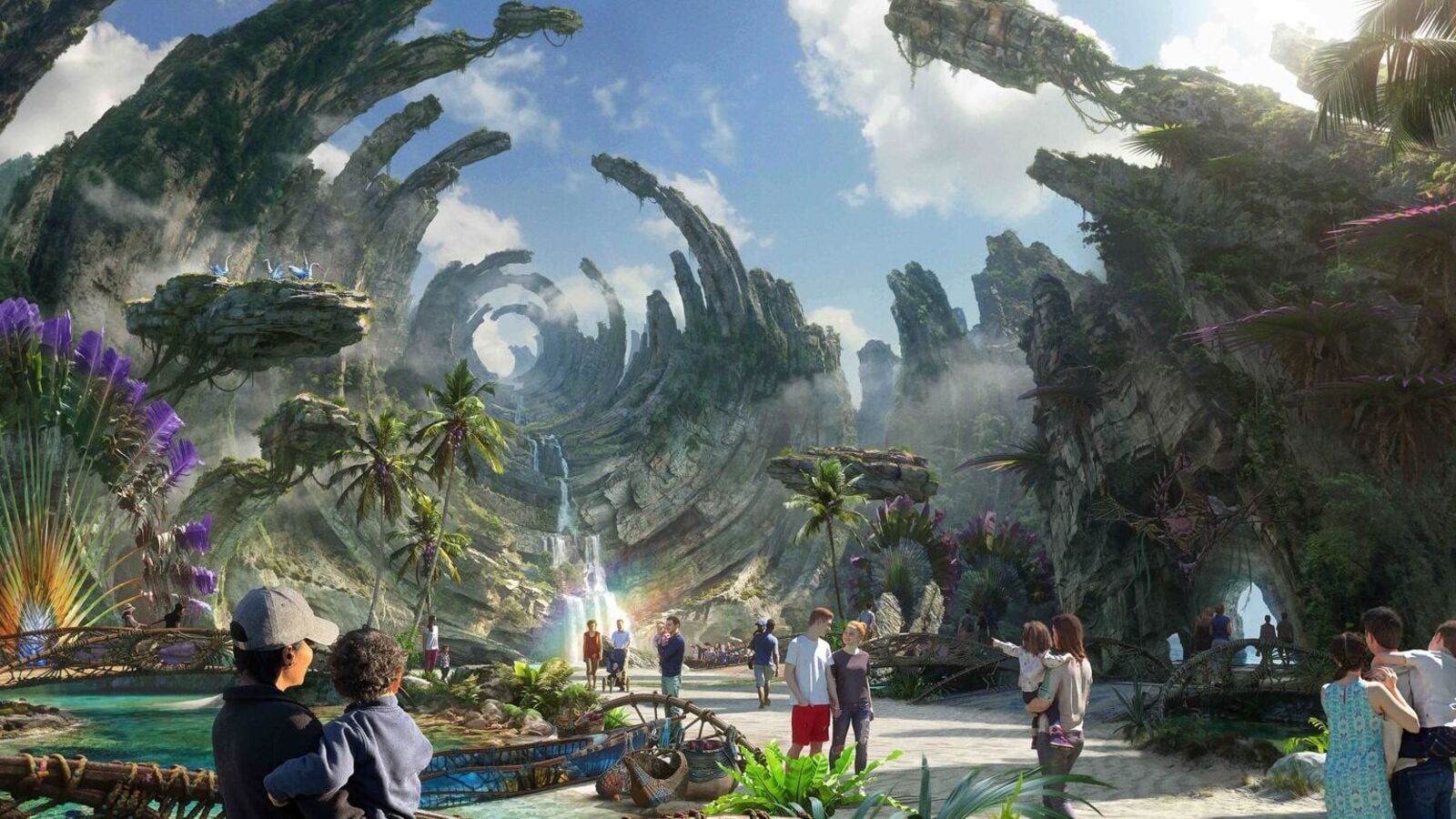
India’s first Disneyland Park is expected to come up in the National Capital Region, with the Haryana government having proposed a 500-acre amusement and entertainment destination in Manesar, chief minister Nayab Singh Saini said on 4 July, according to news reports.