




Mumbai: Shriram Finance is reworking its lending strategy amid slower growth in vehicle finance and focusing on emerging segments such as renewable energy, merchant credit, fisheries, and supply chain finance.
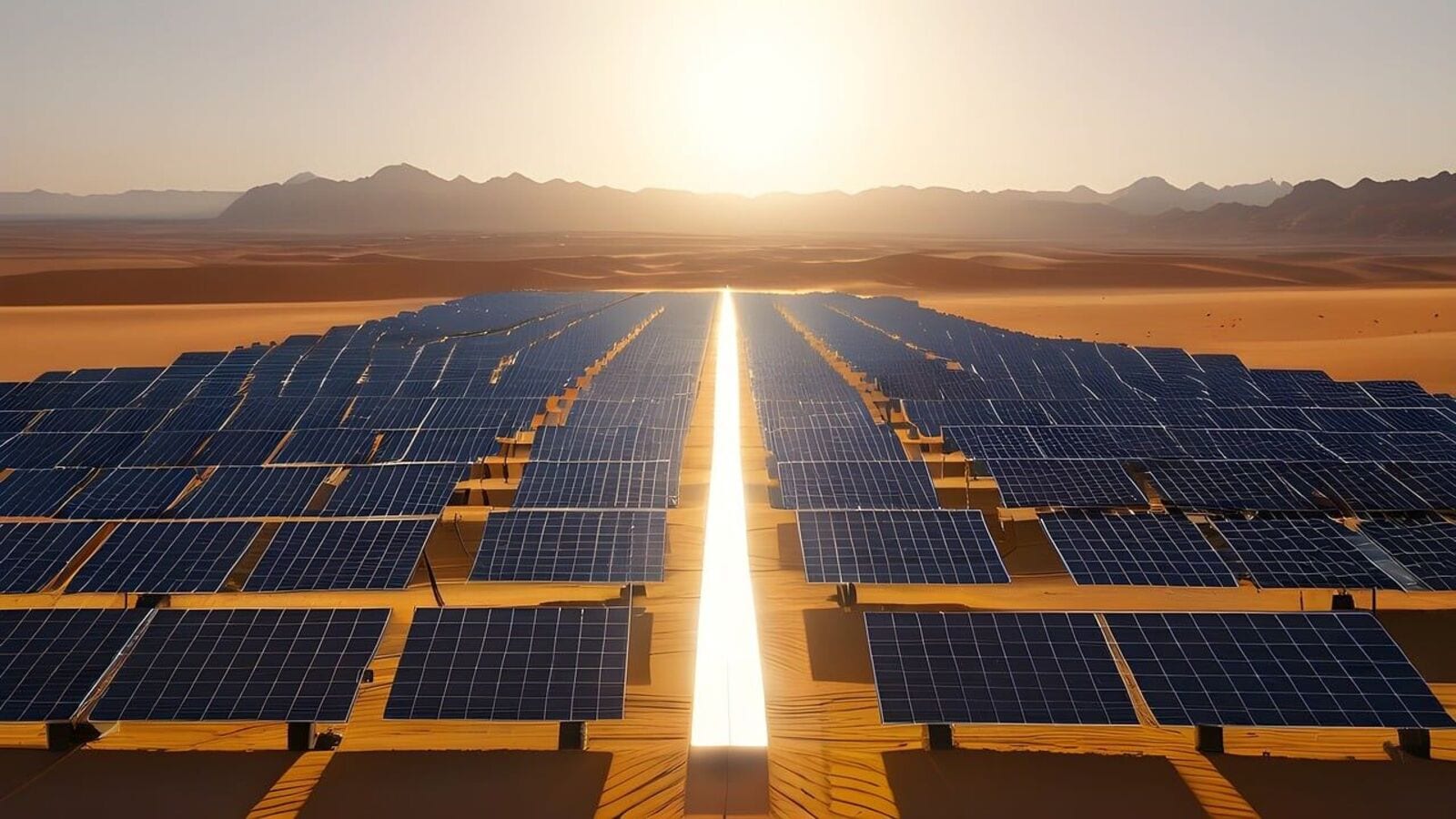
Managing director and chief executive officer Y.S. Chakravarti explained that, given the high cost of power and the high incidence of power cuts in tier-II and beyond cities, the lender’s biggest interest is in retail renewable energy, which includes retail and small commercial establishments installing their own rooftop solar panels.
“We have created a vertical for funding green initiatives. It will be solar, charging stations, rooftop solar, basically renewable energy initiatives,” he said. With grid connectivity now available, surplus energy generation earns credit, making rooftop solar more viable. “In 3 years, we should have a ₹5,000 crore book,” Chakravarti added.
The NBFC has also entered merchant finance through partnerships with Paytm and PhonePe, disbursing ₹100 crore and ₹50 crore monthly, respectively. It finances merchants linked to Walmart’s Best Price, too. “It’s all automated, not much manpower is needed there, and it’s a profitable business,” Chakravarti said. However, regulatory concerns around originators have prompted caution. “We don’t want to take a large bet on that.”
According to Moody’s Ratings, the severity of the monsoon season can affect the performance of commercial vehicle financiers, as these lenders serve borrowers in rural areas that depend on agriculture. While vehicle financiers have seen a slight deterioration in asset quality, it is unlikely to deteriorate sharply because a rise in freight rates and steady energy prices will underpin cash flow for commercial vehicle operators. “Provisioning costs for vehicle loans are likely to stay at current levels or rise slightly as pent-up demand for vehicles that was built up during the coronavirus pandemic dissipates, leading to a slowdown in sales growth, and as loans age,” it said in a note on 4 August.
To reduce dependency on third-party platforms, Shriram Finance is piloting its own sound boxes with merchants to track cash flows and offer credit lines.
Currently, both these types of loans—retail renewable energy loans and merchant finance—are treated as personal loans despite the lender knowing the end use of funds, Chakravarti said, adding that customers’ credit worthiness and repayment ability are assessed based on personal loan metrics.
Shriram Finance remains optimistic about personal loans and plans to continue growing the book, albeit with tight underwriting. The NBFC gives personal loans only to existing two-wheeler customers, preferably those who have never delayed payments for over 60 days.
“A customer who has never bounced during this period will get a lower rate, so basically we have a little higher pricing on somebody who has been a little irregular here and there, but as on date of the loan, there should not be any overdue,” Chakravarti said, adding that the loan amount is capped at 150% of the previous loan.
After slowing personal loan growth in response to Reserve Bank of India (RBI) concerns in 2023, the company resumed lending upon seeing strong performance. Notably, it does not offer personal loans to MSME or commercial vehicle customers. These are riskier customer segments, and the company wants to ensure end-use monitoring for them.
Small business loans
Another area of opportunity for the lender is supply chain finance, where Chakravarti sees “huge scope” as there is still a lot of gap in short-term financing. “Even for businesses which have a bank line, overdraft or term loan, they are still struggling to raise short-term working capital. That is where they come to NBFCs for business loans. So we have a vertical doing that,” he said.
The focus, he said, is on firms which have a track record of at least 3 years of doing business, are profit-making, and have sanctioned bank credit lines which have been fully or partially utilised. “We are trying to meet that working capital gap for those guys, and we are building that book.”
Overall, lenders have become cautious about MSME loans, especially in some southern states, due to lower state government spending, weak borrower cashflows, slackening credit demand, and rising delinquencies even in once-resilient segments.
Industry executives said demand is also slowing because small businesses are facing delayed payments from the Union and state governments and shrinking profit margins amid a broader economic slowdown, Mint reported on 31 July.
However, Chakravarti believes the rural economy is poised for recovery, and he continues to see lending opportunities in certain agriculture-related sectors such as fisheries, including fish farmers, fish tanks and prawn culture, because most of the produce is either exported to other Indian states or outside India.
Even so, Chakravarti expects growth in MSME and gold loans to outpace the overall book. The gold loan portfolio, currently at around ₹5,000 crore, is expected to double in 2-3 years. Introduced following the creation of amalgamated Shriram Finance in November 2022, gold loans are currently offered by around 35% of branches, he said, adding that it will take at least one more year for branches to reach peak productivity levels for MSME and gold loan disbursements.
Vehicle finance
Traditionally a vehicle finance company, Shriram Finance was created from the three-way merger of Shriram Transport Finance, Shriram City Union Finance and Shriram Capital in November 2022. Erstwhile Shriram Transport Finance, the oldest lender of the Group, was a commercial vehicle lender, whereas Shriram City Union Finance specialized in two-wheeler and passenger vehicle loans. While these continue to be core strengths of the NBFC, both commercial and passenger vehicle segments are seeing a slowdown in growth.
On the commercial vehicle side, the slowdown is more in the medium and heavy commercial vehicle (MHCV) segment—which includes large articulated trucks with a load capacity of 35-40 tonnes and above—as these operators are finding it harder to get loads or are seeing loads become smaller.
“We have little exposure to this segment, and otherwise, the cash flows for non-trailer trucks are stable, and they are doing good. However, volumes of sales even for light commercial vehicles (LCV) and small commercial vehicles (SCV) have been more or less stagnant for the last two years because there is no new capacity addition and current vehicles are sufficient to manage the loads,” Chakravarti said. A significant increase in vehicle prices compared with the pre-covid period has also led to increased pressure on the segment. He expects to segment to grow at around 10-12% in FY26.
“A new truck, which used to cost about ₹25 lakh pre-covid, today costs over ₹40 lakh. So the break-in points are getting higher, and because most of our customers are owner-cum-drivers, used vehicle demand is higher,” he said, adding that currently 90% of the CV portfolio is used vehicles. “Today, what you pay for an LCV, we used to pay for an HCV earlier. So, that is a running cost, and then obviously, the cost of depreciation, EMI cost, everything is going up, and that has an impact on profitability.”
The NBFC is instead running a separate programme for ‘fuel loans’, which functions on the same principle as invoice discounting. Invoice discounting is where a business sells its unpaid invoices to a third party, like a finance provider, at a discount to receive immediate cash, improving working capital and cash flow.
Herein, if a truck driver has to make a trip from Delhi to Chennai and back, the assumption for the cost of fuel is around ₹15,000-20,000, which the driver would require immediately, in addition to the cost of tolls on the road. However, the payment is received only after the trip has been completed, leading to a cash flow mismatch. “We fund that trip and then collect the money once he comes back, so it works like invoice discounting because we know the end use of the money,” Chakravarti said.
Used vehicles in demand
On the passenger vehicle side, as well, the lender is seeing higher demand for used vehicles despite a fall in entry-level PVs. “Demand for entry-level cars has slowed down, and used car demand has picked up. Entry-level car prices have come down, but people are postponing decisions or buying more high-end cars, even if used. So aspirations are changing.”
However, despite looking at newer avenues of lending, Chakravarti is not too bullish on electric vehicles (EV) given the raw material issues being flagged by manufacturers, unreliability of finished products and stagnating sales volumes in two-wheelers.
The other problem with low-power vehicles is that they work like a personal loan. “Because there is no registration, you cannot prove it is an EV, and so it is considered unsecured, which is why most banks are also not willing to take them,” he said. Even though there is more data availability today in terms of being able to track the manufacturer, vehicle, build, battery life and vehicle condition, the bulk of the intrinsic value is still linked to the battery, which makes the loan difficult to underwrite.
“Repayment is not an issue; what is an issue is that the yield has become very competitive, and EV loans are anyway cheaper by around 150 bps, so we are not big in that space,” he said. Currently, the NBFC is not aggressively pushing loans in the segment and only offers funding for EVs when existing customers ask for it.