




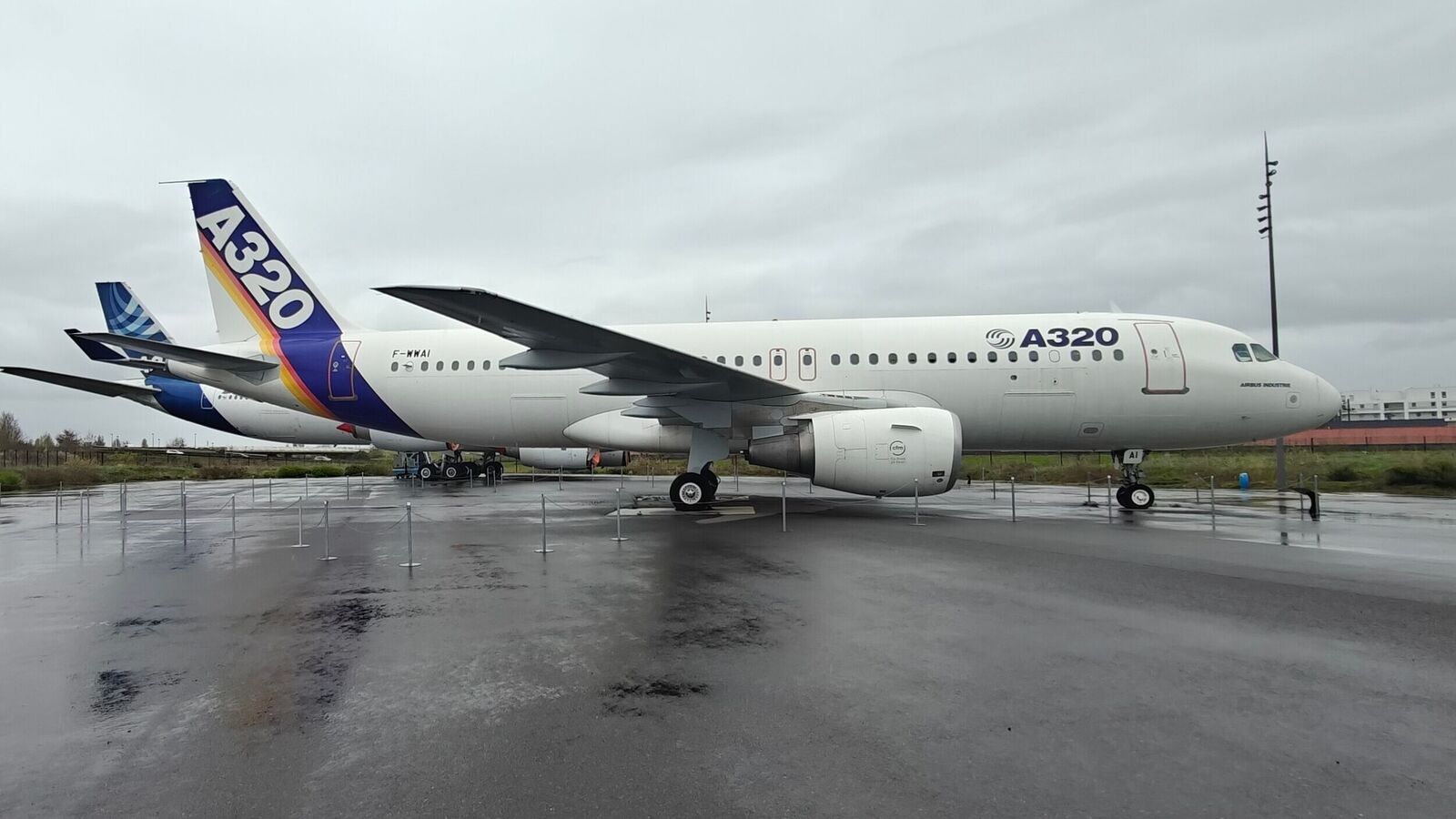
In February 1987, the A320 made its first flight at Toulouse in France, the home of Airbus. The aircraft was designed to take on rival Boeing’s 737 series, which first flew in 1967, a good two decades earlier. When the A320 first took to the air, the 737 had already seen sales of over 1,300 planes which includes the -100 and -200, while transitioning to the -300/-400/-500 series. The A320, on the other hand, was a fly-by-wire design positioned to change aviation in more ways than one.
After the initial struggles, Airbus started making a mark, expanding the A320 to have a full-fledged family comprising A319, A321 and A318, with which it did see only a handful of sales. Boeing, on the other hand, went on to expand its series to include the -700/-800/-900 and its Extended Range version.
Cirium, an aviation analytics company, now predicts that the Airbus A320 family will overtake the B737 series this month, and this number includes military jets, which in effect means that the A320 family has overtaken the B737 in passenger planes a while ago. The 737 has a military version, P-8, which is in use with the Indian armed forces, among many others. Both Airbus and Boeing transitioned to the NEO and MAX, respectively, offering the same platform with improved engines and avionics which entered services in the later part of 2010s.
Boeing has delivered 12,175 B737 series since inception while Airbus has delivered 12,155 A320 family jets as of early August, as per Cirium. The situation could have been slightly different had it not been for the two crashes of the MAX 8 for Boeing and subsequent global grounding, leading to Boeing ceding ground to Airbus and not being able to raise the production limit, while Airbus delivered 602 A320 family aircraft last year, at an average of just above 50 planes a month.
How does the A320 score in India?
India was an early adopter of the fly-by-wire A320, with Indian Airlines inducting the aircraft in 1989. However, when the government allowed privatisation of airlines starting with the Air Taxi concept in 1993, the early airlines moved towards the 737 — Modiluft, Damania, NEPC, Jet Airways, Air Sahara, everyone moved to the 737. A part of this was because of the grounding of A320 in India in 1990 for a few months after the Indian Airlines crash in Bangalore.
The next order for A320 from India came in 2004 when India’s first low-cost carrier Air Deccan decided to induct two A320s. In 2005, the government cleared a deal for 43 Airbus narrowbody aircraft. The next major breakthrough came with the second lot of privatisation; Kingfisher Airlines, Go Air, and IndiGo, all boarding the Airbus A320.
IndiGo propelled Airbus in India
India has close to 800 aircraft registered with scheduled airlines, and a heavy majority or 92% of these are narrowbody aircraft, which are either the Airbus or Boeing. However, Airbus has an unassailable lead in the market with a ratio of 4:1, i.e. one 737 aircraft for every four A320 family aircraft in Indian skies. This has only gotten better thanks to Akasa Air and Air India Express, which inducted aircraft in quick succession over the last three years as the 737 lost out after the demise of Jet Airways in 2019, which was a major operator of the 737 series in India and the region.
What started as a surprise 100 aircraft order at Paris in 2005 has only increased from there on with 900 aircraft yet to be delivered for IndiGo. As of today, IndiGo and Air India operate the Airbus narrowbody while Air India Express, SpiceJet and Akasa Air operate the 737 series. However, IndiGo’s fleet of over 350 A320 family aircraft outweighs all the other Boeings in the country. There are 133 B737 and MAX 8 in the country, split between SpiceJet, Air India Express and Akasa Air.
Tail Note
Airbus aims to increase the production limit of its A320 family aircraft to 75 per month across its multiple production sites by 2027. The target is steep to achieve amidst the current supply chain constraints. Boeing, on the other hand, is achieving around 38 B737s per month, with a target of 42 before increasing it further, making it very clear that once Airbus surpasses the 737 numbers, Boeing will find it very difficult to catch up.
When it comes to India, the Airbus lead will hold on as IndiGo has a huge order book which takes its deliveries well into the 2030s and eclipses the order books of both Air India Express as well as Akasa Air.