




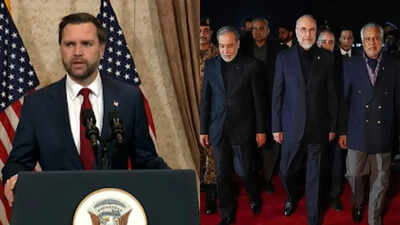
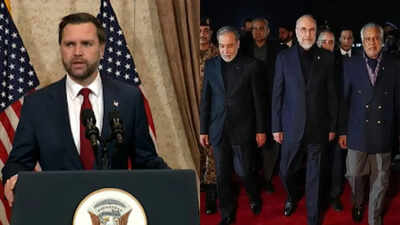
High-stakes negotiations between the United States and Iran aimed at securing a ceasefire and a broader diplomatic framework ended without an agreement after nearly 21 hours of intense discussions in Islamabad. US Vice President JD Vance, who led Washington’s delegation, confirmed that American negotiators would return home empty-handed after failing to bridge key differences with Tehran. Speaking to reporters, Vance said, “We have been at it for 21 hours, and we had several discussions with Iranians; we have not reached an agreement, and that is bad news for Iran more than it is bad news for the USA.”He underlined that the core sticking point remained Iran’s nuclear programme. “But the simple fact is that we need to see an affirmative commitment that they will not seek a nuclear weapon, and they will not seek the tools that would enable them to quickly achieve a nuclear weapon,” Vance said, adding that this remains “the core goal of the president of the United States.”“So we go back to the United States, having not come to an agreement,” he added.Meanwhile, Iran’s foreign ministry said after the talks that the United States must refrain from “excessive demands and unlawful requests”, signalling Tehran’s strong objections to Washington’s conditions.The talks marked a rare and significant diplomatic moment, with Vance becoming one of the highest-ranking American officials in decades to directly engage with Iranian counterparts, following a period of intense military confrontation that had pushed the region to the brink of wider conflict.Despite the breakdown, Iran indicated that diplomacy remains on the table. In a statement posted on X, Iranian authorities said negotiations would continue “despite some remaining differences,” suggesting both sides are willing to keep channels open even after the latest setback.Iran’s foreign ministry spokesperson Esmaeil Baqaei said discussions over the past 24 hours covered a wide range of contentious issues. “Discussions were held over the past 24 hours on various aspects of the main issues of the negotiations, including the Strait of Hormuz, the nuclear issue, war reparations, the lifting of sanctions, and the complete end of the war against Iran and in the region,” he said.However, Tehran made it clear that the success of any future agreement would depend heavily on Washington’s approach. “The success of this diplomatic process depends on the seriousness and good faith of the opposing side, refraining from ‘maximalist and unlawful demands’, accepting Iran’s rights,” the spokesperson said.In a parallel statement, Baqaei reiterated that the talks hinge on the United States avoiding “excessive demands” and recognising Iran’s “legitimate rights and interests,” indicating that Tehran views Washington’s conditions—particularly on nuclear restrictions—as overly stringent.Iranian state media also reported that the latest round of talks failed to produce a breakthrough. According to Fars News Agency, the two sides “did not reach an understanding over their difference in latest round of talks,” underlining the depth of the divide.Behind the scenes, the negotiations in Pakistan were described as intensive and continuous, with Islamabad playing a mediating role. Iranian officials said the discussions began on Saturday morning and continued without interruption, with “numerous messages and texts” exchanged between the delegations.In a detailed statement, Iran’s foreign ministry combined resolve with scepticism. “Diplomacy for us is the continuation of the sacred jihad of the defenders of the Iranian land. We have not forgotten and will not forget the experiences of America’s breaches of promise and ill deeds,” the statement said.It added that Iran remains committed to pursuing its national interests through all available means. “The Islamic Republic of Iran is determined to use all tools, including diplomacy, to secure national interests and protect the country’s well-being.”The talks come at a delicate moment following a fragile pause in hostilities involving the United States, Israel and Iran, with global markets and regional stability closely tied to the outcome. Key flashpoints—including the strategic Strait of Hormuz—were central to the discussions.Iran’s emphasis on issues such as war reparations, sanctions relief and a “complete end of the war against Iran and in the region” highlights the broader scope of negotiations, which extend beyond the nuclear question to economic and geopolitical demands.For Washington, however, the immediate priority remains preventing Iran from acquiring nuclear weapons capability, a position Vance reiterated firmly during and after the talks.
Poll
What should be the priority for the United States in future negotiations with Iran?
While the failure to secure a deal may raise concerns about renewed tensions, the fact that both sides have not walked away entirely suggests diplomacy is still in play. With negotiations expected to continue, the coming days could prove crucial in determining whether the current impasse leads to escalation or a renewed push for compromise.