




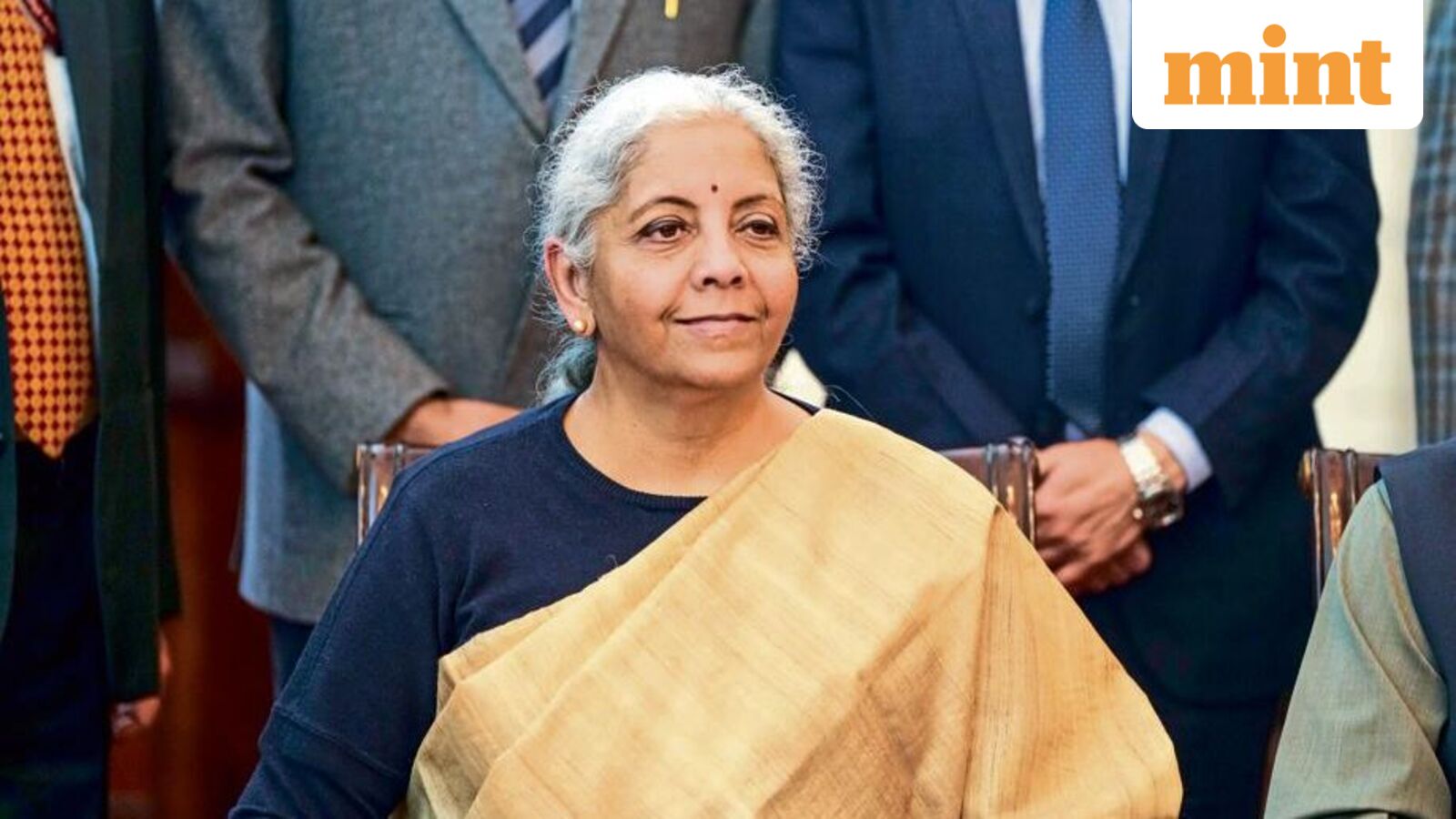
India is well-positioned to withstand global shocks and is not facing an energy shortage despite the crisis in West Asia, finance minister Nirmala Sitharaman told the Rajya Sabha on Tuesday.
Replying to the debate on supplementary demands for grants in the upper house, Sitharaman said India was ramping up domestic capacity and the government had directed refineries and petrochemical complexes to maximize liquefied peroleum gas (LPG) output by diverting propane, butane, propylene and butane statement for its production.
“Nearly 65% of our LPG is imported, and a large share of that comes through the Strait of Hormuz,” she said, acknowledging the risks presented by geopolitical tensions. “As a result of government’s measures, domestic production itself is going up by 25% and the entire increased production would go domestic consumers to ensure households do not suffer,” Sitharaman said. “So, we are not just depending on getting steady flow of LPG even in troubled waters, but also ensuring that domestic supplies remain steady.”
The minister said the Indian economy today stands at a position of strength even under unforeseen situations. “We have navigated successive global disruptions, from the covid-19 pandemic and supply chain breakdowns to the Russia-Ukraine war, debt crisis, inflation spikes, trade wars, de-globalization trends, climate shocks without severe disruptions… The position of Indian economy gives us strength to deal with these unforeseen challenges,” she said.
Fiscal and political
The finance minister also used the debate to criticize the fiscal management of the previous United Progressive Alliance (UPA) government, suggesting that the high growth shown during FY05 and FY10 would not have happened if the government had not resorted to off-budget borrowings and spending towards oil bonds and food and fertilizer subsidies.
Sitharaman said the incumbent regime was more transparent on its spending that has enabled it to reduce fiscal deficit from over 9% during the pandemic to 4.4% within five years.
Sitharaman also said that the ₹2.8 trillion spent on recapitalizing public sector banks after 2014 was a necessary step to repair a banking system inherited by the National Democratic Alliance government.
She said the ‘Atmanirbharta’ (self-reliance) initiative of the government had strengthened the economy and insulated it against external shocks.
The Rajya Sabha passed the second batch of supplementary demands for grants, ₹2 trillion in net additional spending this fiscal year. The Rajya Sabha’s approval was sought for ₹2.81 trillion in gross additional spending, with a portion to be funded through savings under other heads.
Parliament thus approved the supplementary demands, with the Rajya Sabha returning the Appropriation Bill 2026 to the Lok Sabha.
The Rajya Sabha returned the bill with a voice vote after Sitharaman’s reply to a discussion on the grants. The Lok Sabha had passed the demands for grants on 13 March.