




Direct-to-consumer brands accounted for 27% of India’s total retail leasing in 2025, up from 25% in 2024, according to a report by Coldwell Banker Richard Ellis (CBRE), the world’s largest commercial real estate services and investment firm.
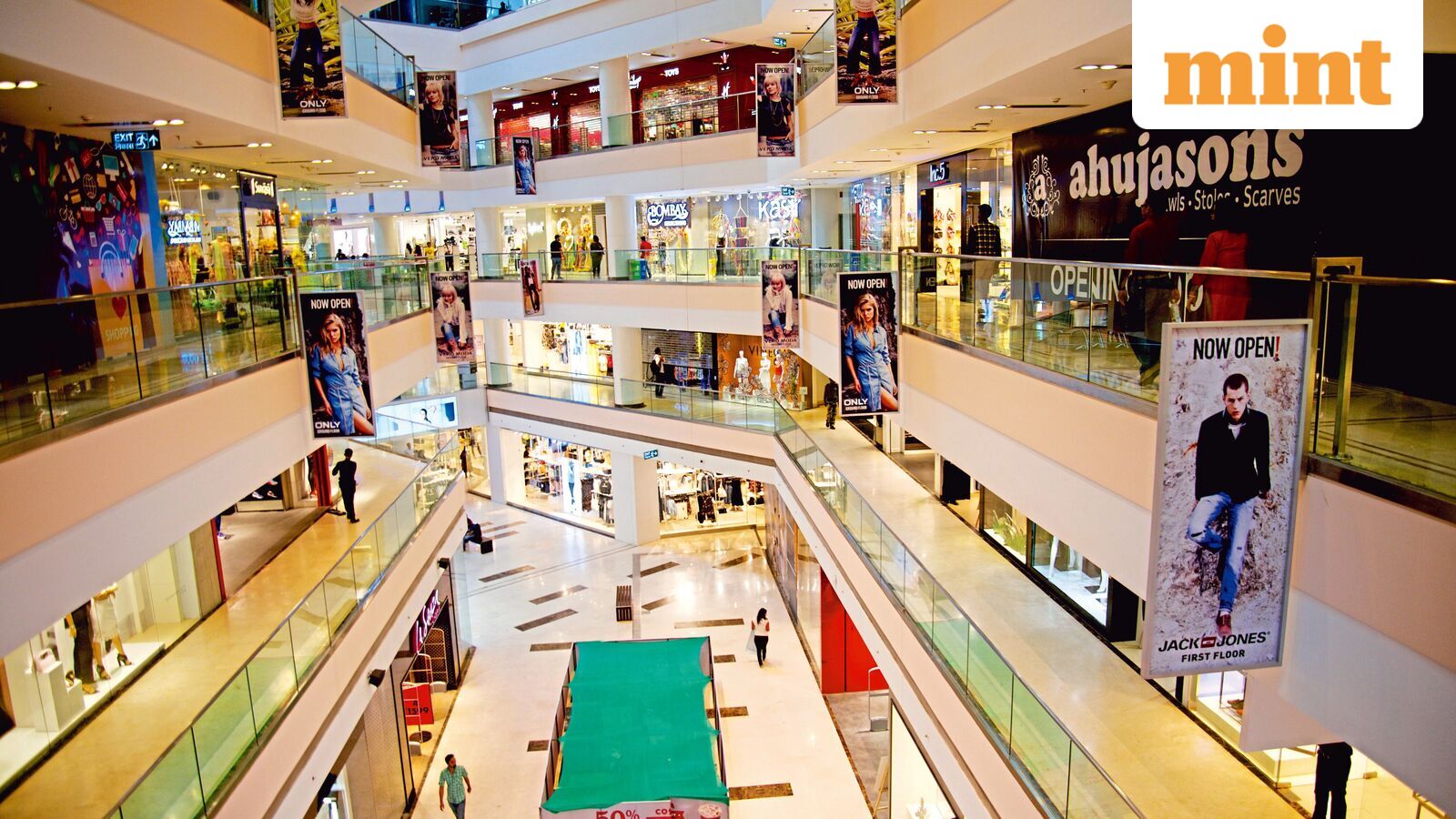
Malls, according to the report, account for two-thirds of the said total retail leasing. The digital-first brands’ visibility in malls is found in some of the top metro cities in the country. Mumbai topped the list, with D2C brands accounting for 31% of total leasing, followed by Bengaluru at 27% and Delhi at 22%. Retail leasing hit a record of 8.9 million sq ft in 2025, with 5.6 million in the second half.
Fashion and apparel brands dominated the surge, followed by food & beverage and jewellery.
“D2C brands have a far better advantage over traditional brands as they have the database required to geo-target and reach their consumers,” said Pushpa Bector, senior executive director and business head, DLF Retail.
Lenskart, Chumbak, Bluestone, Snitch, and Souled are among the brands that have opened physical stores in DLF’s malls.
Raising brand visibility
For the mall operator, these brands attract value-conscious young shoppers and increase footfalls in its malls. “We don’t believe in just picking up any brand. We do our due diligence, and so the ones we pick are the ones that we feel stand the test of time in terms of being able to do a good job offline as well as they do online,” said Bector.
The mall operator allows some of these brands to set up pop-up stores, typically small in size, to gauge consumer traction, and then these brands can expand into a larger full-sized store if they want.
“D2C brands can expand their offline presence thanks to their funding and their strong belief in their vision for the brand. They are equipped to navigate mall logistics and pricing strategies, which allows them to make their business operations successful,” said Bector.
One can easily find about 10-15 new-age brands in some of the biggest DLF malls across the country, signalling a growing offline retail push and efforts to increase brand visibility.
CBRE’s Abhinav Joshi, head of research for India, the Middle East and North Africa, said the shift reflects both demographic changes and investor backing. “Gen Zs and millennials are already familiar with these brands through social media and online channels. Once they achieved visibility and secured private equity or venture capital funding, they started moving from online to offline,” he said.
Joshi estimates that nearly 30% of mall and high-street leasing is now driven by newer D2C brands, a share he expects to rise further. Malls, he added, are often easier for these brands to enter than high streets, as developers are more open to experimenting with emerging labels to enhance the overall shopping experience.
“It’s a mix, some take small vanilla stores, others go for larger formats focused on customisation and personalisation. Those securing prime space are willing to pay because they’re backed by capital,” Joshi said.
Smaller city focus
“We look at our online data to see where our customers already exist and then open a mall store close to them,” said Pradeep Krishnakumar, co-founder of Zouk. “Today we don’t have high streets, we’re majorly mall-driven offline.”
Krishnakumar said rental costs were higher for Zouk’s initial stores, but stabilised as the brand scaled. “By the next 15 stores, things got rationalised. Now we’re getting better rentals, sometimes even better than traditional players,” he said, adding that malls increasingly favour “proudly Indian” D2C brands that can drive footfalls.
He noted that tier II and tier III cities are emerging as strong growth markets. “These cities are growing almost 2x for us online, and that’s now translating into physical store expansion,” he said.
The D2C sector, valued at around $87 billion in 2025 and expected to nearly triple by 2030, is rapidly reshaping India’s retail real estate landscape, according to the CBRE report. Backed by strong funding and aggressive expansion plans, leading D2C brands are increasingly willing to pay top-of-market rentals to secure premium mall locations. Alongside fashion flagships, these digital-first players are intensifying competition for prime retail space, thereby driving rental appreciation across high-street corridors and Grade-A malls.
CBRE also notes that retailers are increasingly pivoting to experiential flagship stores and Gen-Z-focused formats to boost dwell time and engagement, reinforcing why mall-led retail is gaining momentum over pure online models.
Fashion startup NEWME echoed the strategy. Around 23% of its revenue currently comes from offline stores, with the remainder from its app and website. “Digital-only reach is no longer sufficient for long-term growth,” said Sumit Jasoria, co-founder and CEO. “Physical retail builds trust, enables discovery-led demand and strengthens brand engagement.” The company plans measured expansion, guided by demand signals from its online customer base.
CBRE estimates India remains significantly underpenetrated in quality retail real estate, with per capita mall space far below global benchmarks, suggesting room for sustained growth. Joshi expects D2C-led leasing to strengthen further as brands learn from early offline experiments.
“Thirty per cent is already a very high share,” he said. “I feel leasing from D2C will continue to grow.”
Key Takeaways
- D2C brands now control over a quarter of all retail leasing in India.
- Mumbai is the epicentre of the offline D2C shift, accounting for 31% of the sector’s leasing.
- Unlike legacy brands, D2C players use online customer heatmaps to choose mall locations, reducing the risk of store failure.
- Physical stores are no longer just for sales; they are vital for building brand trust and ‘discovery-led demand’ that digital ads can’t replicate.
- Despite the surge, India has fewer malls compared to global standards, suggesting the D2C leasing spree has a significant runway through 2030.