





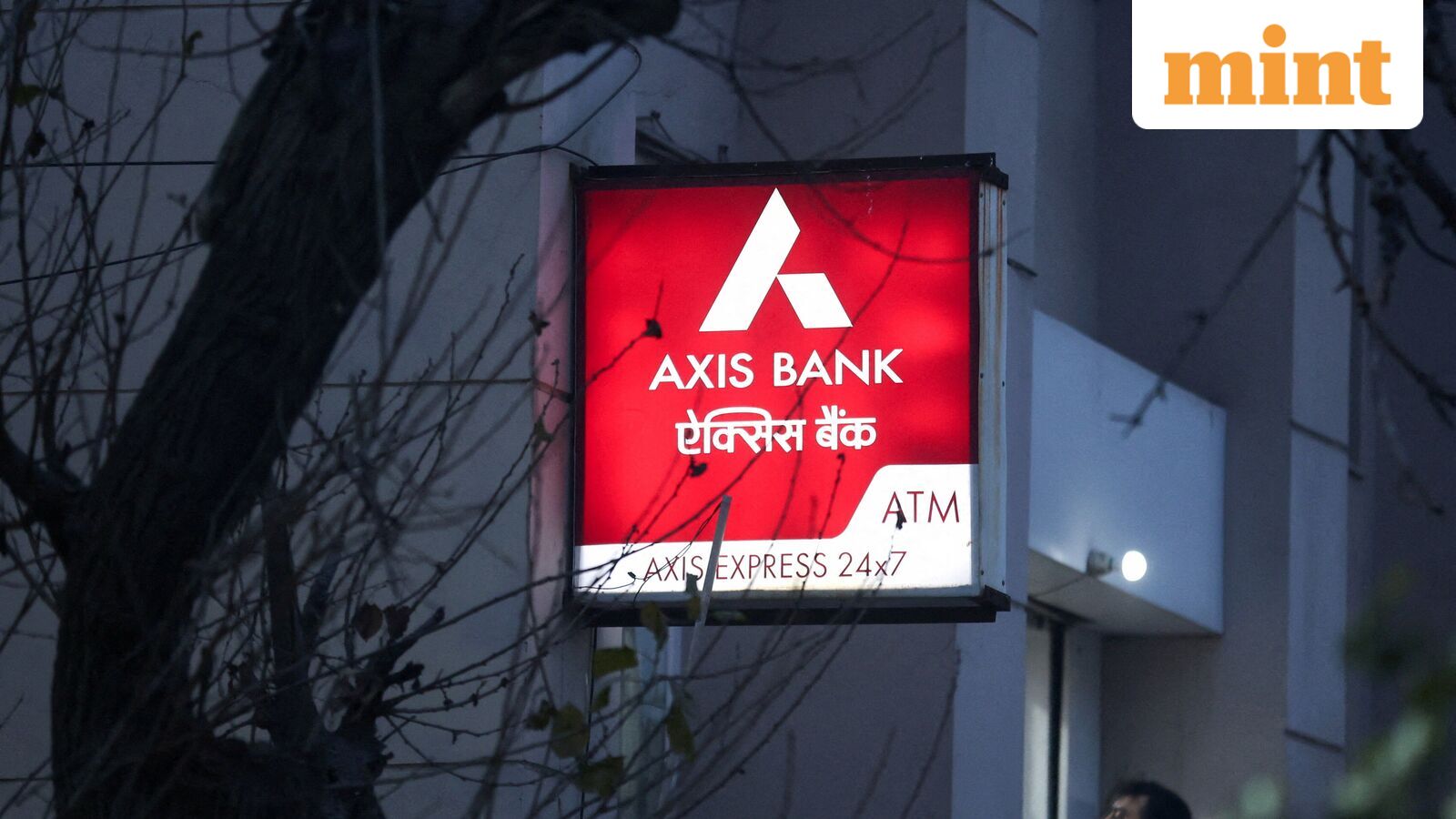
Axis Bank Ltd is still evaluating multiple options to infuse capital into its consumer lending subsidiary Axis Finance, with the process “very much ongoing”, according to a top executive.
“Nothing is off the table” when it comes to shoring up capital at Axis Finance, said executive director Subrat Mohanty in the post-earnings conference call of the bank on Monday.
The bank reiterated that it remains committed to ensuring capital is not a constraint on the subsidiary’s growth and that it is reassessing its options in light of recent regulatory guidance and changes to business guidelines.
Last week, Reuters reported that a potential stake sale may have been put on hold. Axis Bank had initiated the stake sale process last year and had even appointed merchant bankers after the Reserve Bank of India’s 2024 proposed draft rules barred banks from engaging in overlapping business with their subsidiaries.
However, the central bank withdrew the draft circular last month, allowing banks to continue with overlapping non-bank lending operations through their subsidiaries.
A stake sale remains one of several possibilities, Mohanty said, responding to media queries. Other options include a direct capital infusion from the bank, bringing in a strategic partner to dilute equity, or having the subsidiary raise capital on its own through deleveraging and balance-sheet optimization.
“All options are on the table at this point,” he said, adding that the recent regulatory circular has prompted a fresh review of both existing and newly opened avenues.
For the quarter ended December, Axis Finance’s overall assets under finance rose 22% on year to ₹44,972 crore, with 86% of the book being secured in nature. Axis Finance also remains well capitalized with a total capital adequacy ratio of 19.9%.
The non-bank lender’s net non-performing asset ratio stood at 0.95% in the December quarter against 0.66% in the same period a year earlier.
Core banking
Meanwhile, on the core banking business, parent Axis Bank reported a quarter marked by strong corporate loan growth and a cautious retail expansion. The bank’s loan book rose 14% on year to ₹11.59 trillion, with corporate book rising 27% on year to ₹3.75 trillion, retail up by 6% on year to ₹6.44 trillion and small, medium and enterprises at 22% growth to ₹1.39 trillion.
Corporate lending saw broad-based traction across sectors such as real estate, power and large conglomerates, supported by relationship-led lending. Nearly 90% of incremental corporate loans during the period were to better-rated borrowers, underscoring that growth has not come at the expense of risk-adjusted returns, the management said.
Retail loan growth, at around 6%, lagged corporate expansion as the bank consciously slowed this segment amid stress seen in parts of the retail portfolio earlier in the year. However, the management emphasized that loan book growth tends to trail disbursement growth.
Retail disbursements rose 20% year-on-year and 12% sequentially, while home loan disbursements jumped 30% year-on-year and 16% quarter-on-quarter, indicating a recovery in underlying momentum. Secured loans now account for about 73% of the retail book, with the share of unsecured loans having moderated from peak levels of 28-29%.
Axis Bank cautioned that net interest margins are likely to soften in the near term. With around 73% of loans on floating rates and a large portion linked to the repo rate, the full impact of the December rate cut will flow through in the fourth quarter.
While some liability repricing is still pending, the bank maintained that margin movements are in line with earlier guidance. During the December quarter, the bank’s net interest margin (NIM) was 3.64%, down from 3.73% a quarter ago.