




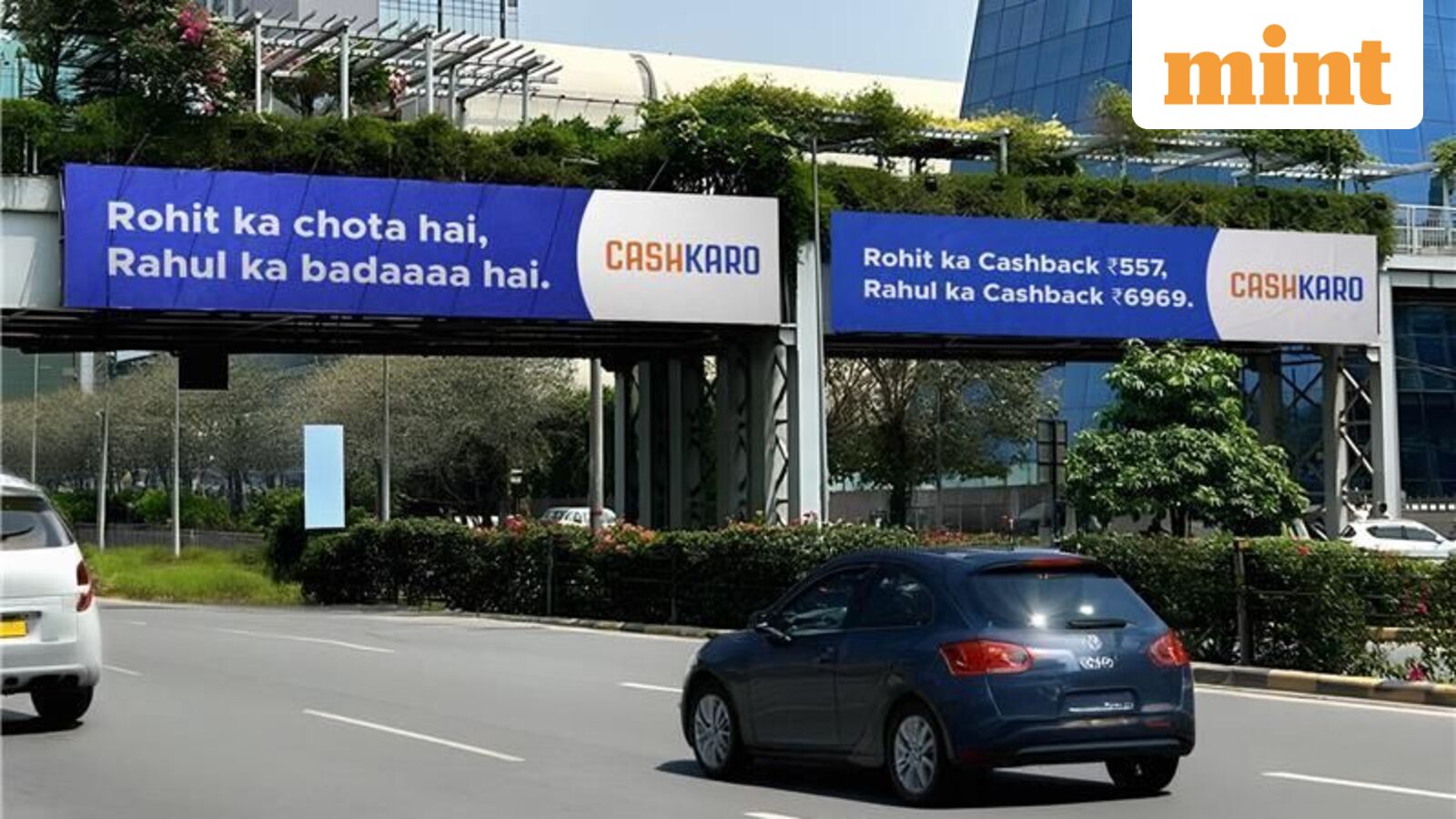
When fintech firm CashKaro posted what looked like a billboard for its offerings on its official LinkedIn account, plenty of people took issue with the central joke. The first billboard is all about reeling in the audience with a double-meaning joke in Hindi, seemingly comparing the sizes of two men. Turns out, the comparison is between the cashback you can get with Cashkaro and without it.
Two things stood out to us in this ad. One, the billboards and the roads they are situated on all seem to be AI-generated, a sign of how much outdoor advertising is used to drive online virality. Two, a fintech firm picked a fairly simplistic double meaning to generate some virality.
Suggestive messaging and puns are not taboo. Many brands use them exceptionally well. Take the condom brand Durex, for example, which routinely uses puns, metaphors, and clever jokes to advertise a variety of condoms marketed for all sorts of functions. Kohinoor condoms, too, had run a hilarious advertisement in 2004. The ad features an old watchman in an abandoned haveli, haunted by strange wailing sounds all night, like in the old horror films, only to find out in the morning that it was the sound of a creaky bed. The subtle humour does a great job of reminding viewers what the product is all about – a long-lasting condom.
Against CashKaro, much of the outrage came from people offended by the use of “cheap” double entendre. We disagree. As seen in previous examples, such messaging is a great storytelling device, especially in a relatively conservative country like India.
In CashKaro’s case though, it is difficult to understand what purpose it serves. Its out-of-place use kills the point the brand probably wants to make: that cashbacks are great, and CashKaro offers the best cashbacks.