




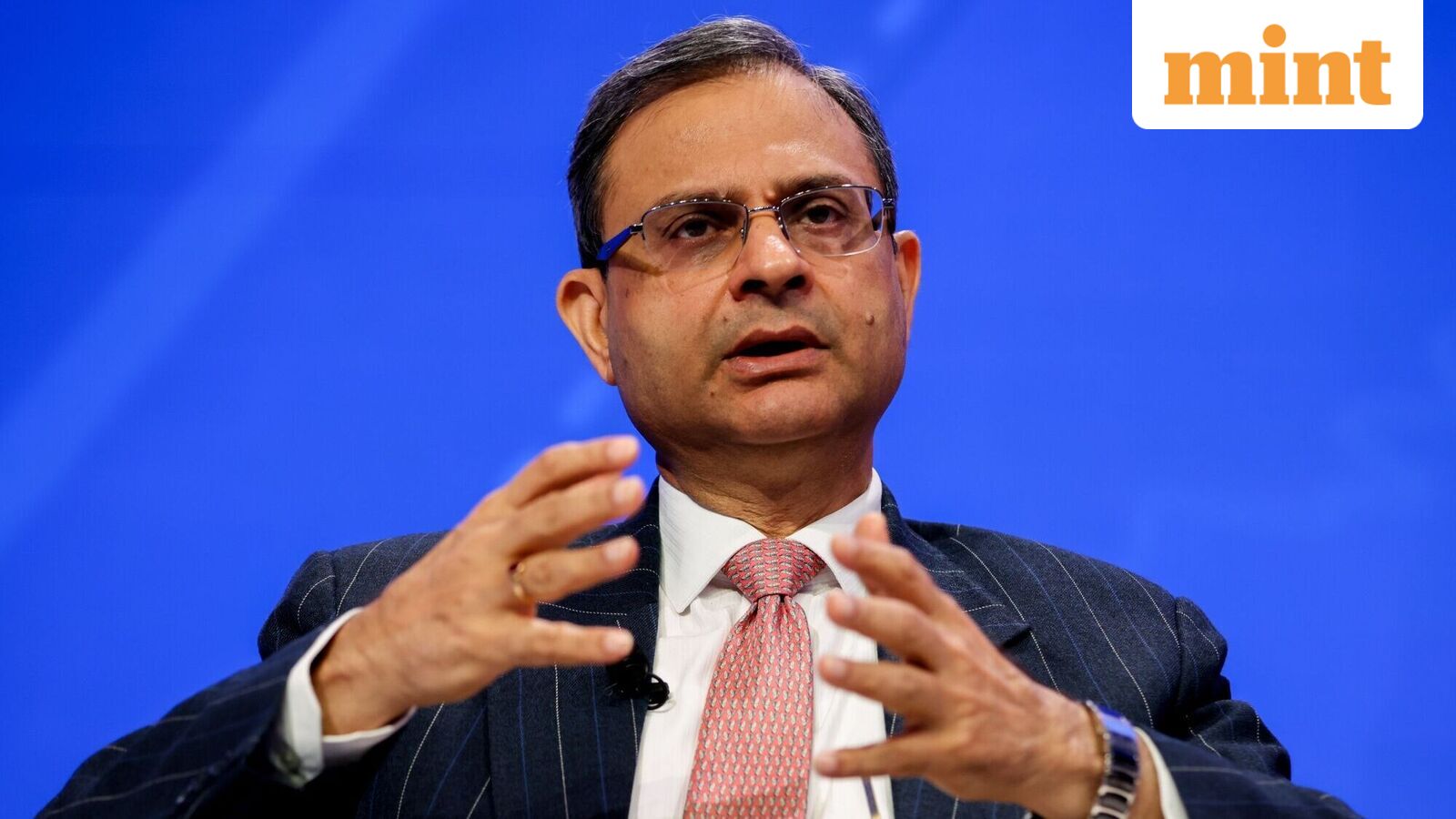
The Reserve Bank of India (RBI) is aware of near-term risks to the Indian economy from external spillovers and will continue building strong guardrails to act as a buffer against global shocks, governor Sanjay Malhotra said.
“The Indian economy and the financial system, in contrast, remain robust and resilient supported by strong growth, benign inflation, healthy balance sheets of financial and non-financial firms, sizeable buffers and prudent policy reforms,” Malhotra said in the foreword to the central bank’s half-yearly financial stability report.
He said that 2025 was challenging as geopolitical conflicts, trade tensions, and persistent policy uncertainty cast a shadow over the global economy and the financial system. The outlook for 2026 and beyond, said Malhotra, is shrouded in uncertainty as the contours of policies that are reshaping the global economic landscape remain fluid and untested.
Elaborating on the risks later in the report, the central bank flagged a cluster of risks to the Indian economy. External uncertainties, including further escalation in geopolitical and trade tensions and widening geoeconomic fragmentation, were cited as the major risks.
“They could lead to higher volatility in exchange rate, weaker trade, lower corporate earnings and muted foreign direct investments,” RBI said.
A strong depreciation in the rupee—it had started 2025 at 85.65 levels and slid by over 6% over the year—made it the worst-performing currency in Asia, according to data from Bloomberg.
According to the RBI report, the depreciation reflected falling terms of trade due to the impact of tariffs and a slowdown in capital flows. The RBI was referring to US president Donald Trump’s 50% tariff on Indian goods shipped to the US.
The report said that with the effective US tariff rate on India being the highest compared to its trading partners, the rupee depreciated despite the broad weakening of the dollar against other major and Asian currencies.
“Importantly, the exchange rate has displayed (a) wider trading range, which in turn has imparted higher volatility. Currency derivatives markets also point to the likelihood of increased volatility going forward as trade tensions continue to weigh on market sentiments,” it said.
Steady selling by foreign portfolio investors increased the pressure on the rupee. According to data from NSDL, overseas investors were net sellers of $18.9 billion in the local equity market in 2025, as against net buyers of $124 million in equities in 2024.
The regulator also cautioned against a sudden and sharp correction in the US equity markets. Such a development, it said, could cause a correction in domestic equities, affect investor confidence and wealth, trigger foreign portfolio outflows and tighten domestic financial conditions.
It said the Indian equity markets’ performance has been modest compared to its emerging market peers this year, following a five-year period of outperformance since 2020.
According to the report, tepid corporate earnings growth amid relatively slow nominal GDP (gross domestic product) growth, higher valuations, sustained FPI outflows, adverse tariff outcomes, and depreciation in the rupee have weighed on the equity market.
However, in the face of these risks, the economy and the financial system have adequate buffers to withstand them, the report said. These include strong domestic growth drivers, sizeable foreign exchange reserves, and sufficient capital and liquidity buffers in the financial and corporate sectors.
Malhotra also called for balancing pragmatic regulation and supervision with fostering innovation, growth and consumer protection. In his foreword, he said maintaining financial stability and strengthening the financial system remain the regulator’s north star.
“But financial sector regulators recognize that financial stability is not an end in itself,” he said.
According to Malhotra, these objectives are mutually reinforcing and vital for increasing productivity and long-term economic growth. “The most important contribution the policymakers can make is to foster a financial system that is robust and resilient to shocks, efficient in providing financial services and promotes responsible innovation.”
The central bank has been on a deregulation spree. In November, it released 244 consolidated master directions, replacing more than 9,400 circulars and guidelines that had accumulated over several decades. “This is only a consolidation, not a change in regulations. The purpose is to eliminate redundancy, remove conflicts, and make compliance simpler and more efficient,” RBI deputy governor Shirish Murmu had told reporters.
That apart, RBI underlined rising stress in the unsecured lending portfolios of private sector banks, noting that while overall asset quality appears stable, fresh slippages and write-offs remain high.
This has come as unsecured retail lending, which boosted bank credit growth in the years following the covid pandemic, has slowed sharply after RBI tightened risk norms in November 2023.
In the December 2024 report, RBI had flagged concerns about higher write-offs of unsecured lending among private sector banks. In the non-banking financial company (NBFC) sector, asset quality has improved in headline terms, with gross non-performing assets ratios declining, according to the December 2025 report. However, RBI cautioned that fresh accretions to bad loans are rising and write-offs are increasing, signalling a gradual build-up of stress in loan portfolios.