





On 30 September, Arkansas senator Tom Cotton introduced the Visa Cap Enforcement Bill, which seeks to prevent universities, research institutions and non-profits from hiring an unlimited number of foreign workers.
“Colleges and universities shouldn’t get special treatment for bringing in woke and anti-American professors from around the world. My bill closes these loopholes that universities have abused for far too long,” said Cotton in a release dated 30 September. He added that the bill aimed to do away with exemptions to limits on H-1B visas.
H-1B visas allow foreigners with specialised skills to work in the US temporarily. They are issued for three years and can be renewed for up to six years. The US government can only approve 65,000 H-1B visas for companies a year, and 20,000 additional visas for foreign professionals who graduate with a master’s degree or a doctorate from a US academic institution.
But while IT services companies must abide by the 65,000 cap, universities who hire H-1B workers for postdoctoral, research, and faculty roles are considered cap-exempt. “Under the current rules, universities, research institutions and non-profits can hire an unlimited number of foreign workers without being subject to the annual H-1B cap,” said Poorvi Chothani, immigration attorney and managing partner at LawQuest.
These cap-exempt employers can also submit H-1B petitions at any time during the year, and the employee can start work once the petition is approved, completely bypassing the annual H-1B lottery.
Small fry
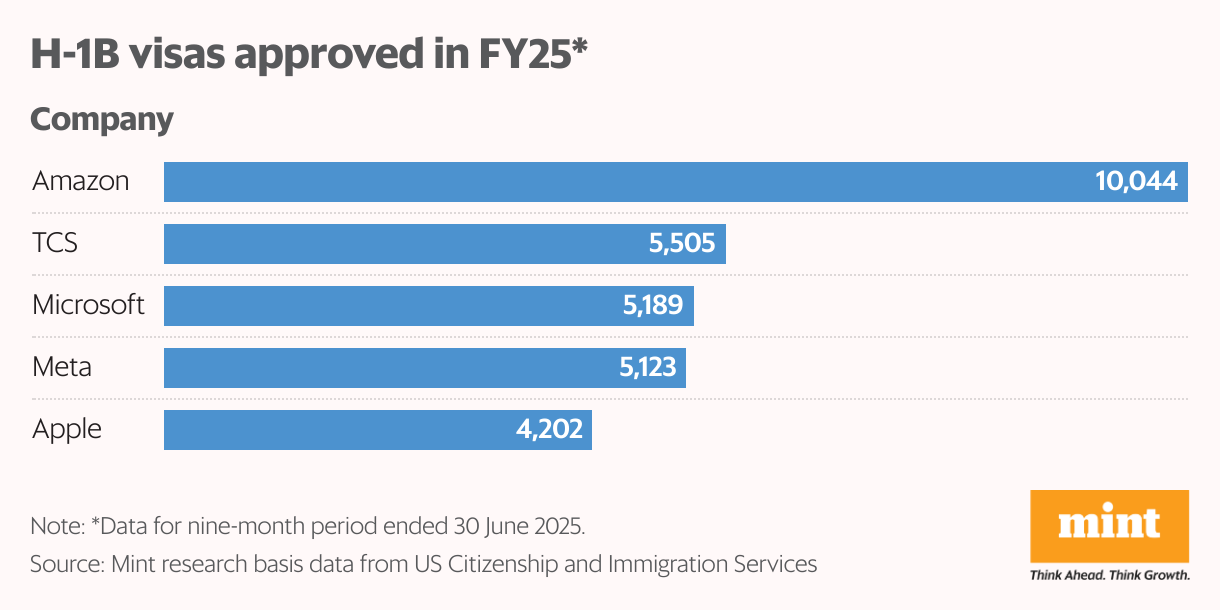
To be sure, most H-1B visas are snapped up by tech companies. According to data from US Citizenship and Immigration Services, 7 of the 10 largest users of H-1B visas are tech firms, including Tata Consultancy Services Ltd and Cognizant Technology Solutions Corp. Cumulatively, the top 10 snapped up 36,737 H-1B visas between them, or more than half the total available this year, as of 30 June. The US government follows an October-September financial calendar.
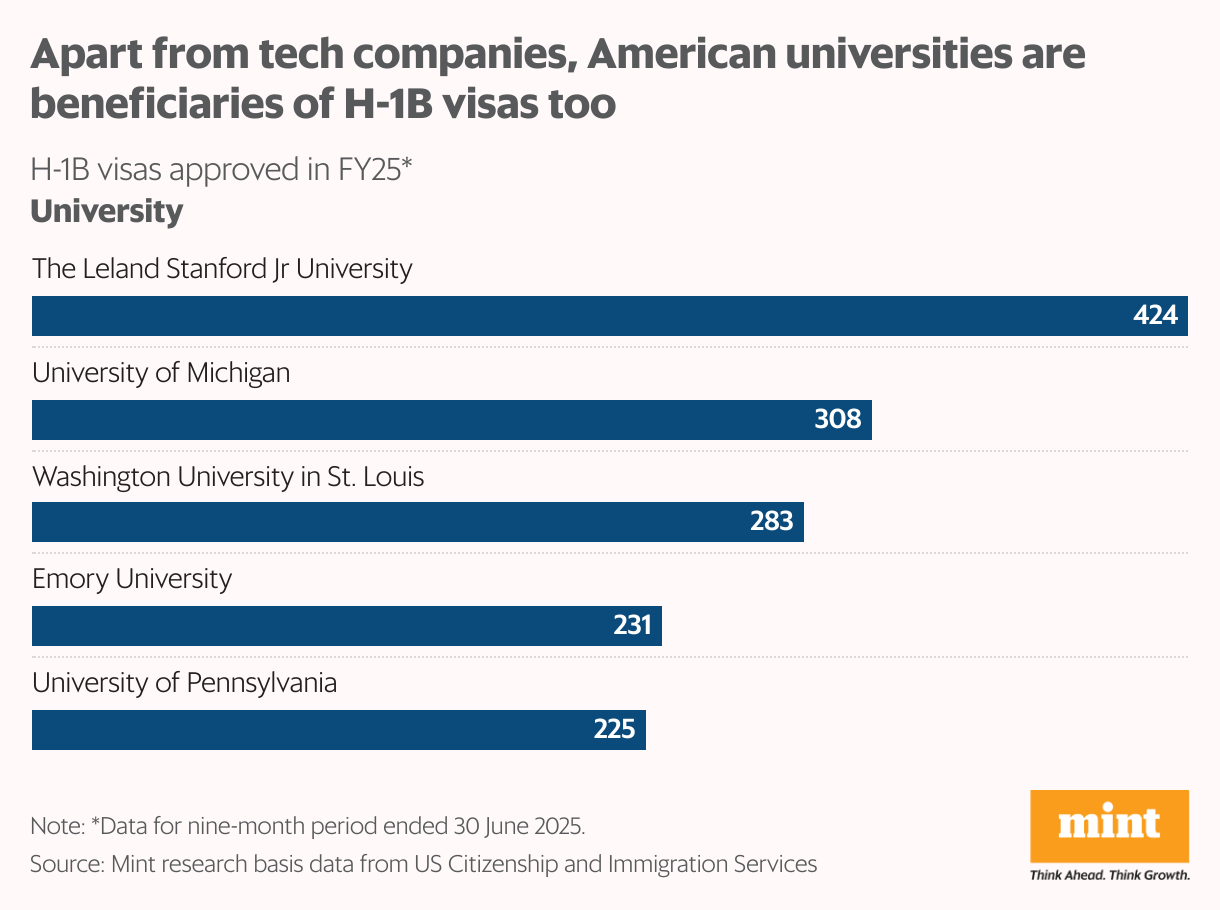
Educational institutes, meanwhile, get far fewer H-1B visas. The top five recipients of these visas – including Stanford University, the University of Michigan, and Washington University in St. Louis – have received only 1,471 between them this year, as of 30 June.
Earlier, companies had to pay around $1,000 to sponsor a student for a H-1B visa. But last month, US president Donald Trump increased this fee for new H-1B visas to $100,000 from next year to stem the alleged misuse of these visas.
Primary target: China
An expertMintspoke to said the latest move was aimed at preventing people from easily entering the US through universities. Russell A Stamets, partner at Circle of Counsels, said, “The current US regime is seeking to drastically cut the number of immigrants across the board. This legislation combines anti-immigration policy with the regime’s well-documented attack on higher education in the US. Like it or not, this current regime is pursuing clear goals.”
Stamets added that the move was particularly aimed at stemming the influx of Chinese nationals into US universities and research institutions. “China is purposefully sending academicians for higher-level programmes abroad. They are an acknowledged powerhouse in scientific research and pose a threat to the research dominance of the US,” he said.
According to the US Department of State, China was the second-largest beneficiary of H-1B visas in the previous fiscal year, receiving 31,735 such visas. A breakup by profession is not available.
A second expert added that the bill would affect temporary professors more than permanent (tenured) ones.“If this bill passes, it will affect non-tenured professors more than tenured ones. Tenured professors in the US are similar to permanent faculty members in India – it can take many years to get tenure. It will also affect students pursuing PhDs and hoping to work at US research institutes or universities,” said Suchindra Kumar, partner and leader for education, PwC India.
Challenge incoming?
Chothani of LawQuest said colleges would challenge this legislation. “This bill will find a lot of support in both Houses on the back of anti-immigration propaganda but universities are expected to strongly oppose it,” she said.
For now, Senator Cotton’s bill shows that US policymakers are cracking down on even minority users of work visas, highlighting that the Trump administration is serious about sending back non-Americans.
On 24 September, Republican senator Charles E. Grassley and Democrat senator Richard J. Durbin targeted several companies including TCS and Cognizant over their hiring practices. Earlier last month, Ohio senator Bernie Moreno proposed the Halting International Relocation of Employees (HIRE) Act to increase taxes on companies that hire offshore IT firms.