




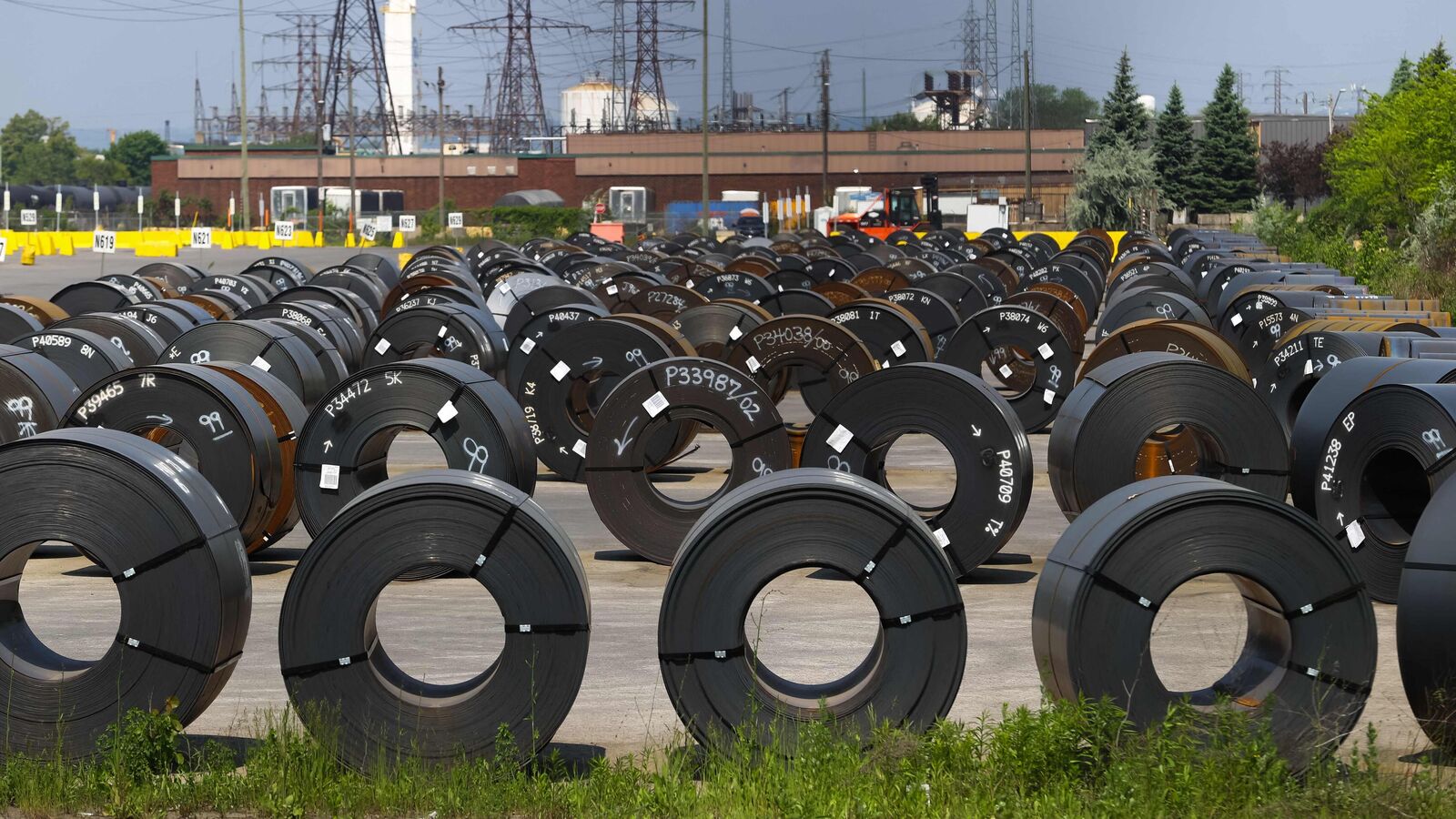
India’s steel industry is confident that the 12% safeguard duty recently imposed on imports of certain flat steel products will be sufficient to protect domestic producers from injury and prevent the dumping of cheaper steel, industry officials said.
Naveen Jindal, president of the Indian Steel Alliance (ISA), the apex body representing major public and private steel producers, said the duty “is sufficient for the time being” but left open the possibility of approaching the government for adjustments if global steel prices fall further and cheaper imports enter India.
“We would have liked the duty protection to be around 25%, but if in their wisdom the Directorate General of Trade Remedies (DGTR) has recommended 12%, that is sufficient,” Jindal told reporters on the sidelines of the India Steel Conclave organized by the ISA. He added that the industry would return to the government if import challenges arise in the future.
Global tariffs and price pressure
Jindal noted that high tariffs imposed by countries such as the US—up to 50% on Indian steel—have halted exports to those markets, contributing to depressed global steel prices.
“All the steel that was being exported to the US has stopped, and producers are looking for other markets. That is one reason international prices are under pressure,” he said.
DGTR, operating under the Ministry of Commerce, recommended the safeguard duty for three years to protect domestic manufacturers from sudden surges in inbound shipments. The move followed a complaint by the ISA and came after a probe confirmed a “recent, sudden, sharp and significant increase” in imports of the products under consideration, which threatened to cause serious injury to local producers.
The final duty schedule is set at 12% in the first year, 11.5% in the second, and 11% in the third. A provisional 12% duty had already been imposed for 200 days in April, based on preliminary findings.
Demand outlook and risks
On the domestic front, Jindal said steel demand in FY25 grew in double digits and is expected to continue on a similar trajectory, despite disruptions from monsoon-related floods.
“Many parts of the country experienced heavy rains, which impacted demand. However, we expect demand to pick up next month and close the year with double-digit growth,” he said.
According to data from the steel ministry, total finished steel production in India stood at 145.31 million tonnes (mt) in FY25 while consumption increased to 150.32 mt. During the same period, India exported 4.85 mt of steel while imports increased to 9.53 mt.
Contrary to expectations, steel prices have fallen even after the duty’s imposition. Benchmark hot-rolled coil (HRC) prices dropped from ₹52,900 per tonne on April 29, 2025, to ₹48,500 per tonne by July 25, and continued to decline in August.
Industry officials attribute the drop to intense competition in India’s flat steel sector, where six large producers and multiple smaller players compete aggressively.
High market competition eliminates collective pricing power, ensuring that domestic prices align with global trends, they said, dismissing concerns that safeguard duties might be used to inflate prices artificially.
Global steelmaking capacity exceeded demand by roughly 600 million tonnes in 2024, according to OECD data, a gap projected to widen to 720 million tonnes by 2027. Analysts warn that increasing global supply, combined with tariffs in other countries, could redirect surplus steel to markets with lower or no protective duties, putting pressure on domestic producers.
Jindal emphasized the industry’s respect for DGTR’s role in assessing injury to domestic producers. DGTR carefully considers the kind of injury occurring before reaching a conclusion, he said, adding, “We respect that and if there is a problem, then we will again take it up with the right authorities.”