




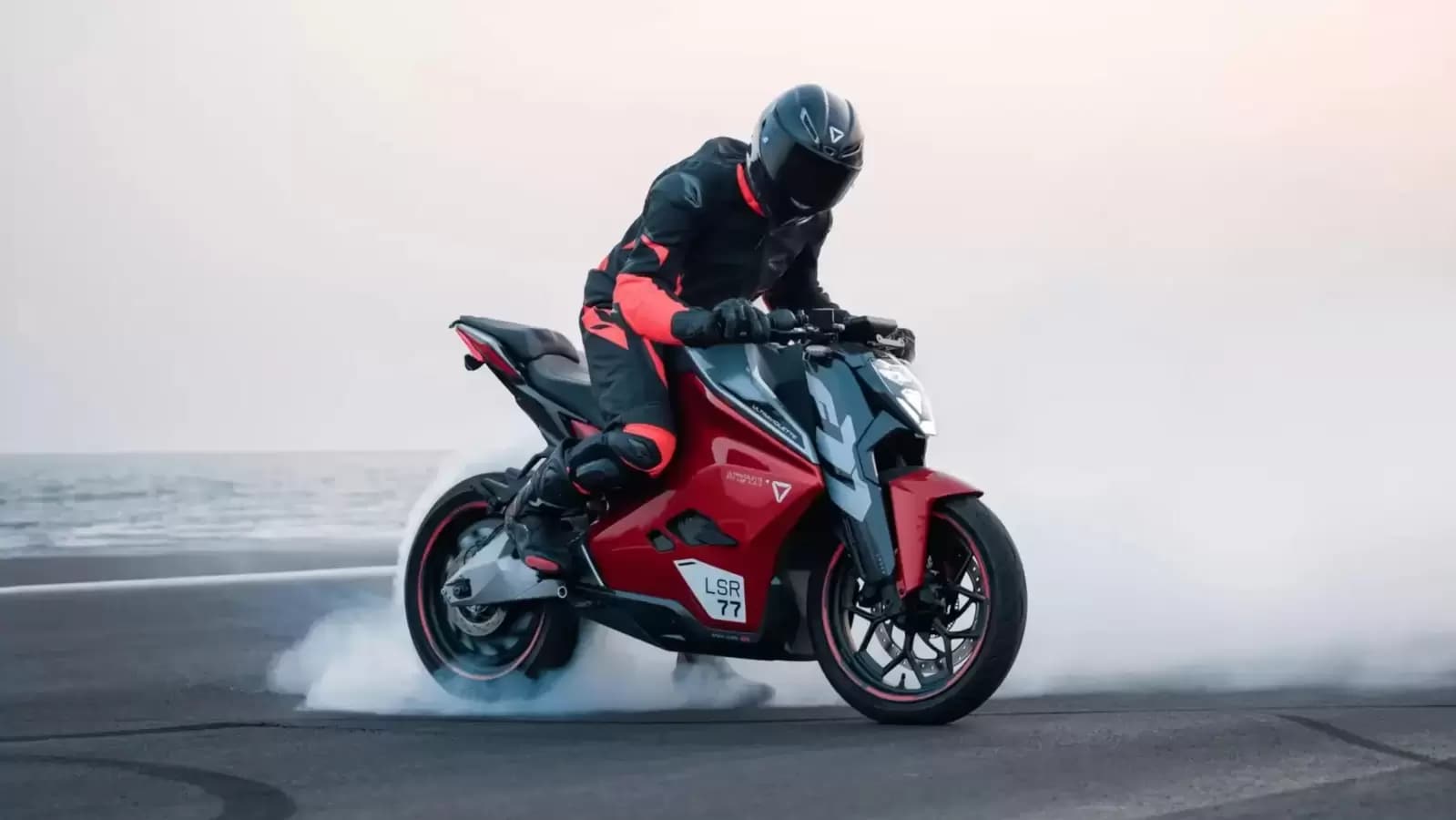
New Delhi: India has begun a push to increase the production of electric motorcycles, which have been largely missing from the market, before government incentives for electric two-wheelers lapse in seven months.
While it is unlikely that new e-motorcycles will hit the market before the end of March, when the incentives scheme ends, policymakers will get a sense of the industry’s problems and requirements as they plan out ways to boost electric mobility in the country.
Niti Aayog, the federal policy think-tank, is holding stakeholder discussions on increasing the production of e-motorcycles, according to two people aware of the development. India’s electric two-wheeler adoption is led by scooters and not motorcycles, which Niti Aayog said can be an opportunity because it is the country’s largest vehicle segment.
“India’s market is dominated by two-wheelers. Catering to this market can be an opportunity to boost India’s overall EV adoption,” one person said.
Niti Aayog said in an August 2025 report that motorcycles, often used by the youth, are an untapped segment and can expedite the conversion of fossil fuel two-wheelers to electric two-wheelers. The report, titled ‘Unlocking a $200 Billion Opportunity: Electric Vehicles in India,’ noted that there are hardly any e-motorcycles in the market and that electric two-wheeler sales were largely scooters.
More than 1.14 million electric two-wheelers – scooters and motorcycles – were sold in FY25, the highest after petrol two-wheelers, with incentives under the ₹10,900 crore PM Electric Drive Revolution in Innovative Vehicle Enhancement (PM E-DRIVE) Scheme claimed for more than 600,000 vehicles.
The country’s green mobility push for two-wheelers assumes importance given that India is the biggest two-wheeler market in the world with 18.8 million sales in FY25. But most of this support was given to scooters and not motorcycles.
Few e-motorcycles
Only a handful of companies – Revolt Motors, Matter Motors and Ultraviolette among them – manufacture e-motorcycles in India. Bengaluru-based Ola Electric started deliveries of its Roadster series of e-motorcycles in June.
Larger manufacturers are yet to announce their entry into the electric-motorcycle domain. The country’s top motorcycle makers include Hero MotoCorp, Bajaj Auto and TVS Motor Company.
“The consultation included discussions on strategies that could be used by the industry to start making electric motorcycles. There was also some discussion about financial incentives as developing an e-bike is a little more complicated than making scooters,” the second person said.
The discussions conducted by Niti Aayog covered the strengthening of public charging infrastructure as home chargers commonly used for two-wheelers faced difficulties with residential welfare associations not in favour of them.
An email query sent to Niti Aayog on 28 August remained unanswered.
While manufacturers of electric motorcycles can claim incentives under the ₹25,938 crore production-linked incentive scheme for automobiles and auto parts (PLI-Auto), stringent localisation criteria have kept many of them away. Of the 17 companies selected for incentives under the PLI-Auto scheme, none has approvals for electric motorcycles.
Developing e-motorcycles is expensive – primarily due to limited space on the chassis to fit a large enough battery. Motorcycles are also typically faster than scooters and have higher engine capacity, and emulating its performance will require considerable research and development costs, leading to higher prices for electric motorcycles.
“Leading motorcycle companies in India have taken a measured approach in entering new segments, focusing first on building robust supply chains and aftermarket support to ensure cost efficiencies,” said Randheer Singh, former director of electric mobility at Niti Aayog and CEO of ForeSee Advisors. “For newer entrants, the pressure to achieve profitability often means pushing products to market faster. By contrast, legacy firms, even while entering the e-scooter space, invested considerable time in testing vehicles and gauging consumer sentiment before launching sales.”