




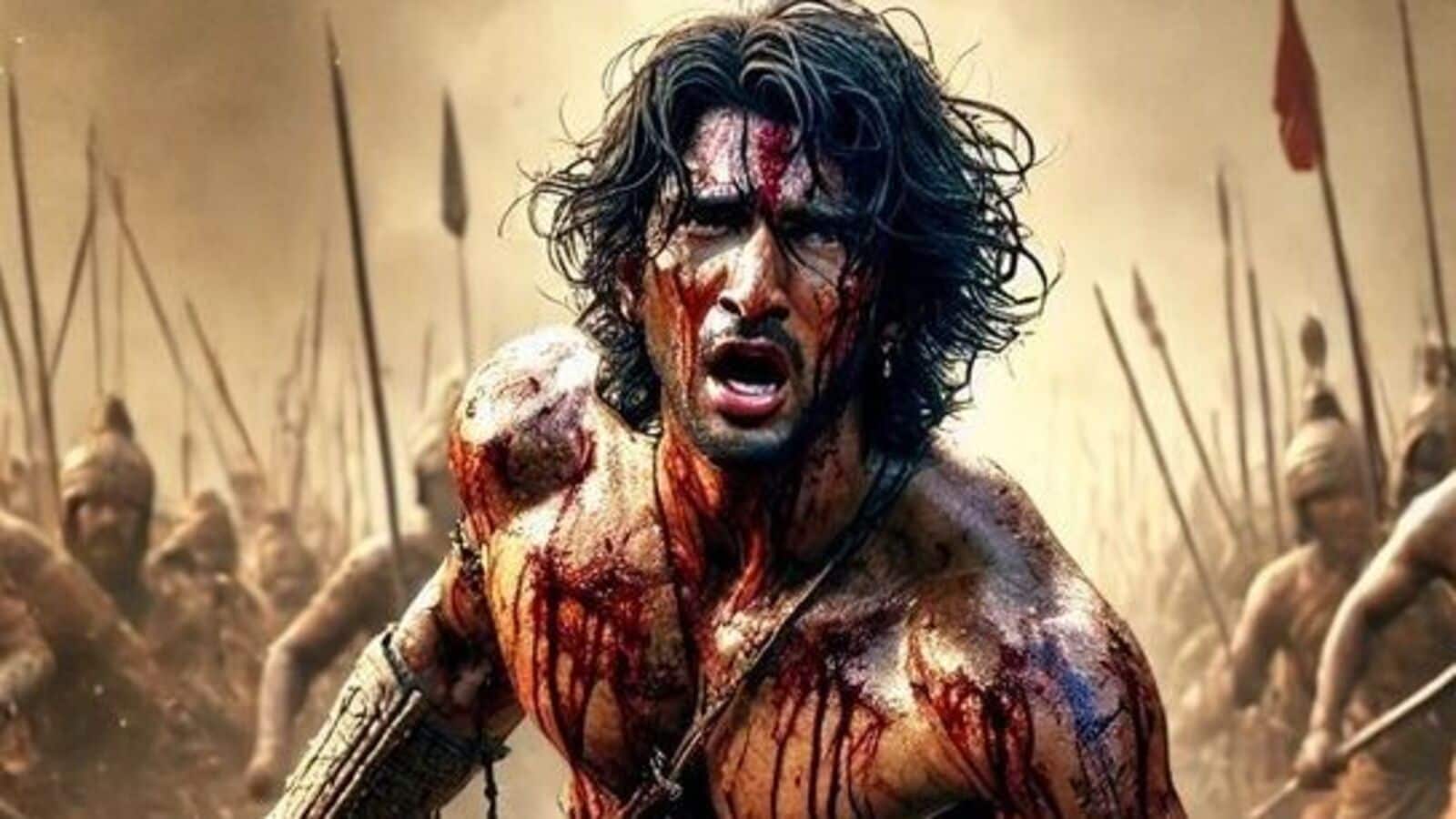
While Collective Artists Network, formerly known as KWAN, a talent management and media company, has launched a 600-episode microdrama version of the Mahabharata, filmmaker Ram Madhvani has announced a mythological virtual reality universe with the first short film being an AI adaptation of the Bhagavad Gita. The aim is to not just marry scale and speed with cost efficiency but bring in drama-rich visuals, iconic characters and stories that everyone instantly recognizes.
According to Madhvani, mythology has always been fertile ground for storytelling – it’s symbolic, and timeless. They’re not just stories – they’re living philosophies that speak of identity, purpose, and morality in a way that transcends time.
“AI allows us to bring these layered, often abstract ideas to life with a new visual language. And in VR, you don’t just watch the Ramayana or the Gita; rather, you feel like you’re a part of it,” Madhvani said.
He added that the shift from observation to experience is deeply powerful and resonates with the viewers.
“Also, there’s a spiritual hunger today for meaning, belonging and rootedness among the youth. Mythological narratives, especially Indian ones, offer that in abundance. With AI, we can honour their depth while making them accessible to a global and digitally native audience,” he pointed out.
With audiences deeply fragmented in the digital world and the wide prevalence of social media, the idea is to simply catch the consumer where they sit, according to Vijay Subramaniam, founder and CEO of Collective Artists Network.
Concepts matter
“Technology is just an enabler; the core is still the story or concept. India is a land of stories, and we plan to tap into everything from temples and kings to figures like Kali, Durga and Shivaji,” Subramaniam said.
He added that while AI definitely eliminates expenses such as sets and studios, the bigger aim is to educate Gen Z audiences with these stories that they are likely to connect to.
Some experts emphasized that while fully AI-generated content continues to evolve, current viewer preferences tend to favour selective AI integration—especially where it enhances but does not entirely replace the human element.
Companies like Madhvani’s have teams of technologists, researchers, AI engineers and traditional storytellers whose goal is not to use AI to replace human creativity but to expand it. This strategic use of AI can be effective in areas like special effects and animation.
“A standout example is Mahavatar Narsimha, an epic animated tale that leverages AI-supported animation to deliver a visually breathtaking experience. The film has not only impressed critics but also achieved commercial success at the box office,” said Chandrashekar Mantha, partner and media and entertainment sector leader at Deloitte India. “As AI continues to advance, its role in storytelling and visual production is shifting from novelty to necessity—reshaping creative industries in real time.”
Getting the edge
That said, the advantages of freedom, flexibility and scale aside, some point out AI can be used to do more than tap into collective imagery and known stories. Dipankar Mukherjee, co-founder of StudioBlo, an AI-powered content studio, said given that AI helps hedge risks of telling new stories with lower costs, the need of the hour is to create new IPs (intellectual properties) so people don’t get bored.
“AI has lowered the barrier to entry, so more people will experiment. But once the ‘new toy’ feeling wears off and the market is flooded with similar-looking AI work, the edge will belong to those who can fuse creative instinct with AI’s potential. Machines can do a lot, but they can’t replace the human knack for context, storytelling and emotional depth,” said Manish Solanki, chief operating officer and co-founder of TheSmallBigIdea, a digital marketing agency.
Solanki added that built-in drama-rich visuals, iconic characters and stories that everyone instantly recognizes make mythology a safe playground for testing AI’s visual and storytelling chops.
“But here’s the thing: it’s starting to feel overdone. When too many creators dip into the same visual bank, it all starts to blend together. The real magic will come from people who use AI to create things we haven’t seen before, not just reimagine what’s already in our cultural memory. That’s where creativity and context make all the difference,” he added.