




At its latest meeting, the GST Council decided to bring local delivery services offered through e-commerce platforms under the GST net, with a tax rate of 18%. If the delivery partner is unregistered, the responsibility for paying the tax shifts to the platform itself under the reverse charge mechanism, ensuring GST is collected at the platform level rather than lost due to the unregistered status of individual partners.
This levy applies specifically to deliveries booked through e-commerce operators—platforms such as Porter, Uber Delivery and Rapido—where customers use an app or website to hire a delivery partner to move packages locally. In such cases, the customer pays a delivery fee to the platform, which then passes on a share to the delivery partner.
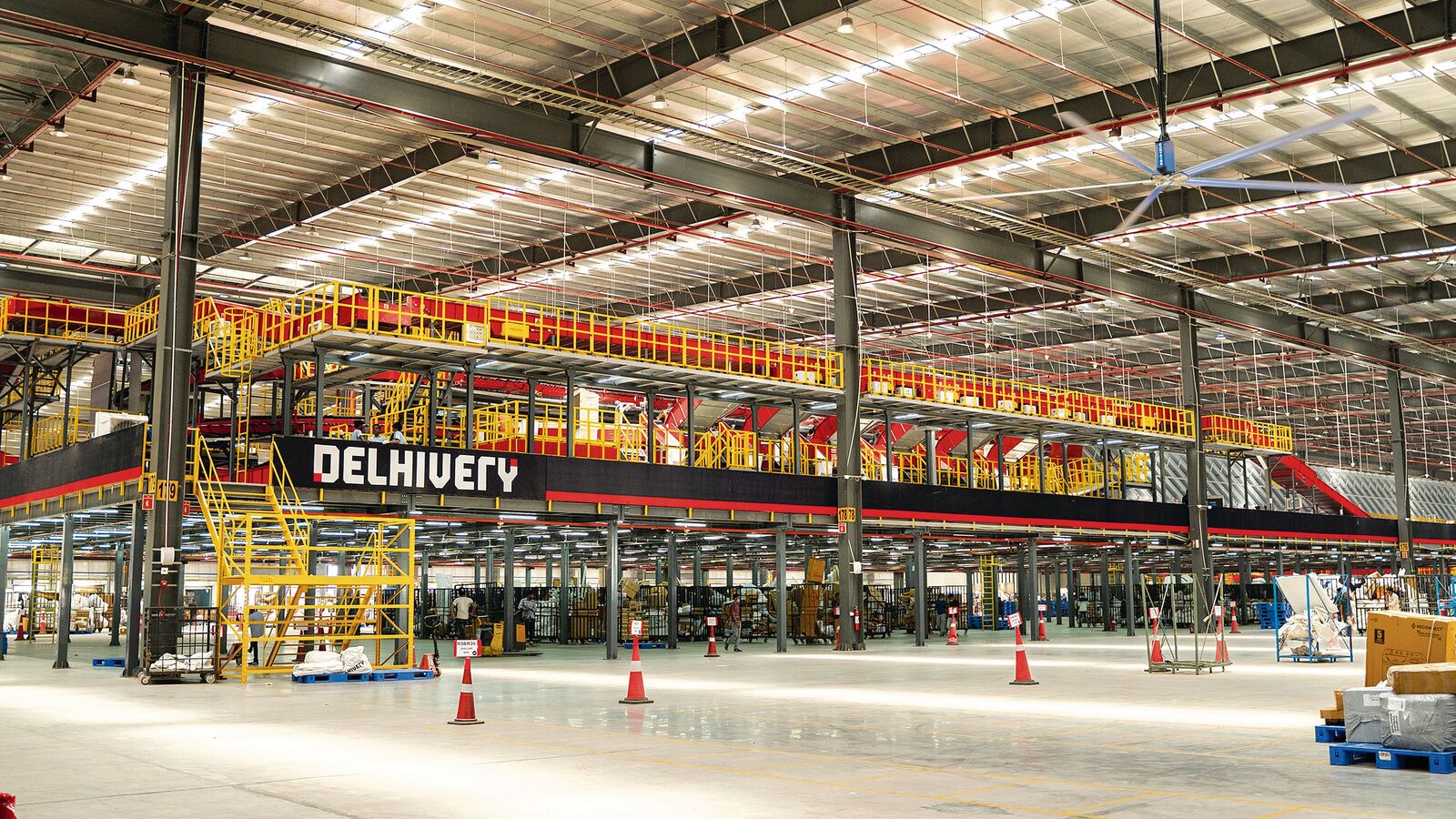
In July, Delhivery too entered the ring, launching its on-demand intracity service, Delhivery Direct. After piloting in Ahmedabad, the company rolled it out in the Delhi-National Capital Region and Bengaluru—two of India’s biggest and most complex urban logistics markets.
“Treating logistics like a luxury doesn’t make sense—it makes daily essentials costlier, pushes up inflation, and hurts the MSMEs (micro, small and medium enterprises) that survive on affordable supply chains,” said a senior industry executive working in the logistics industry.
Fuel cost trap
“Differential GST rates of 5% and 18% for traditional versus tech-enabled and intracity versusintercity will create disparity within the same sector. Fuel—petrol and diesel—makes up nearly 40-60% of our operating costs, but since it is outside GST and no input tax credit can be claimed, higher tax rates only add to the burden,” said another industry executive in the logistics ecosystem.
“A higher GST on intracity logistics would raise costs for MSMEs and make it harder for them to compete with larger players—the opposite of what rate rationalization is meant to achieve, plus the higher rates put direct pressure on gig workers’ earnings,” said a third executive working in the logistics industry.
Porter, Delhivery, Rapido and Uber did not respond to Mint’s queries until press time.
Since fuel remains outside the GST ambit, logistics players cannot claim input tax credit on one of their largest cost components.
Kulraj Ashpnani, partner at Dhruva Advisors, explained that input tax credit essentially allows businesses to set off the tax they pay on inputs against the tax they collect on their outputs, helping reduce their overall tax liability.
This leads to a cascading effect as GST is levied on delivery charges while embedded fuel taxes remain unrecoverable, pushing up costs for last-mile logistics, said Brijesh Kothary, partner at Khaitan & Co.
Passing on costs
Moreover, delivery costs may also inch up for local, or what logistics players call ‘intra-city,’ deliveries.
However, Kothary explained that currently, many standalone local delivery services booked via apps escape GST where the delivery partner’s turnover is below the registration threshold.
“By notifying such services under Section 9(5), the liability shifts to the e-commerce operator, and a uniform 18% GST will apply on these transactions. This marks a shift from the earlier position, where delivery could fall within the GTA (Goods Transport Agency) framework with concessional rates or exemptions,” he added.
Moreover, a large chunk of this is either going to be passed on to the customer or have some impact on the delivery partner earnings, “because we don’t think that companies are in a position to take this on in their books at this point of time, since they are looking for profitability and investing in other areas,” said Satish Meena, co-founder at Datum Intelligence.
Since many players in the space remain in a cash-burn phase, they continue subsidizing deliveries to drive customer adoption.
“Passing on the entire GST increase to consumers may not be commercially viable in the short run, which implies that operators themselves could absorb part of the cost,” Ankit Jain, partner, Ved Jain and Associates, a law firm.
In turn, some of this burden may be shifted onto delivery partners, whose payouts could be adjusted downwards to balance the impact. “This risks further margin compression for delivery personnel, who already operate on thin earnings,” explained Jain.
Platform dilemma
It’s important to note that the recent decision does not extend to platforms that are primarily engaged in the supply of goods, such as Amazon, Flipkart or Blinkit, “since those entities provide delivery as an ancillary activity to goods supply rather than offering stand-alone delivery services,” Jain added.
Platforms (with increased tax outgo) tend to reduce surge bonuses and/or per-delivery incentives to control costs. Partners already pay for their fuel and vehicle repairs. They do not get relief from input tax credit as fuel is not under GST. This increases the margin between increasing expenses and flat revenues, explained Ankit Rajgarhia, designate partner at Bahuguna Law Associates.
If delivery charges rise substantially due to GST, order volumes could dip, especially for low-value orders ( ₹150-300). Reduced orders will result in reduced gigs, which will directly affect the revenue-generating abilities of delivery partners. “When incomes stop or decline, turnover also increases, and the industry is threatened with labour instability. In this way, delivery partners are not taxed, but the 18% GST indirectly squeezes their pockets,” he added.